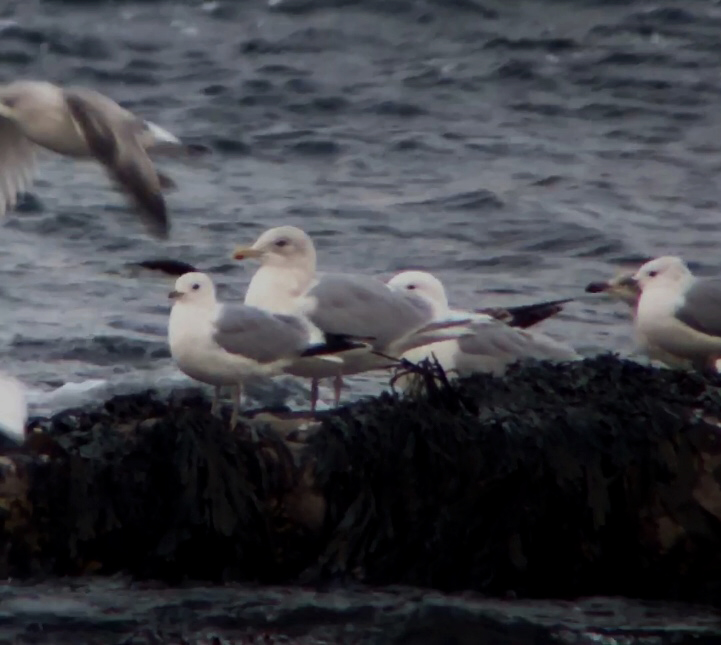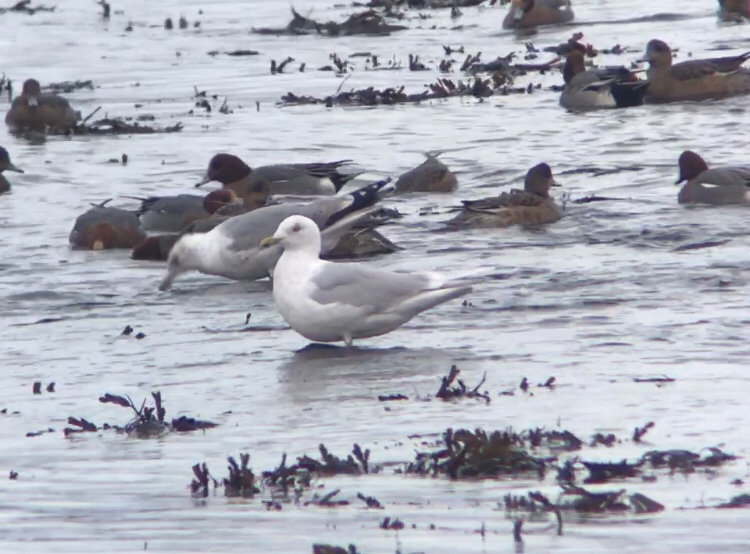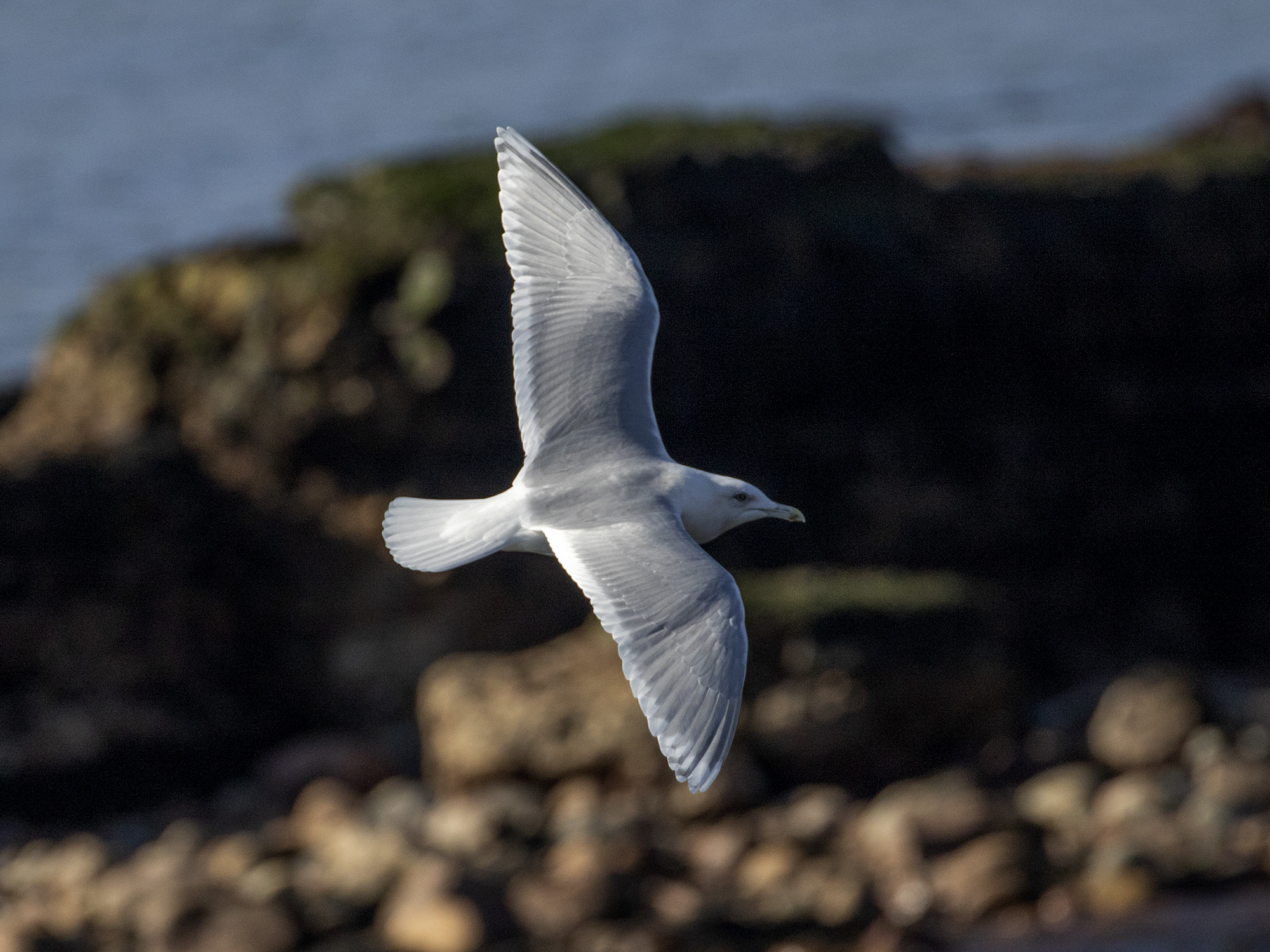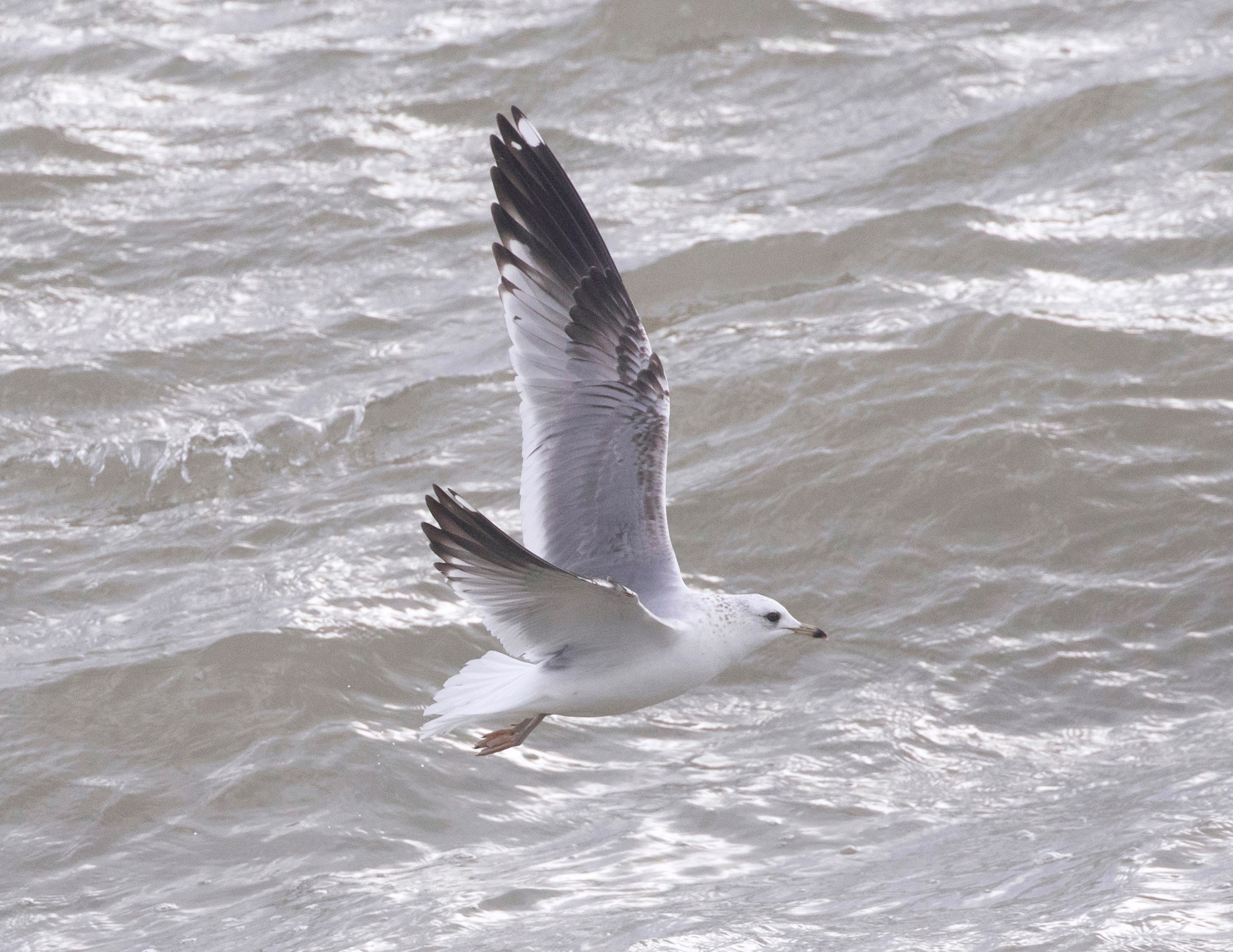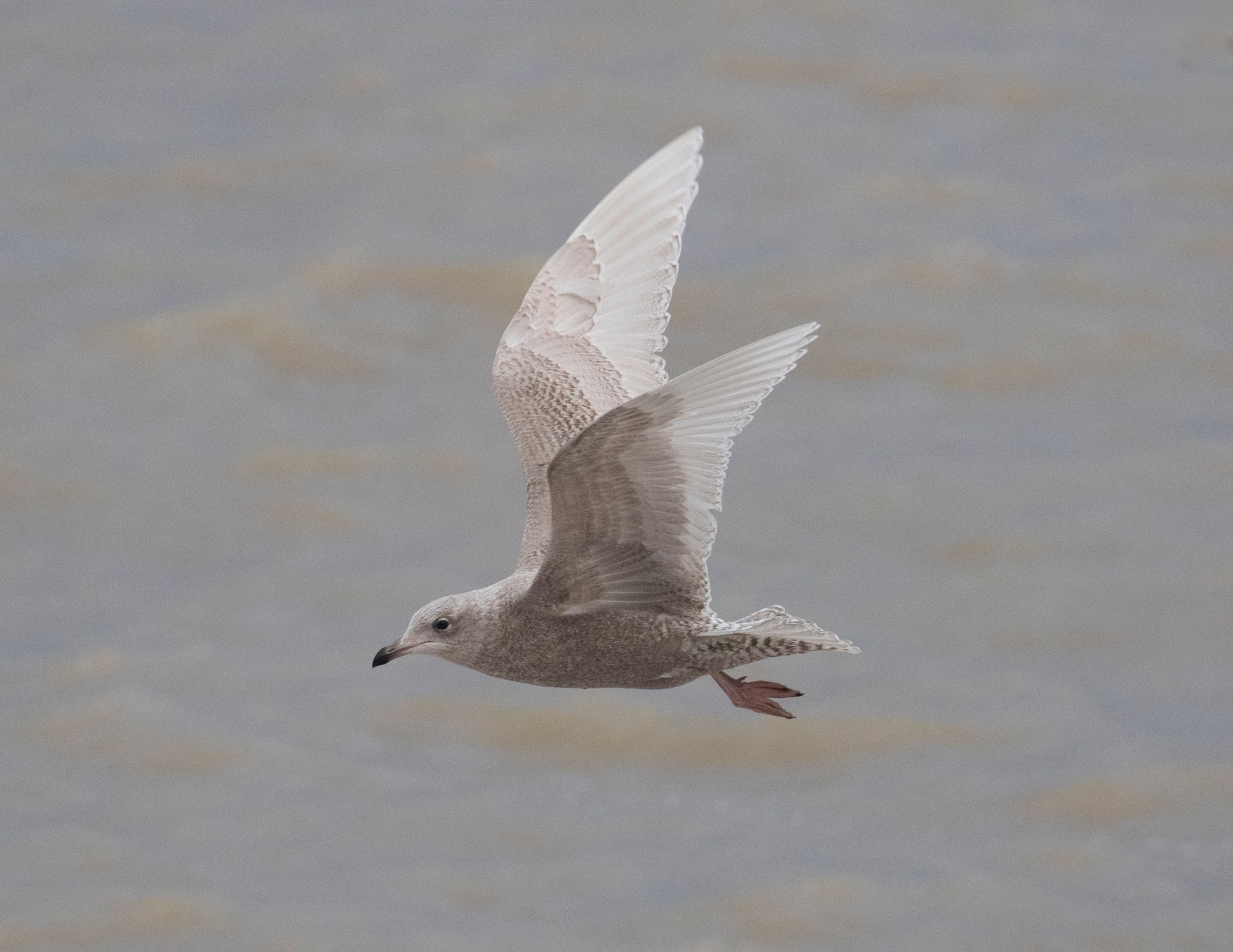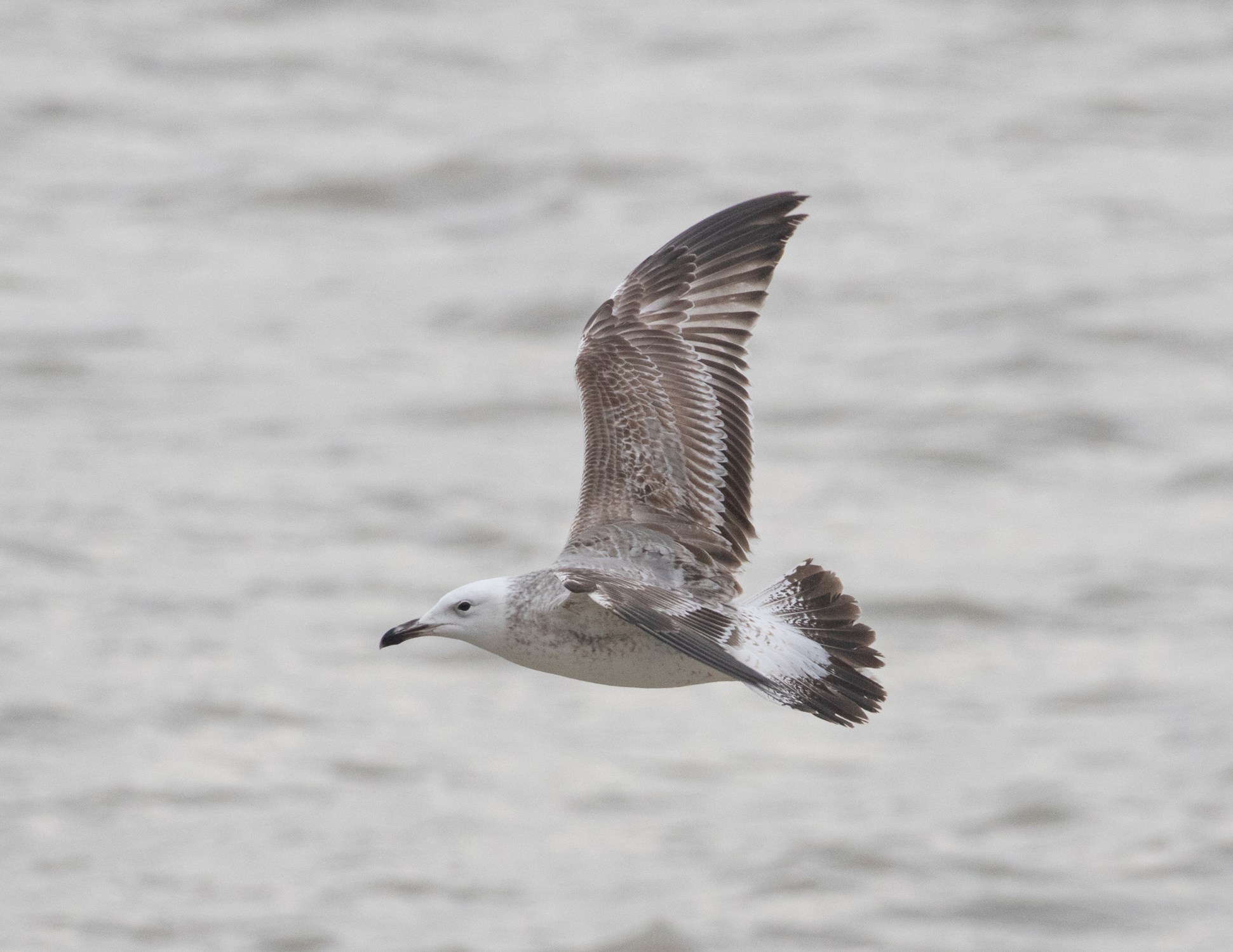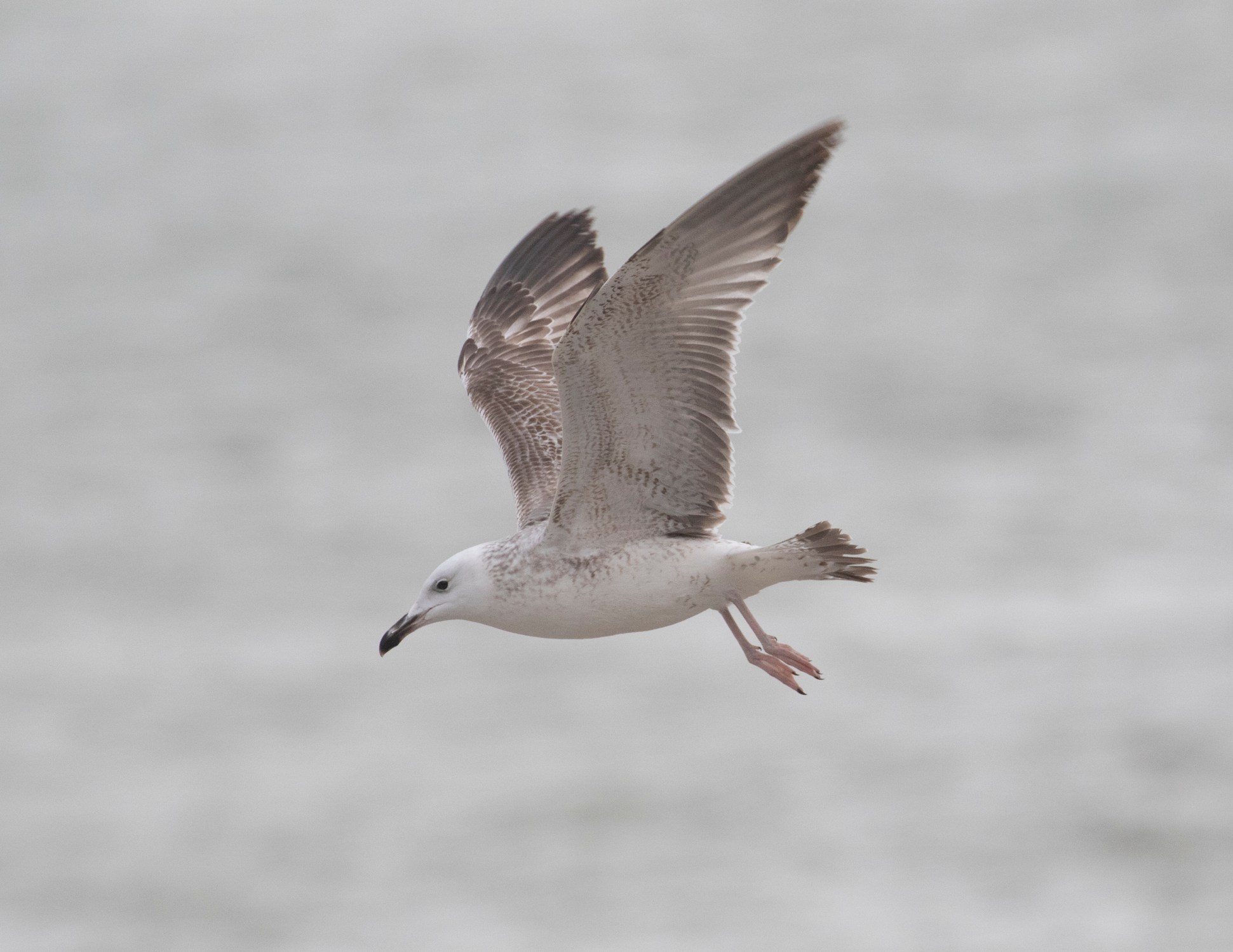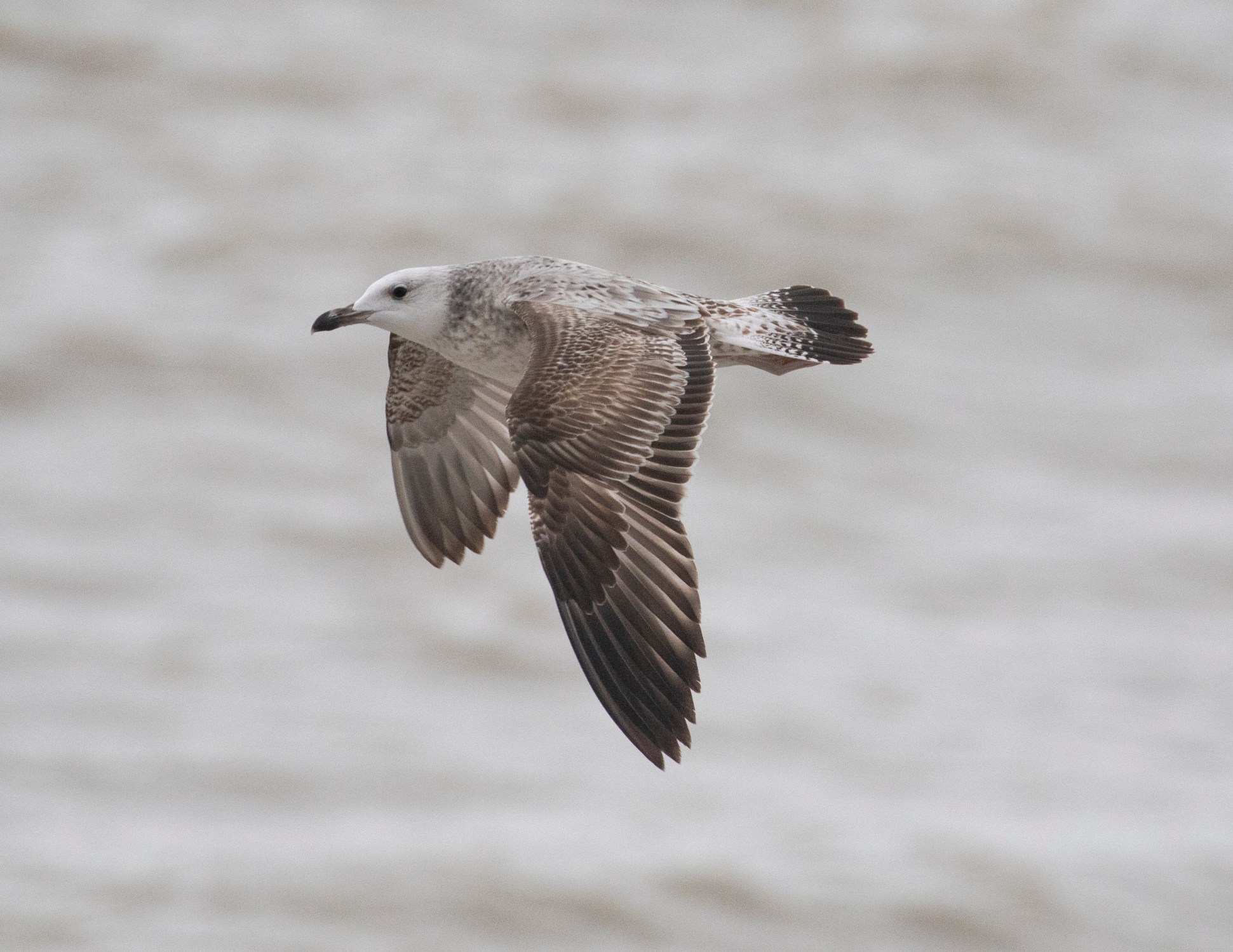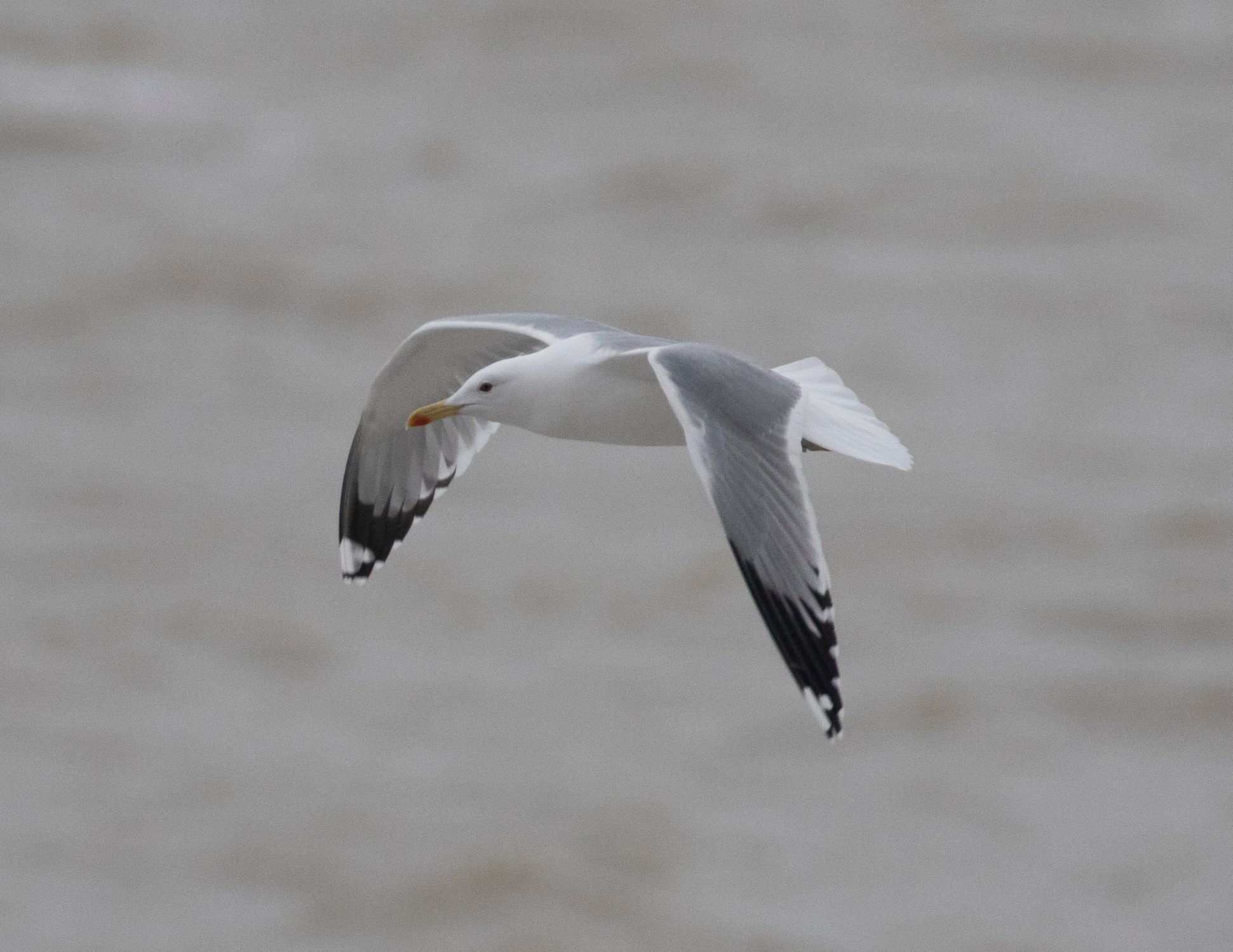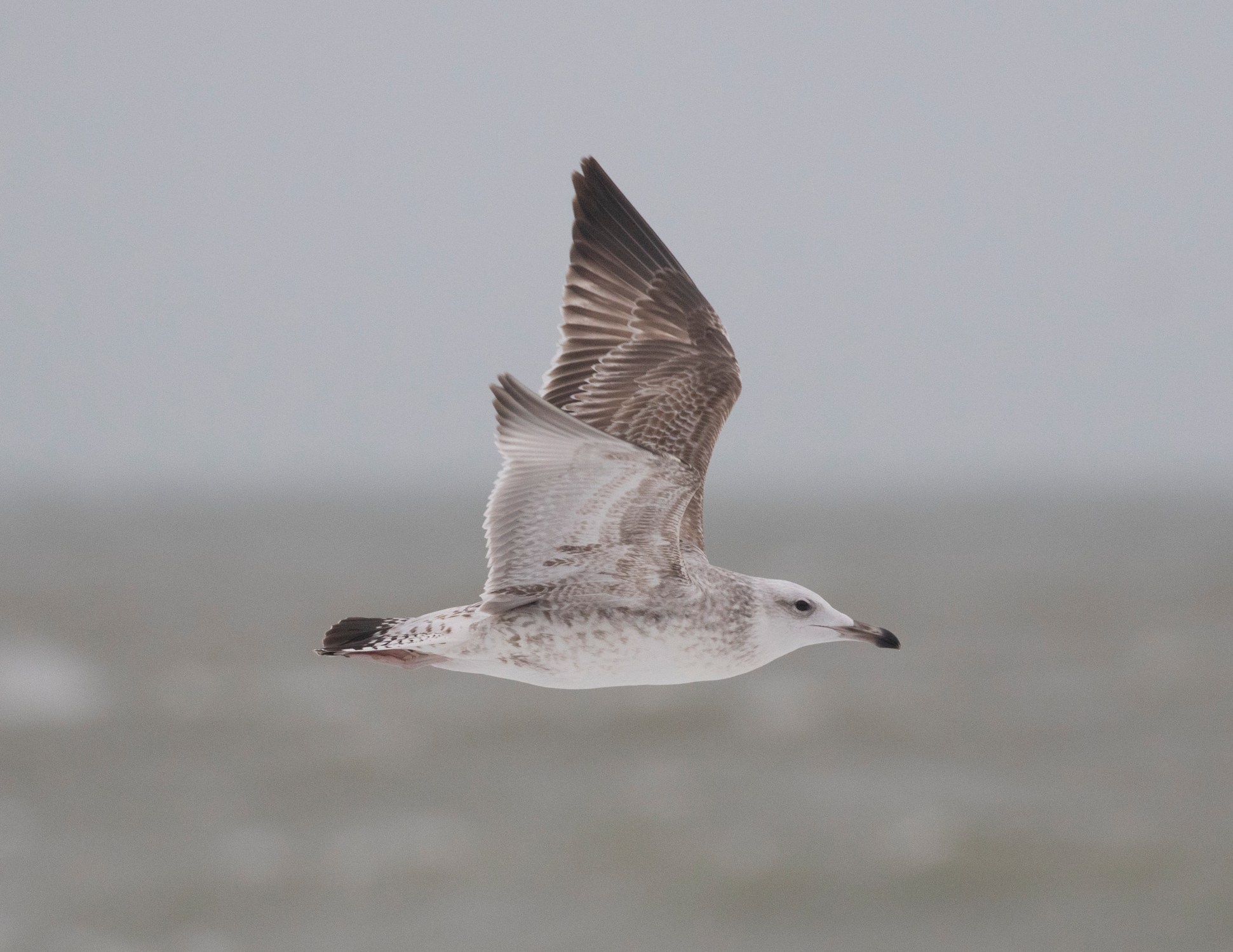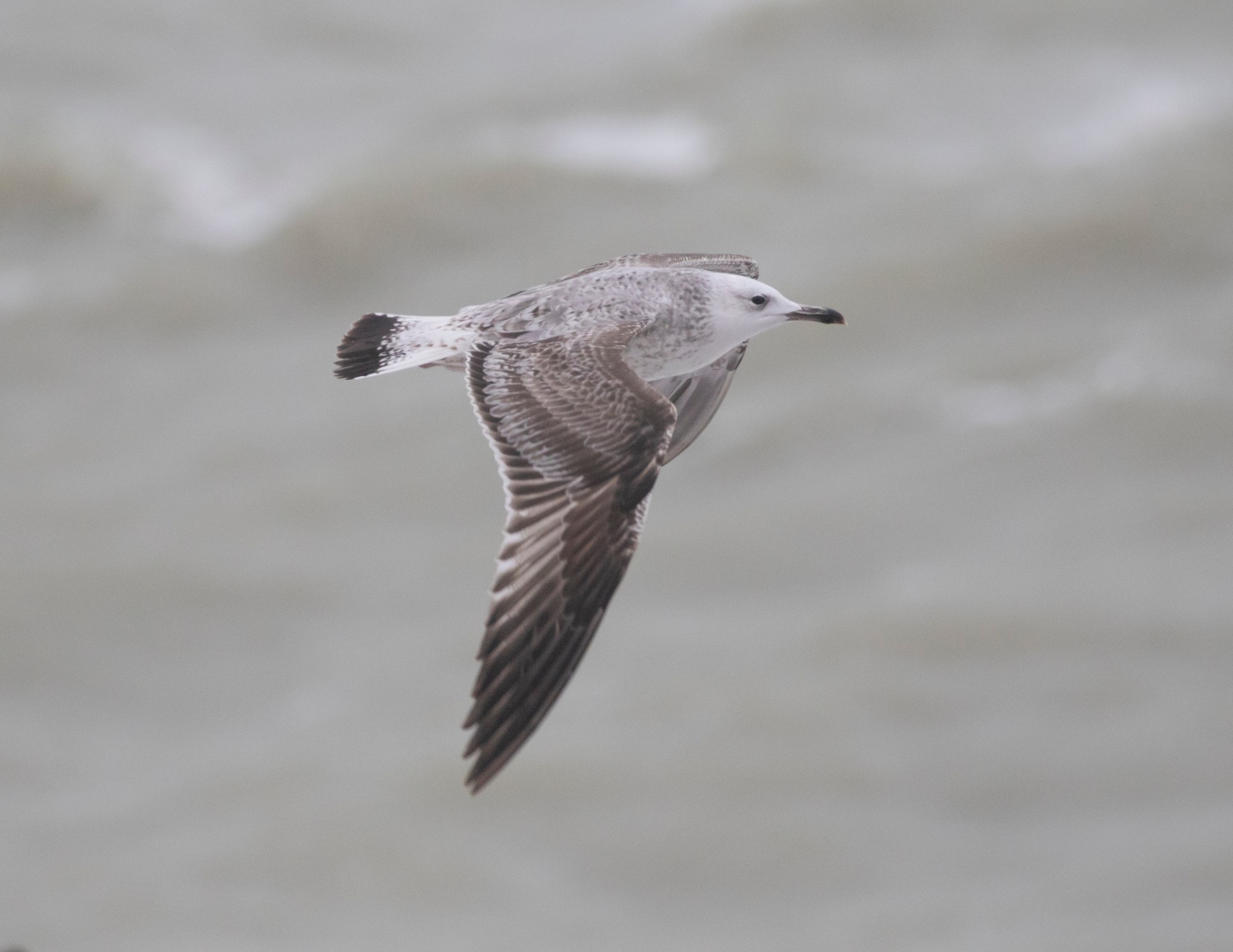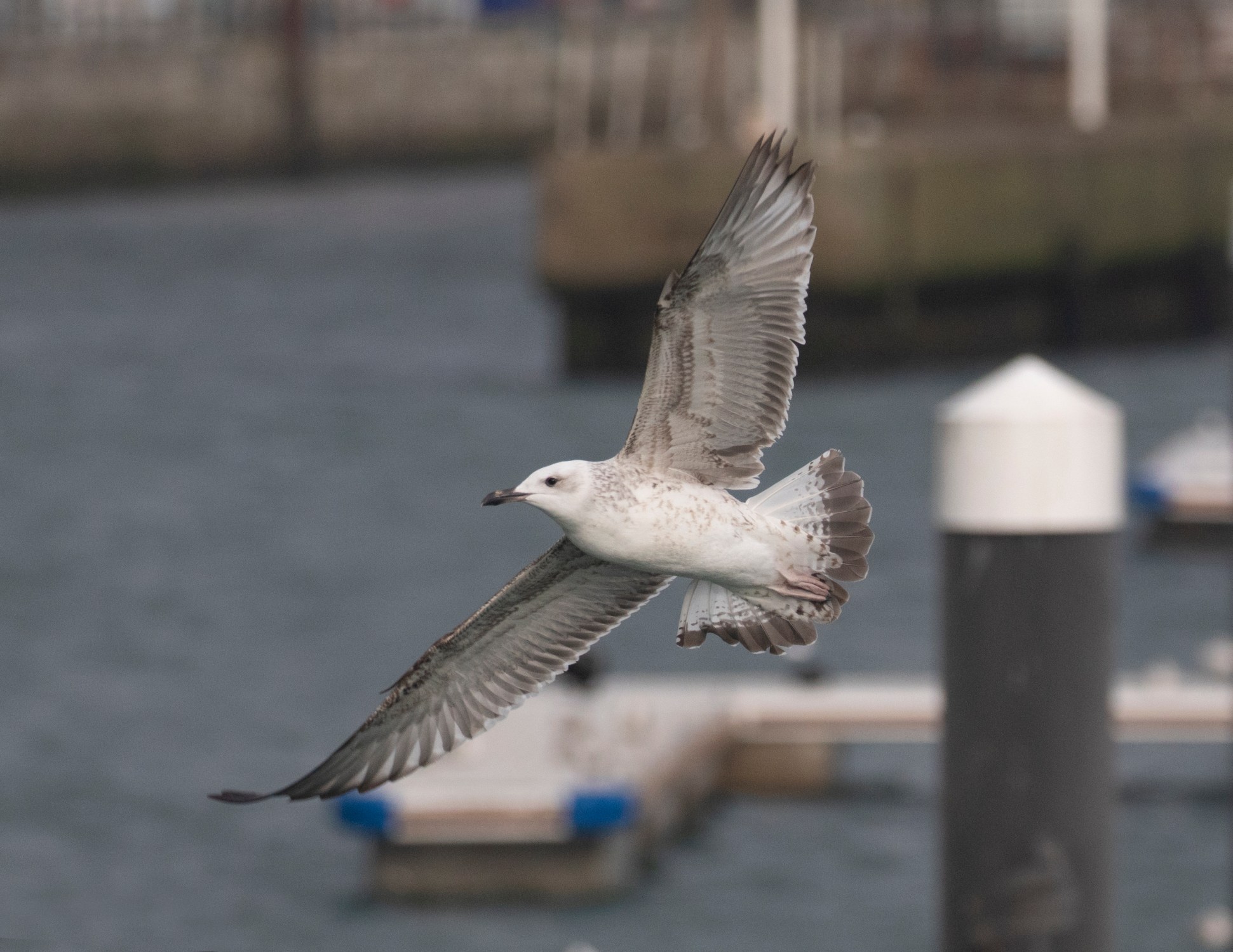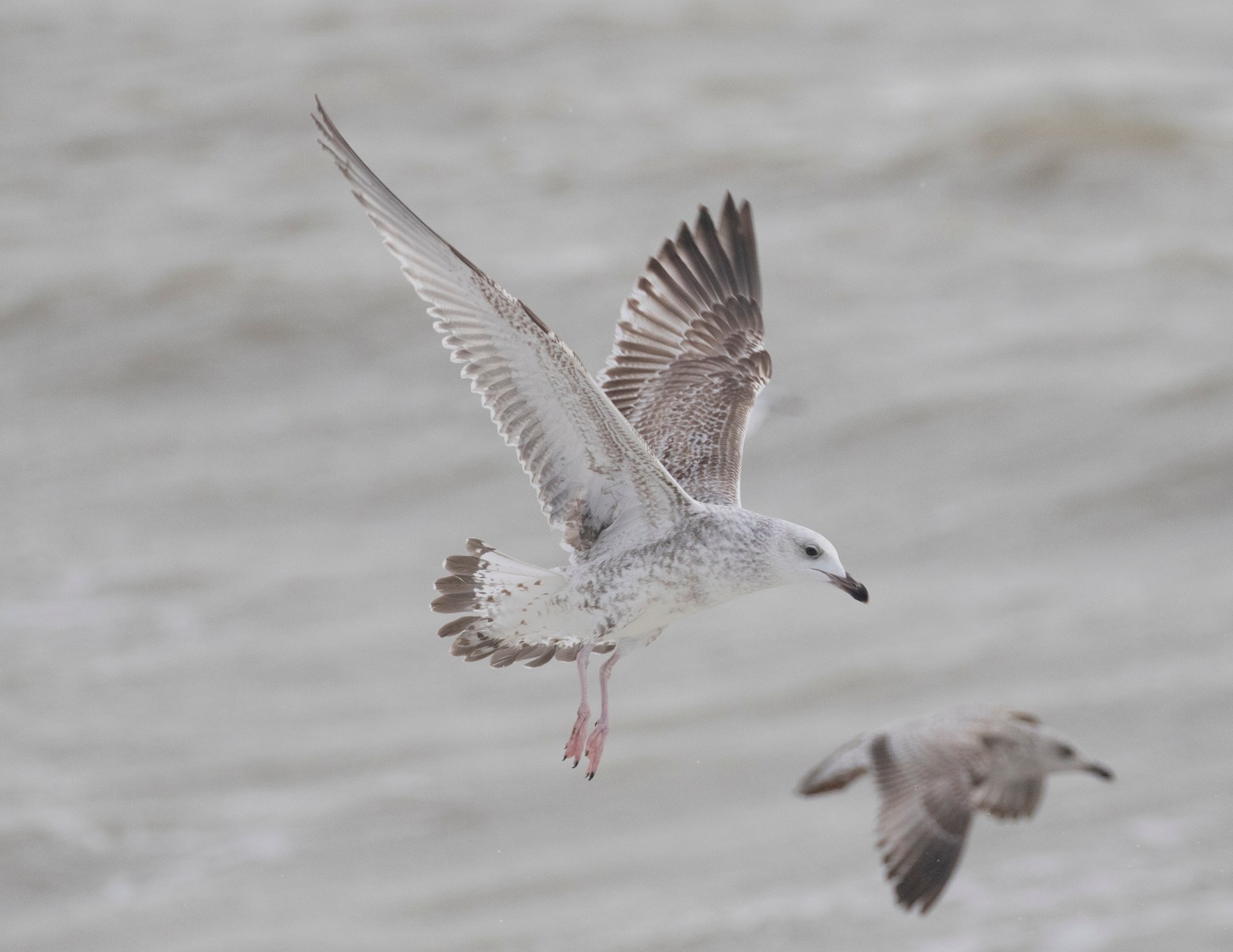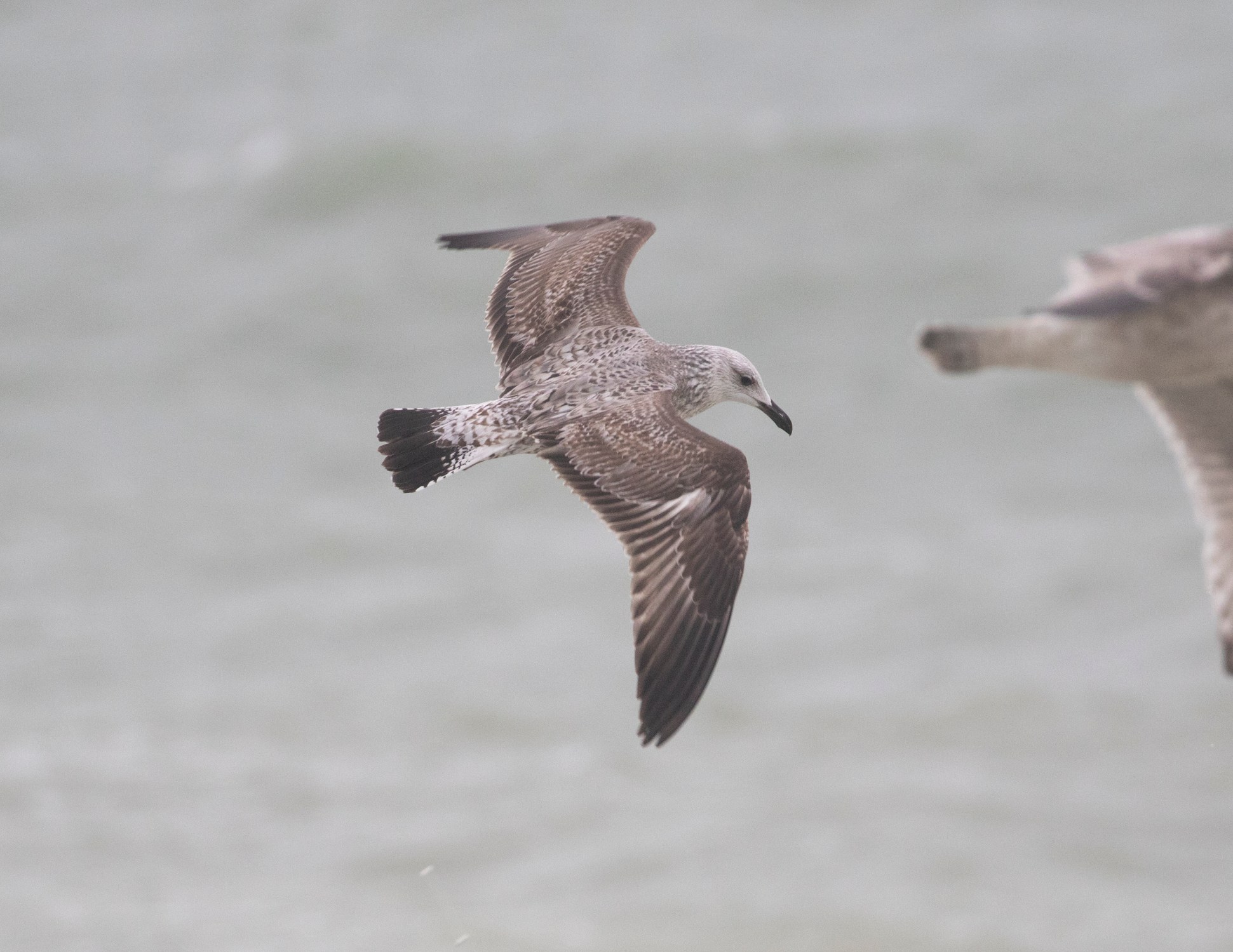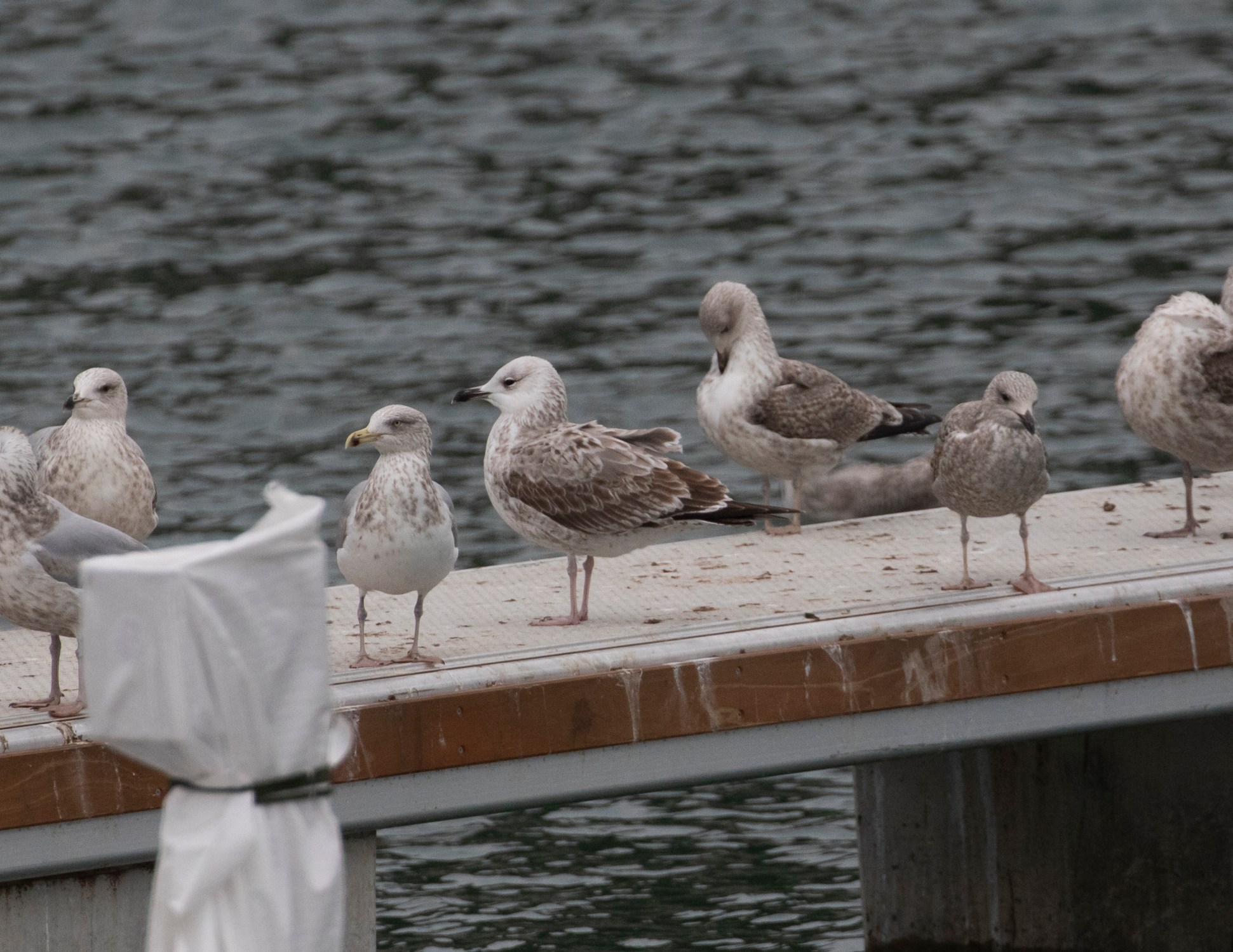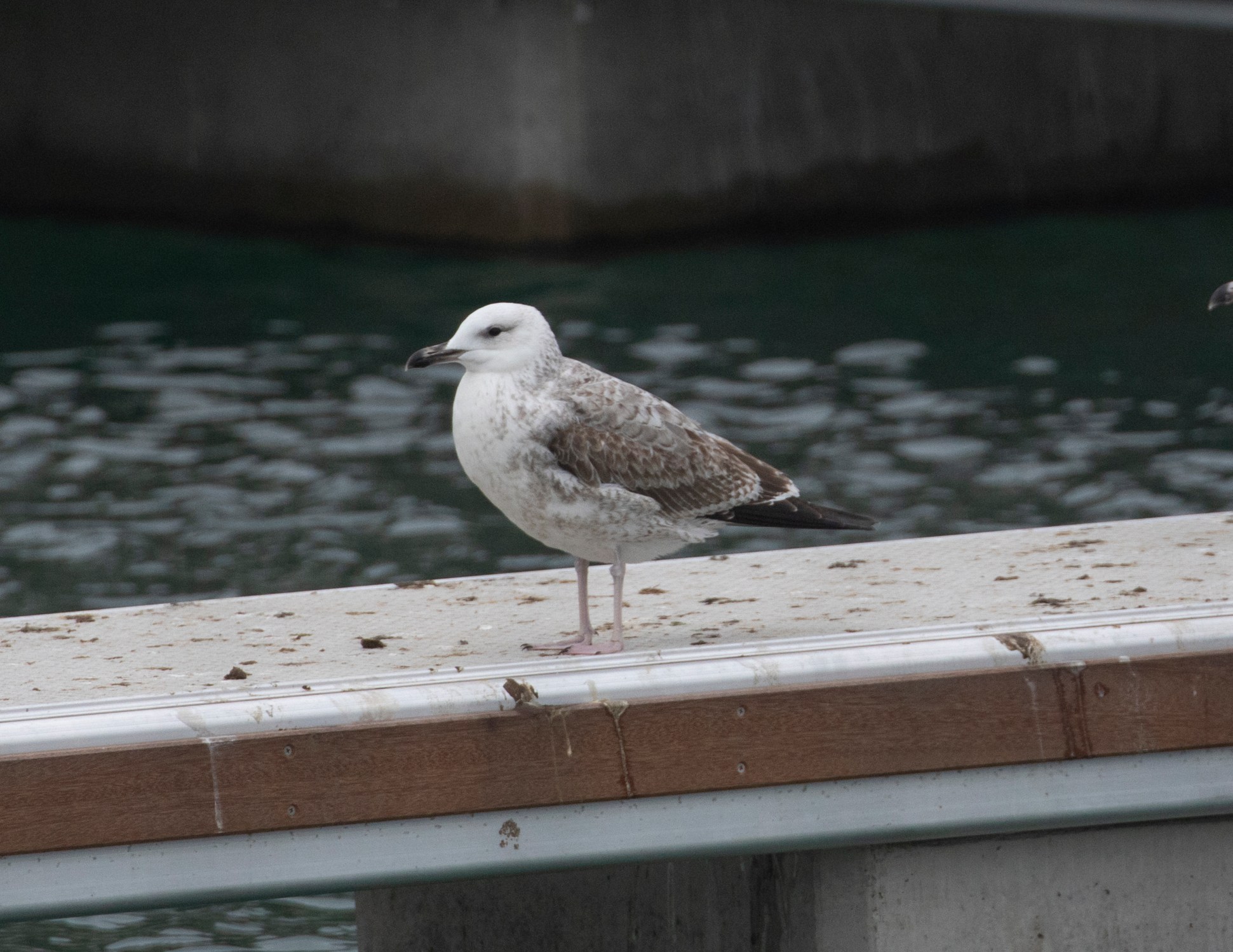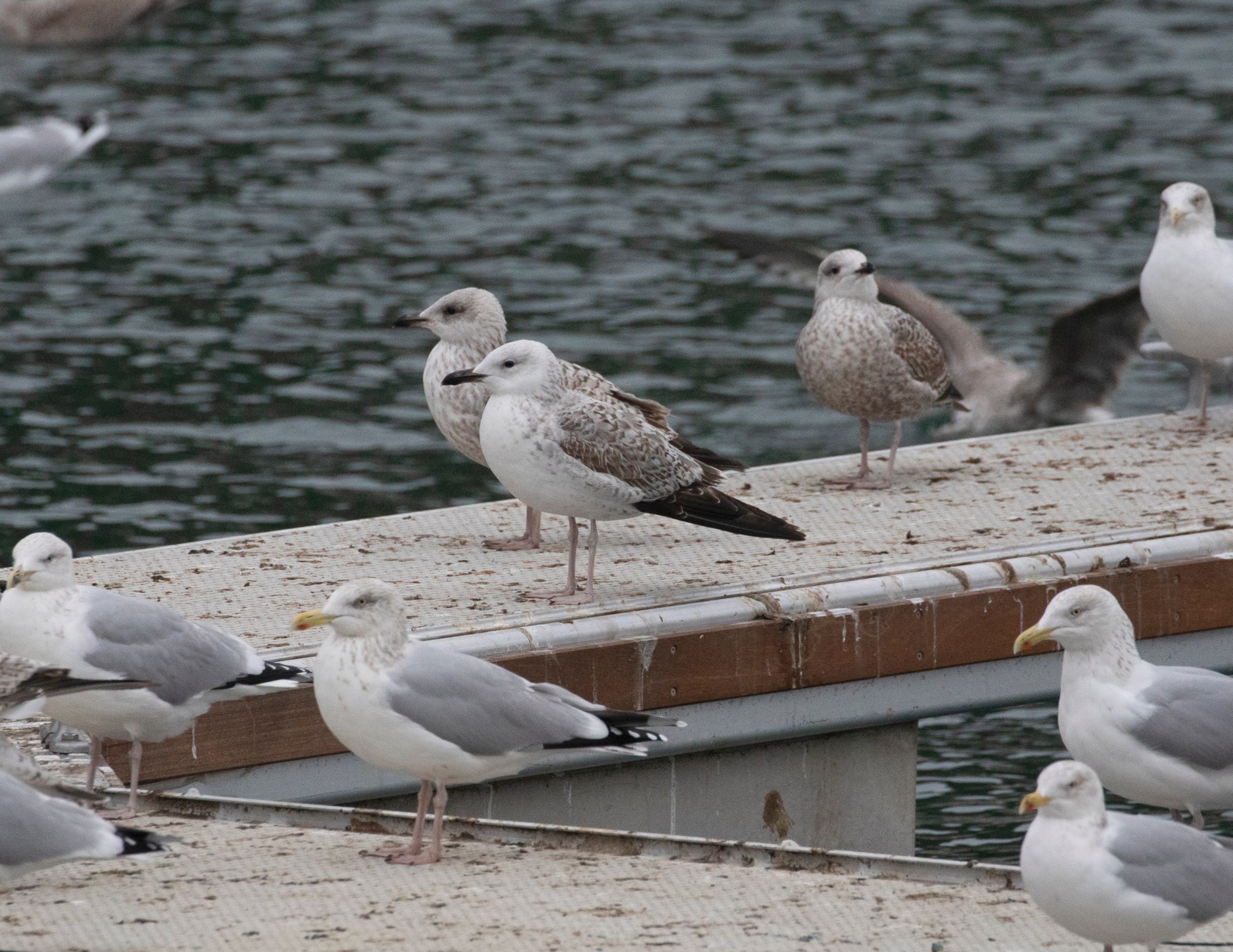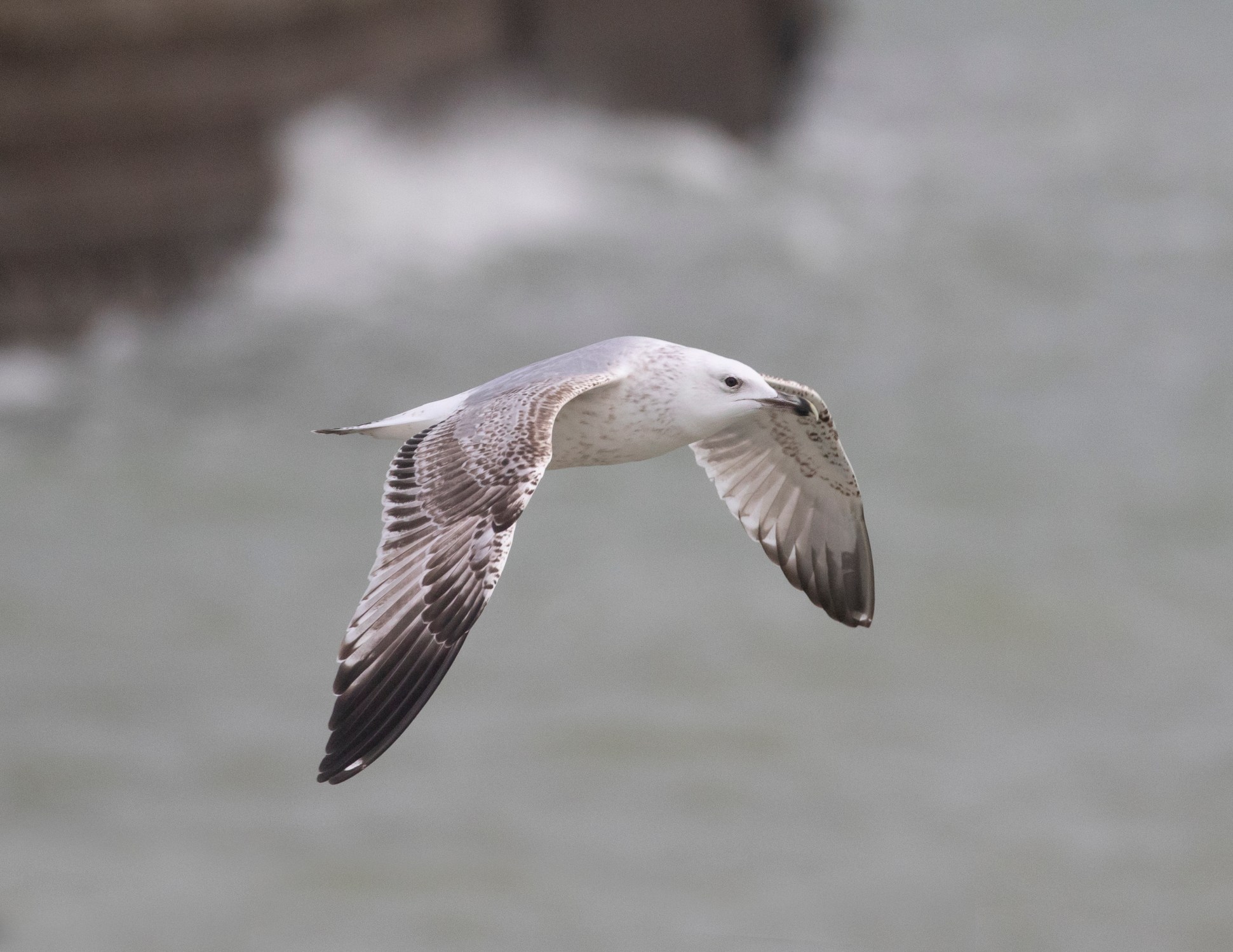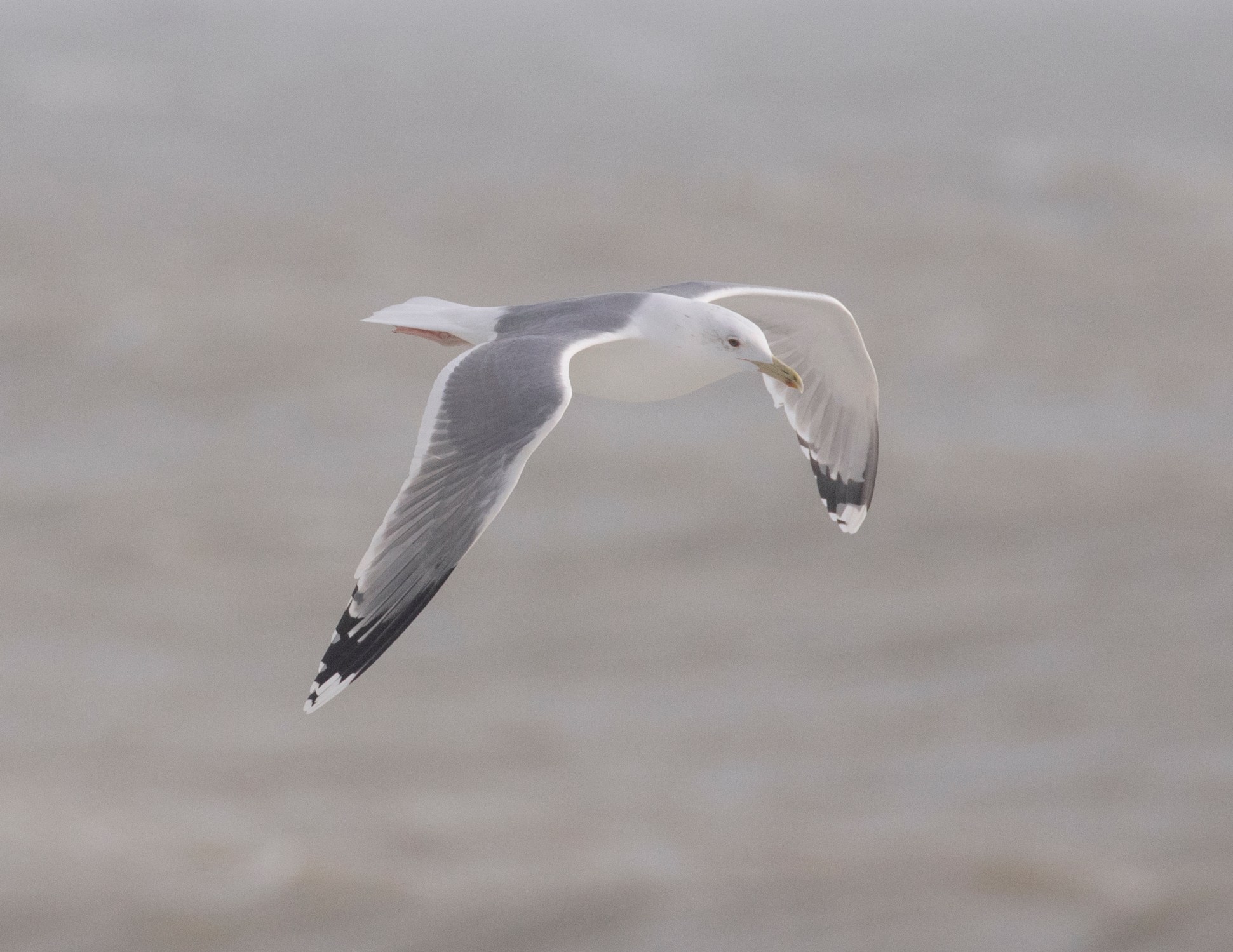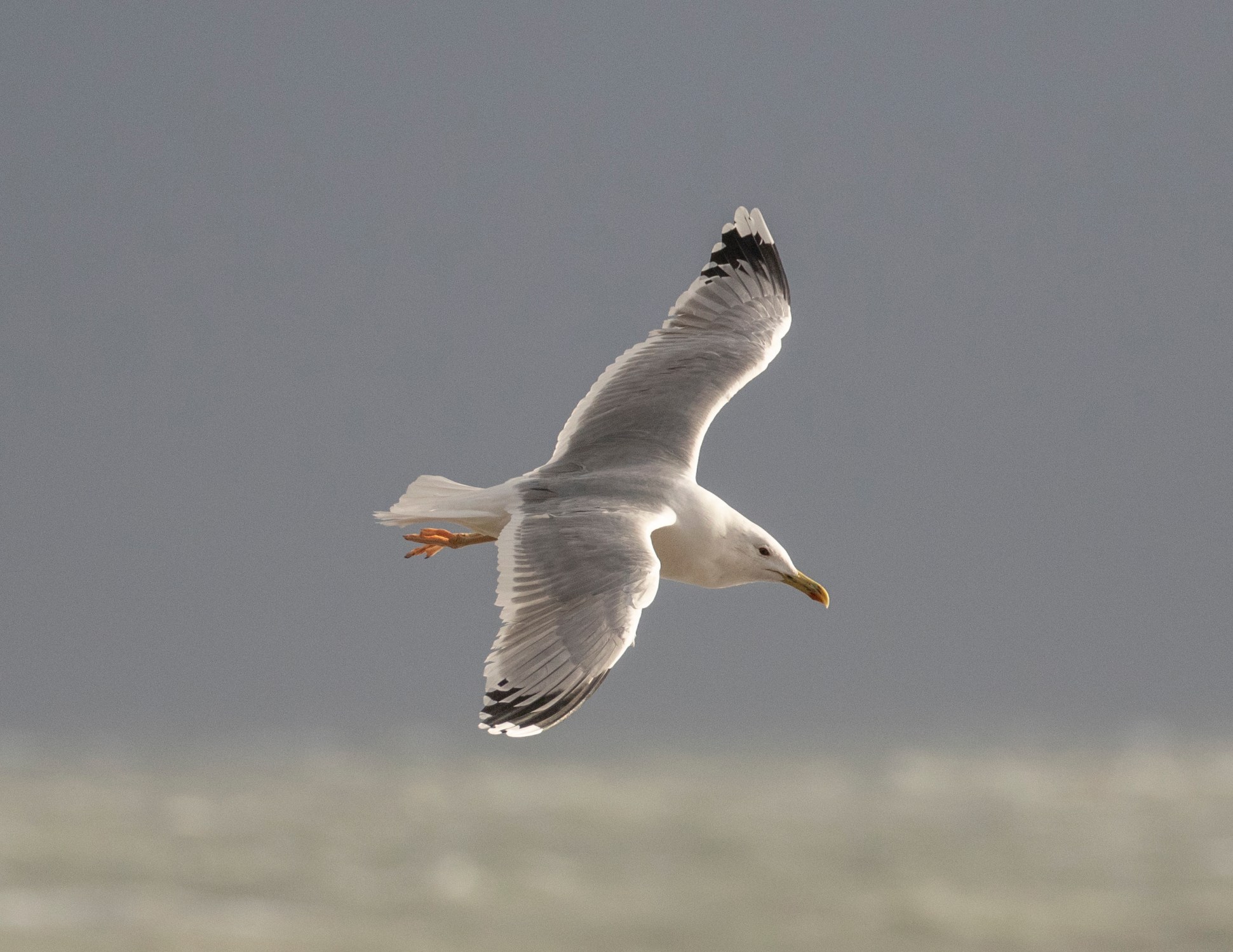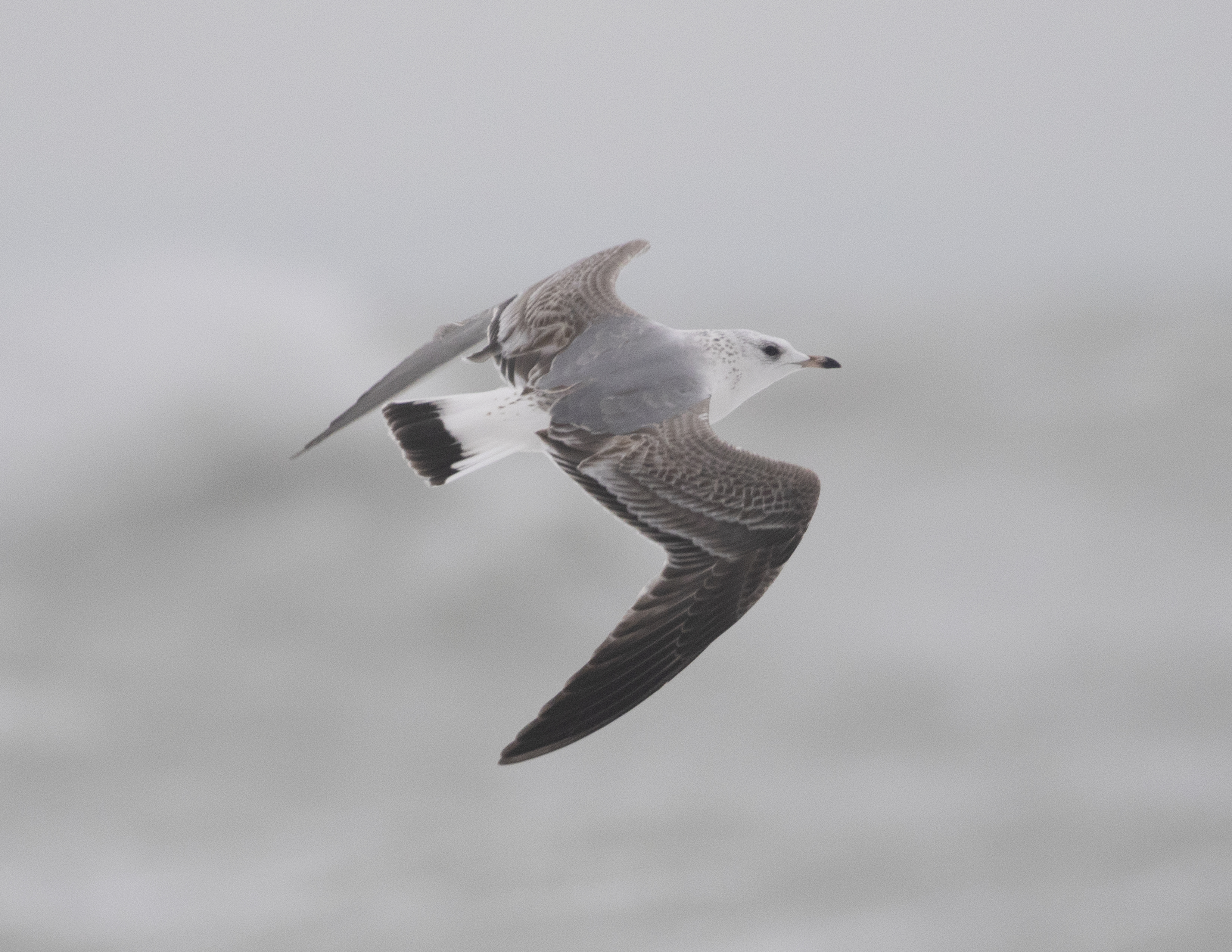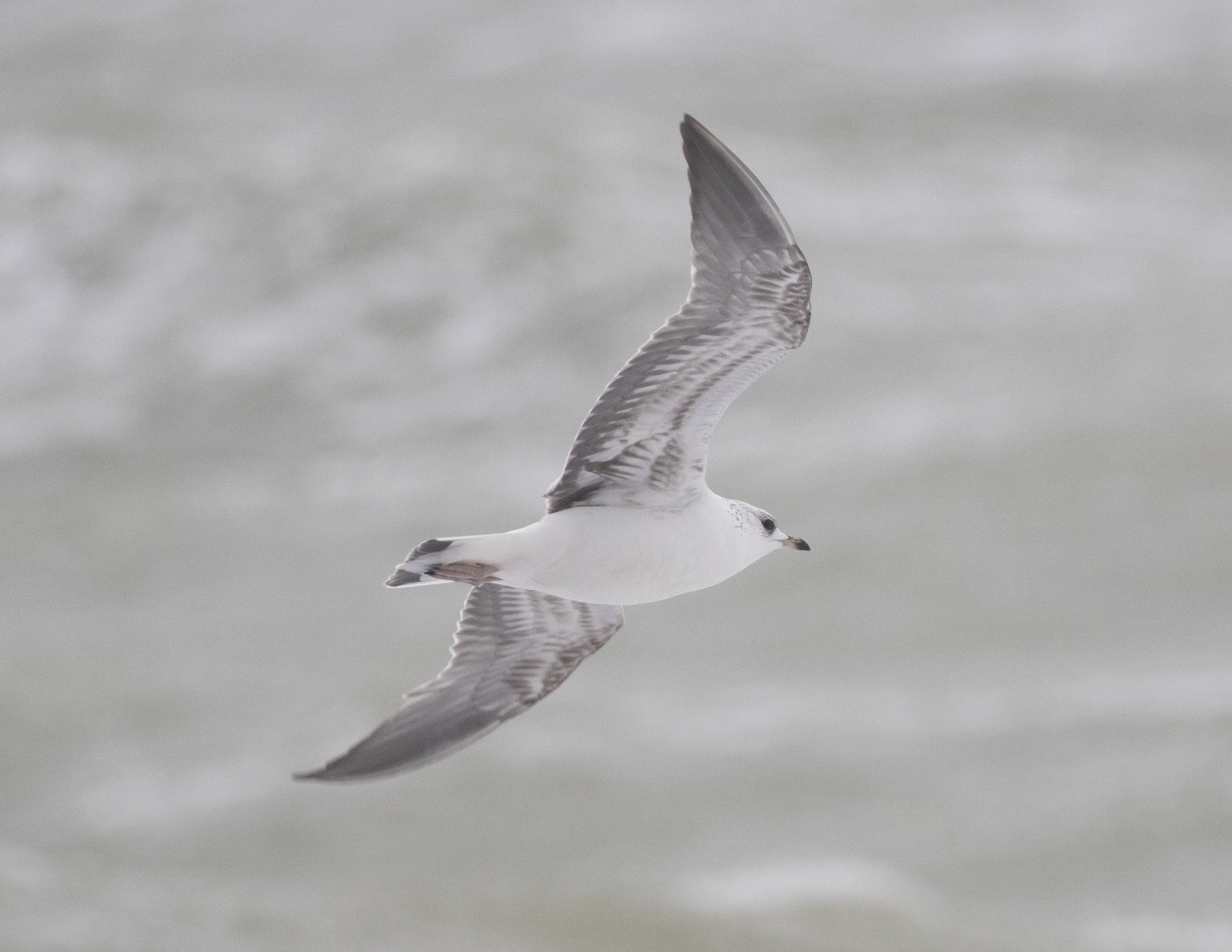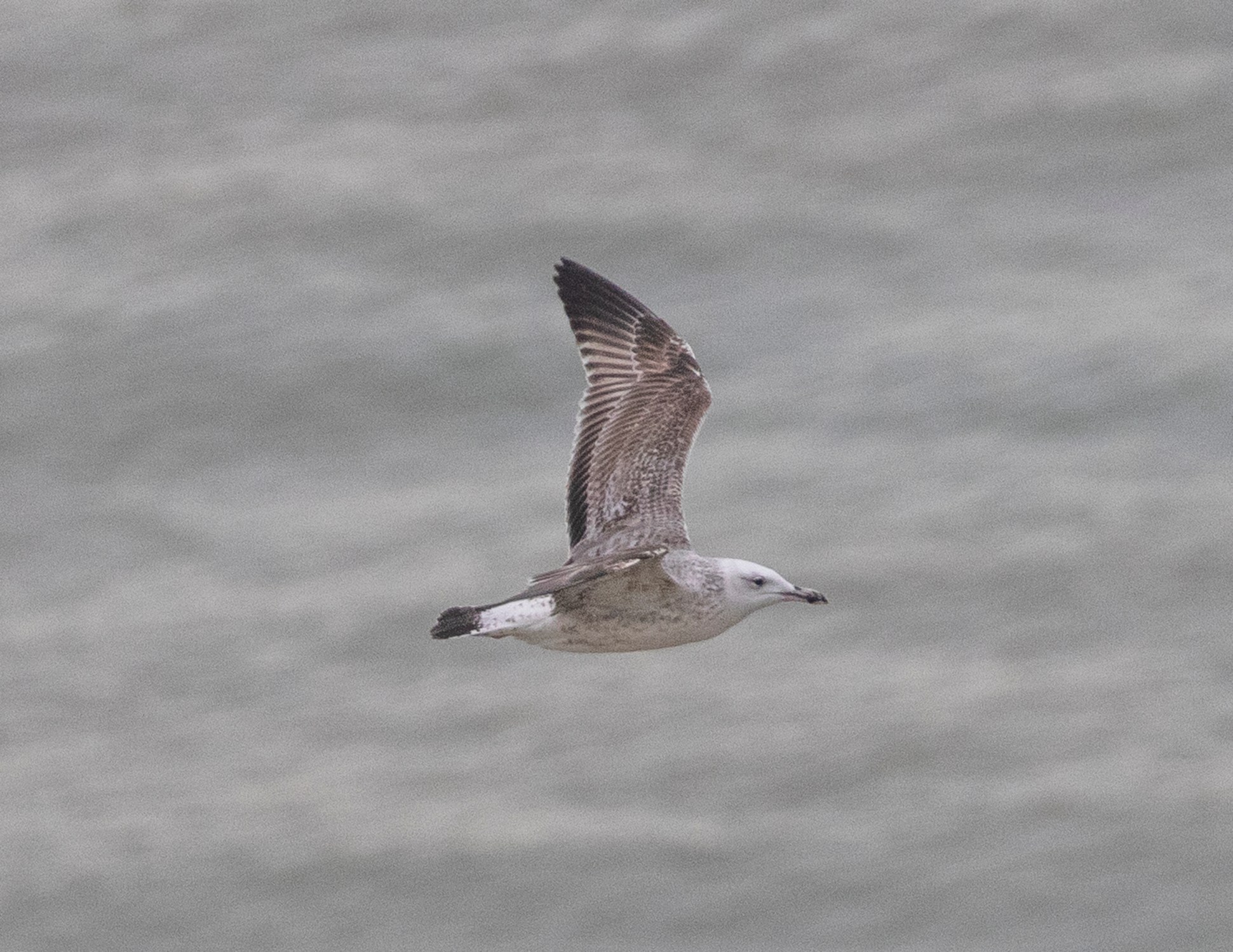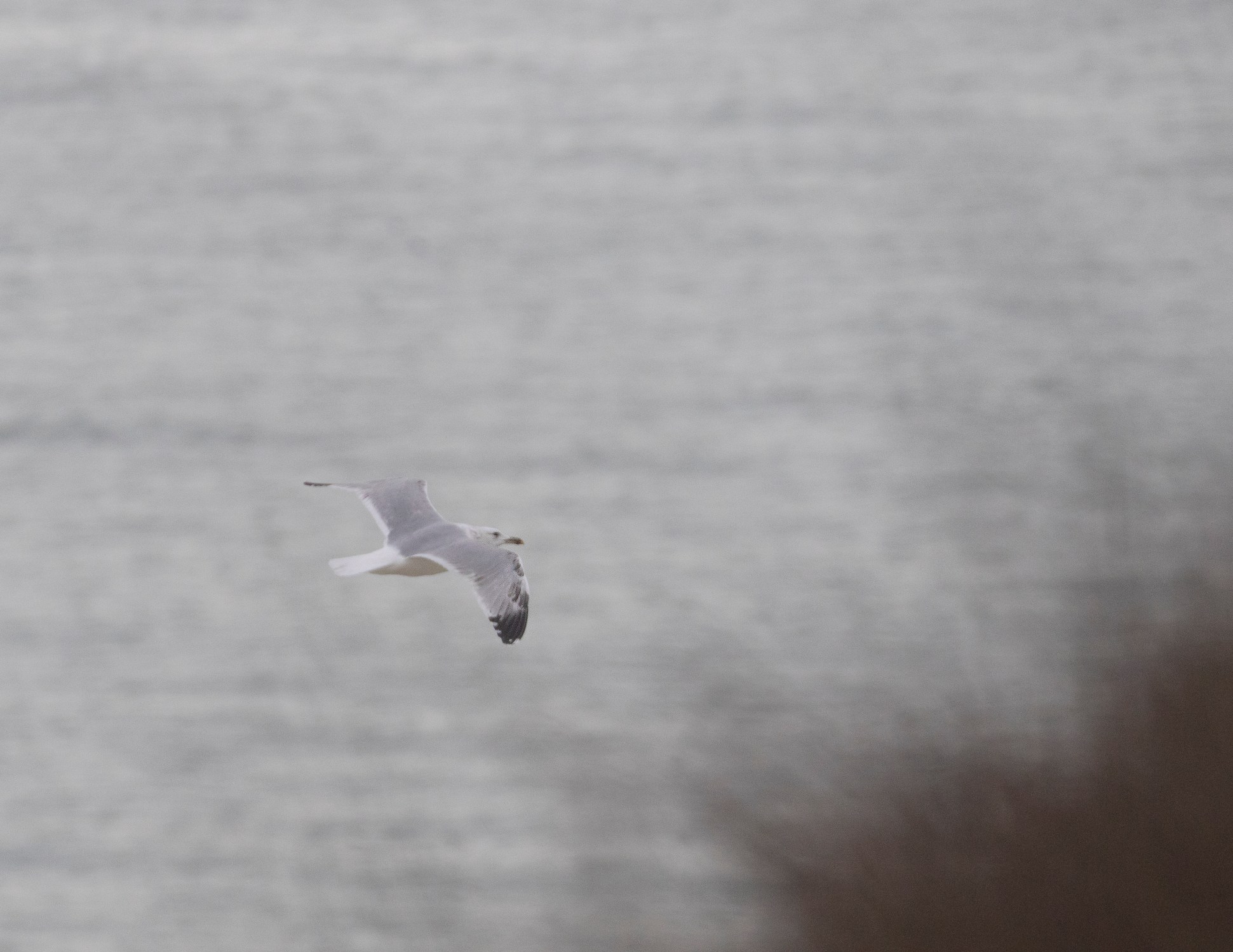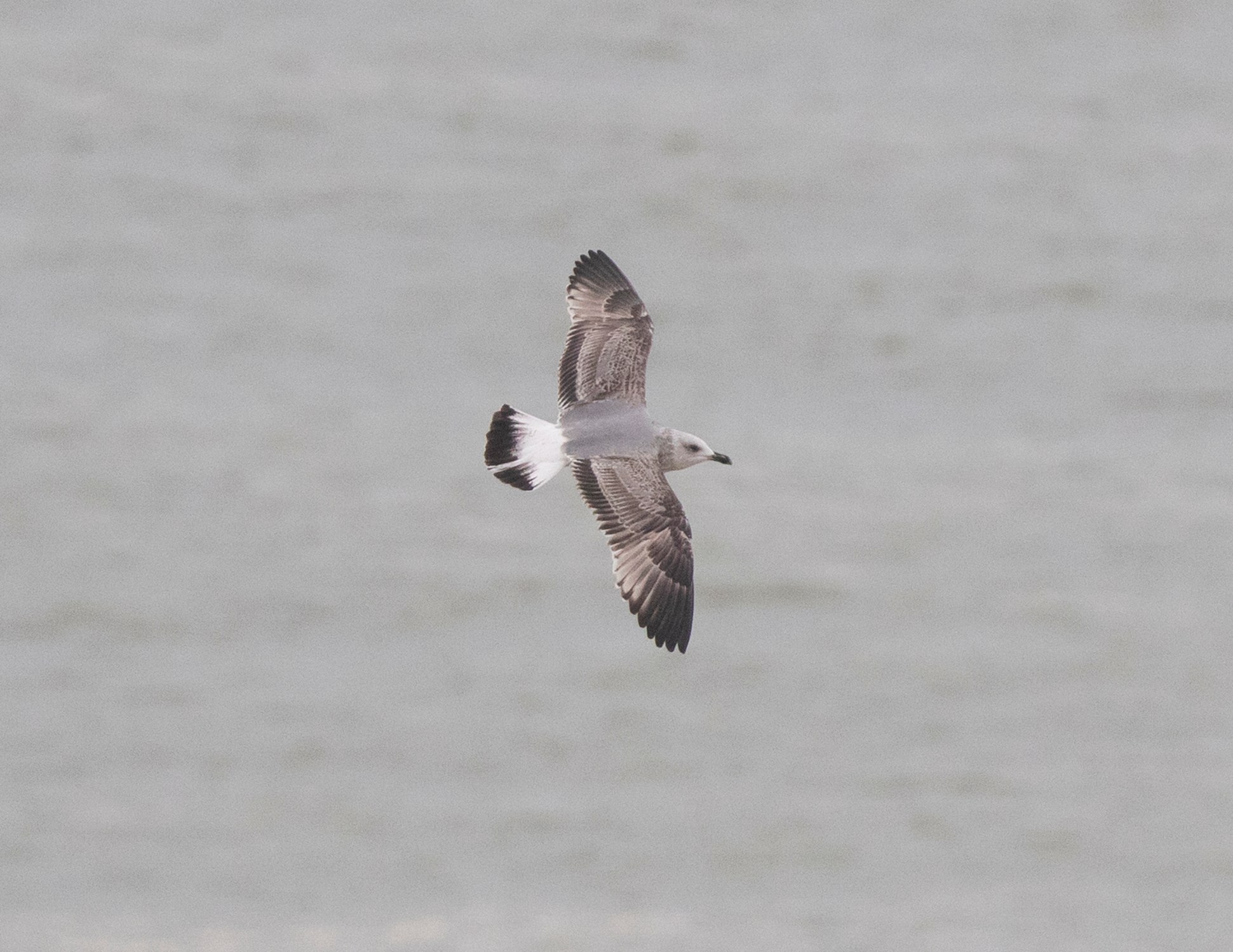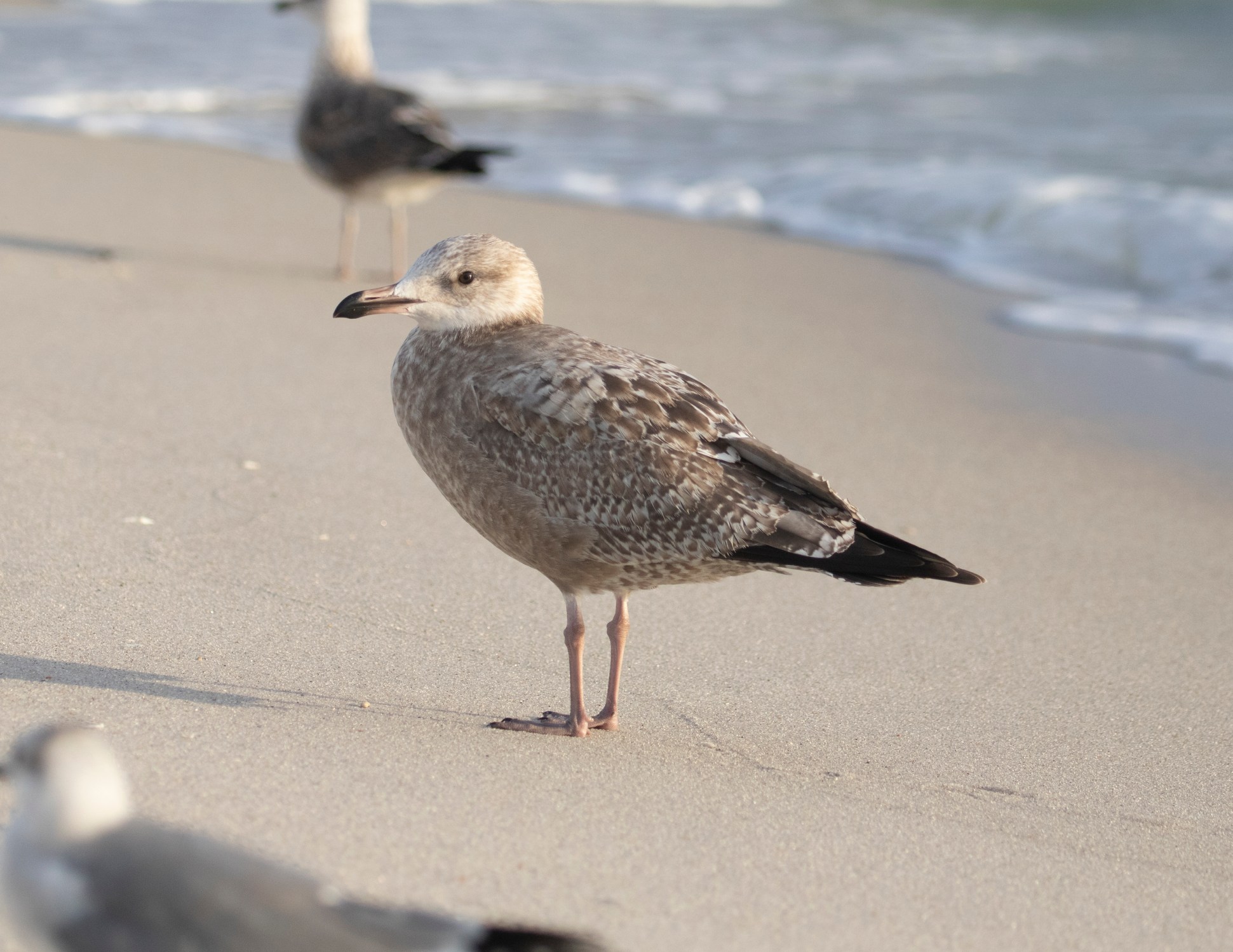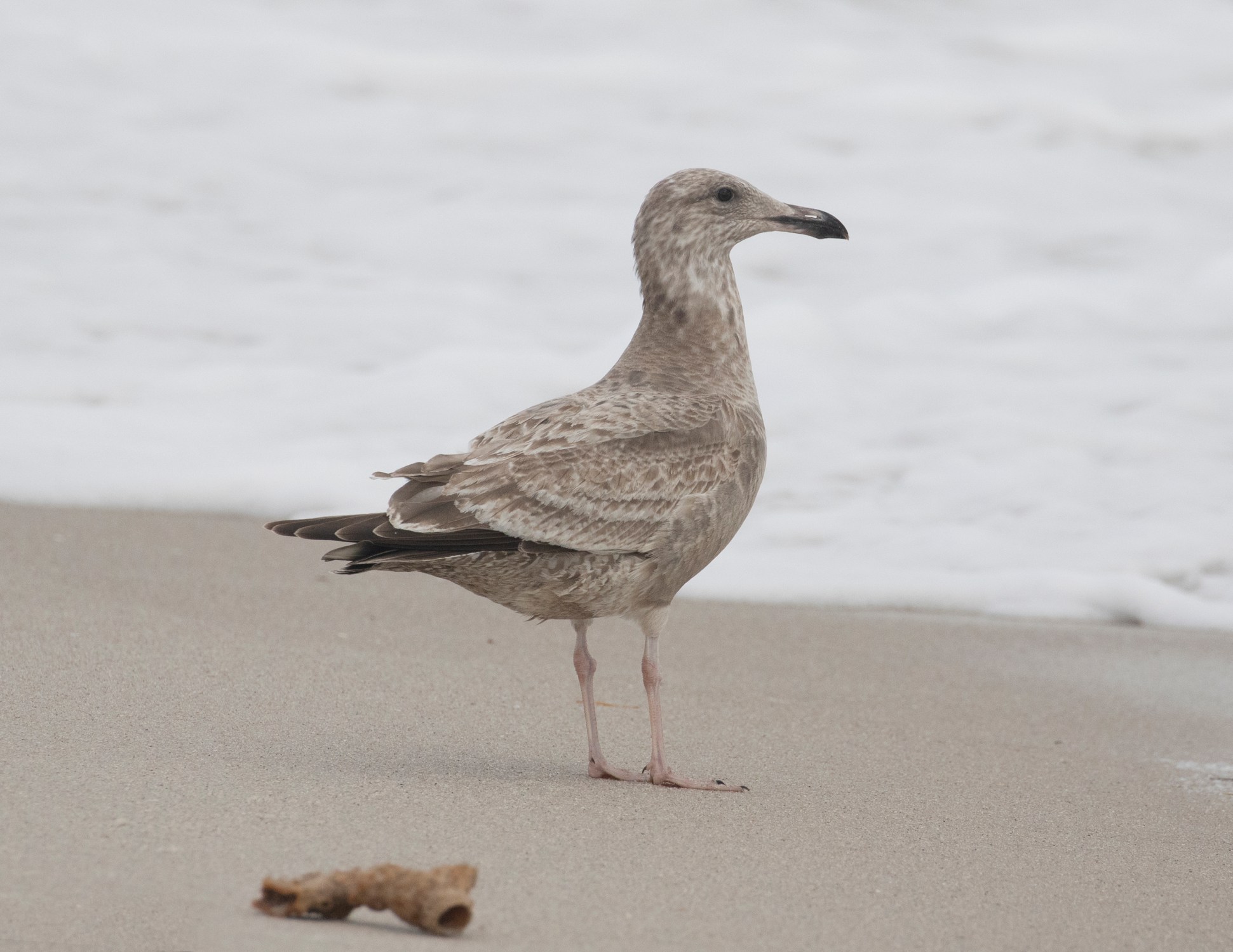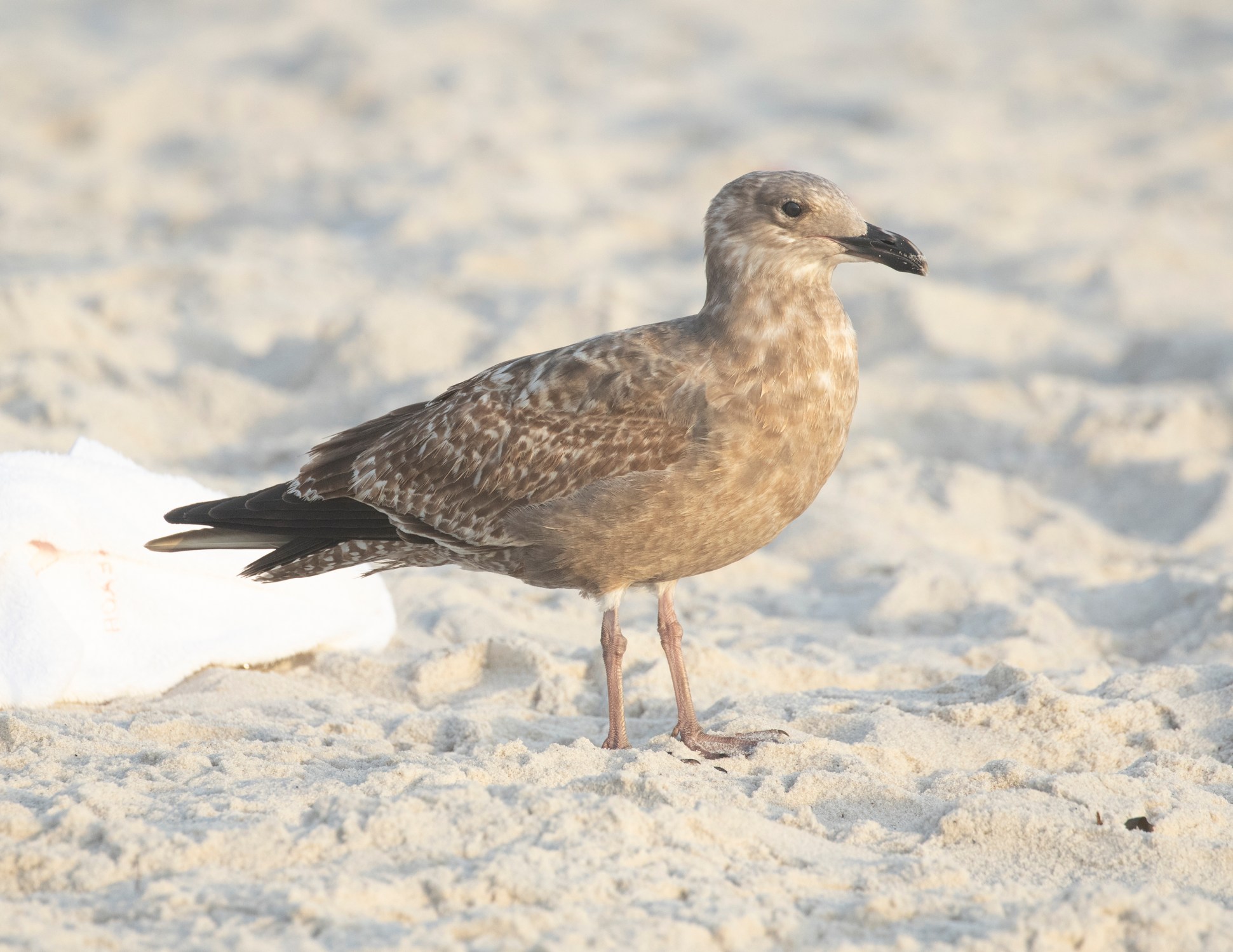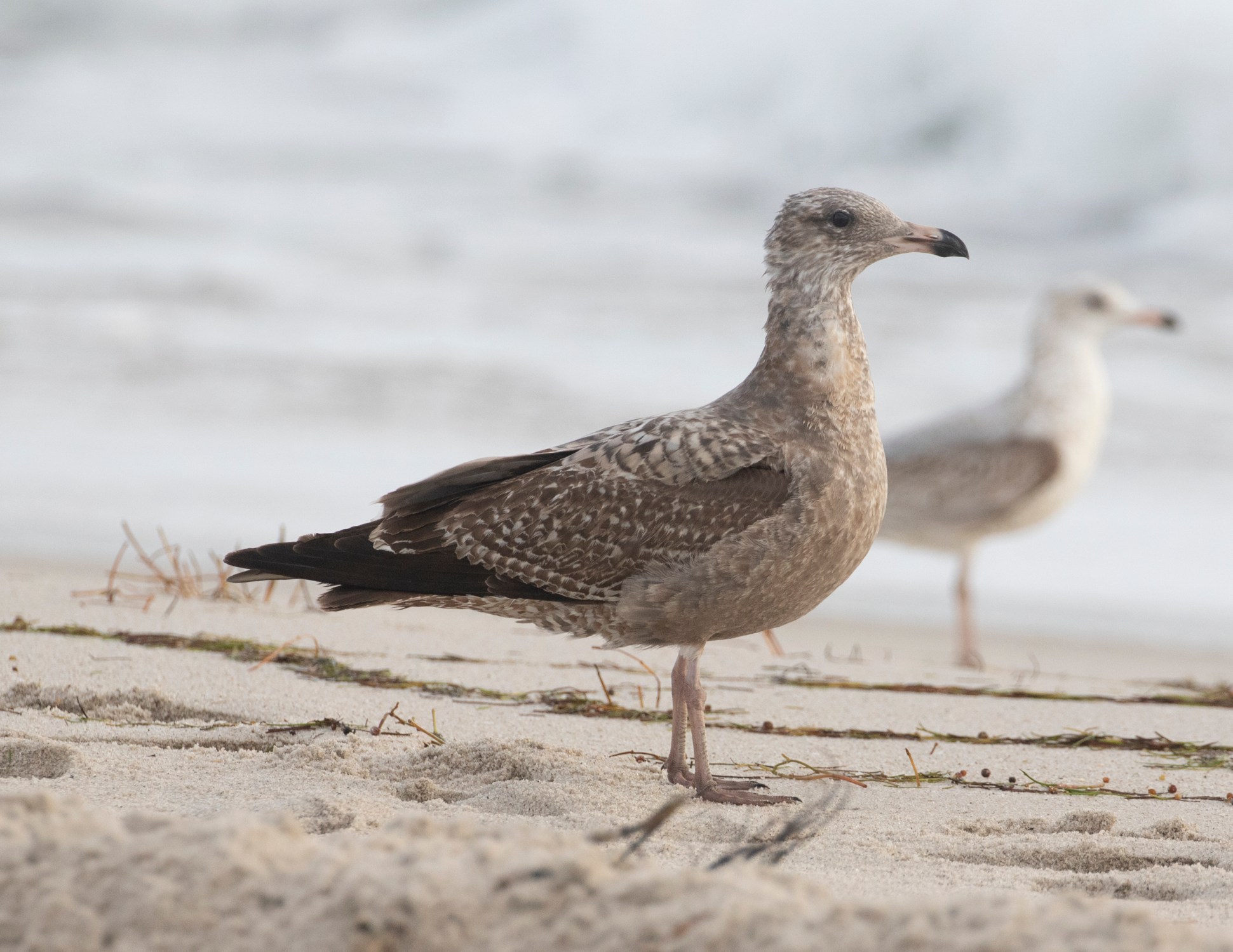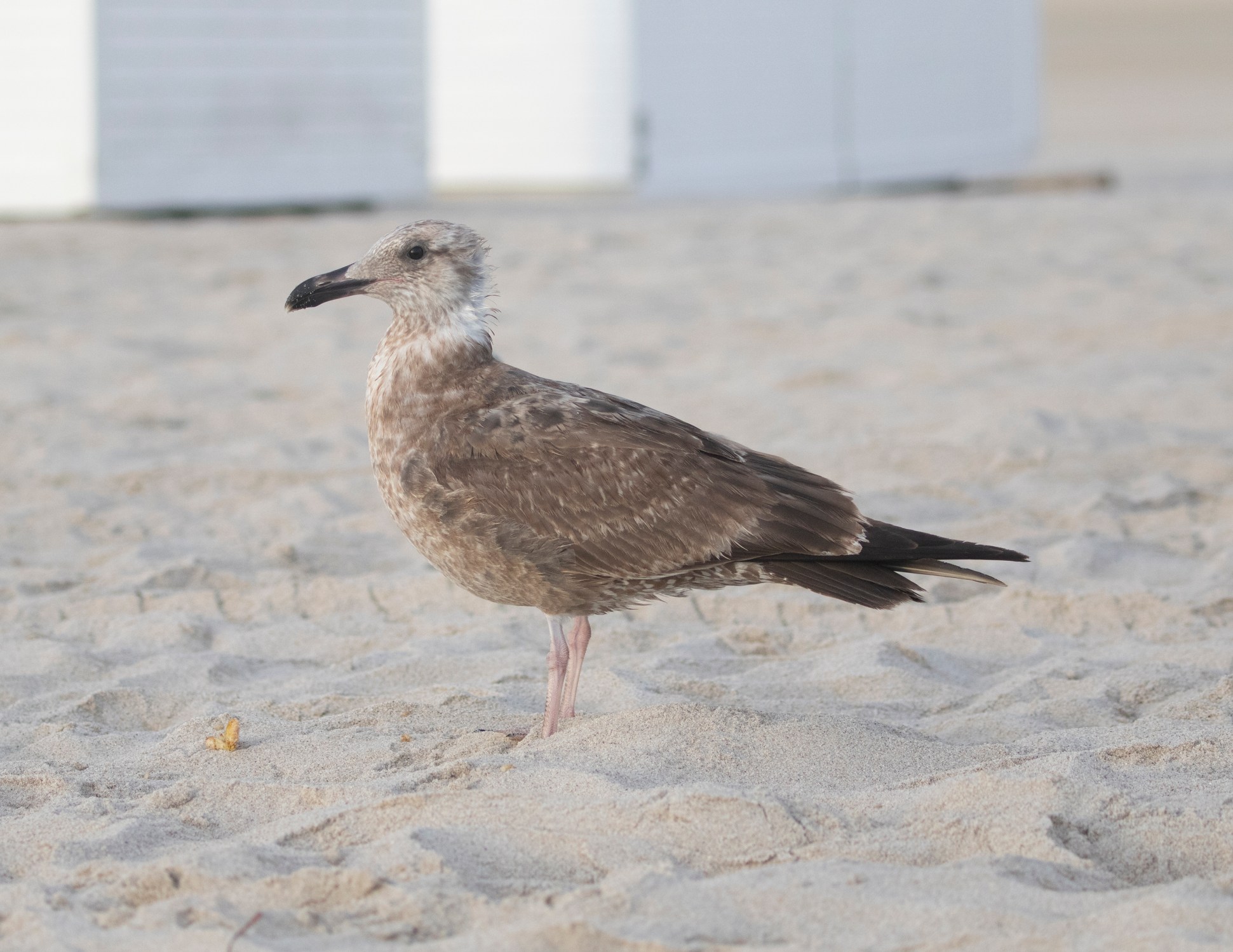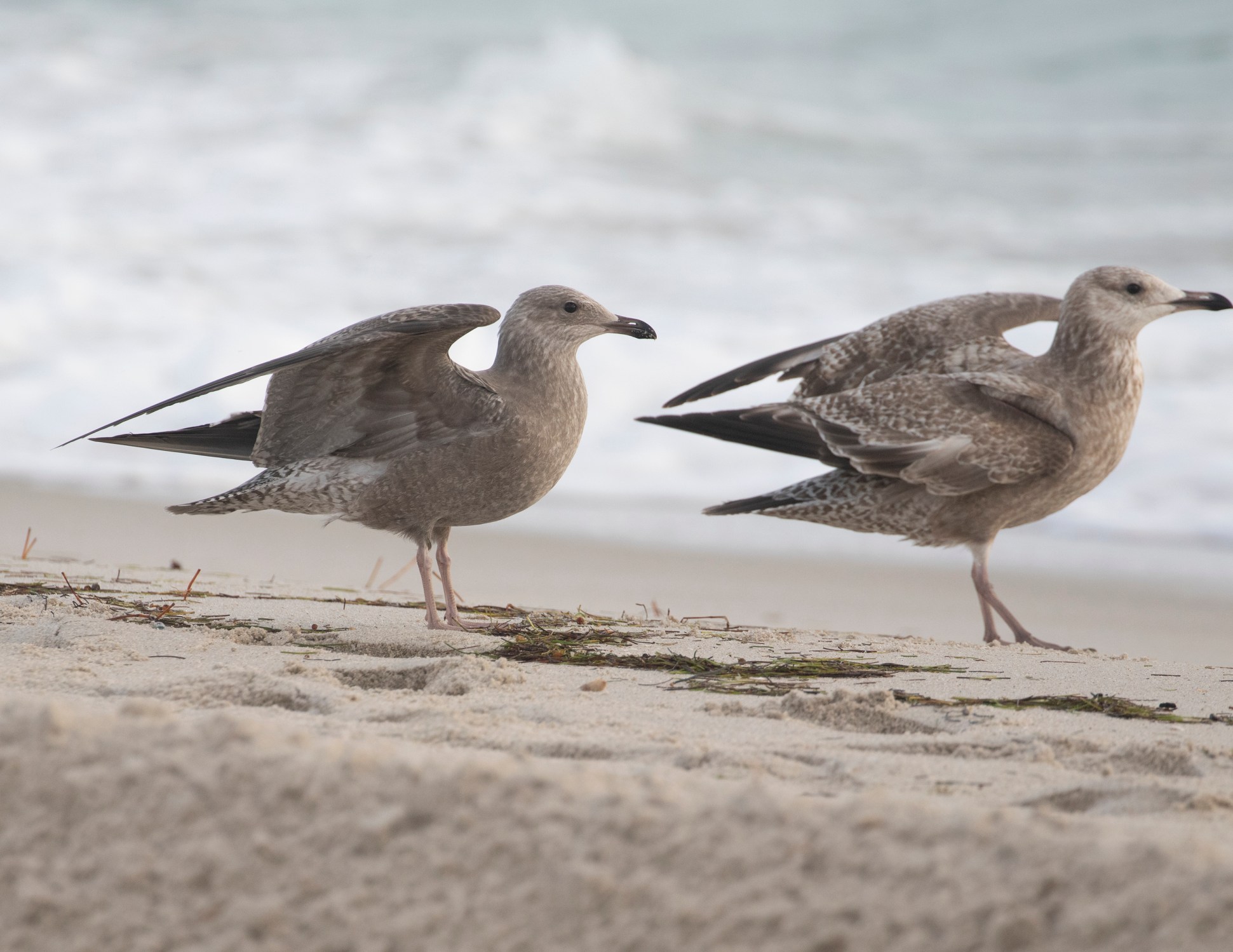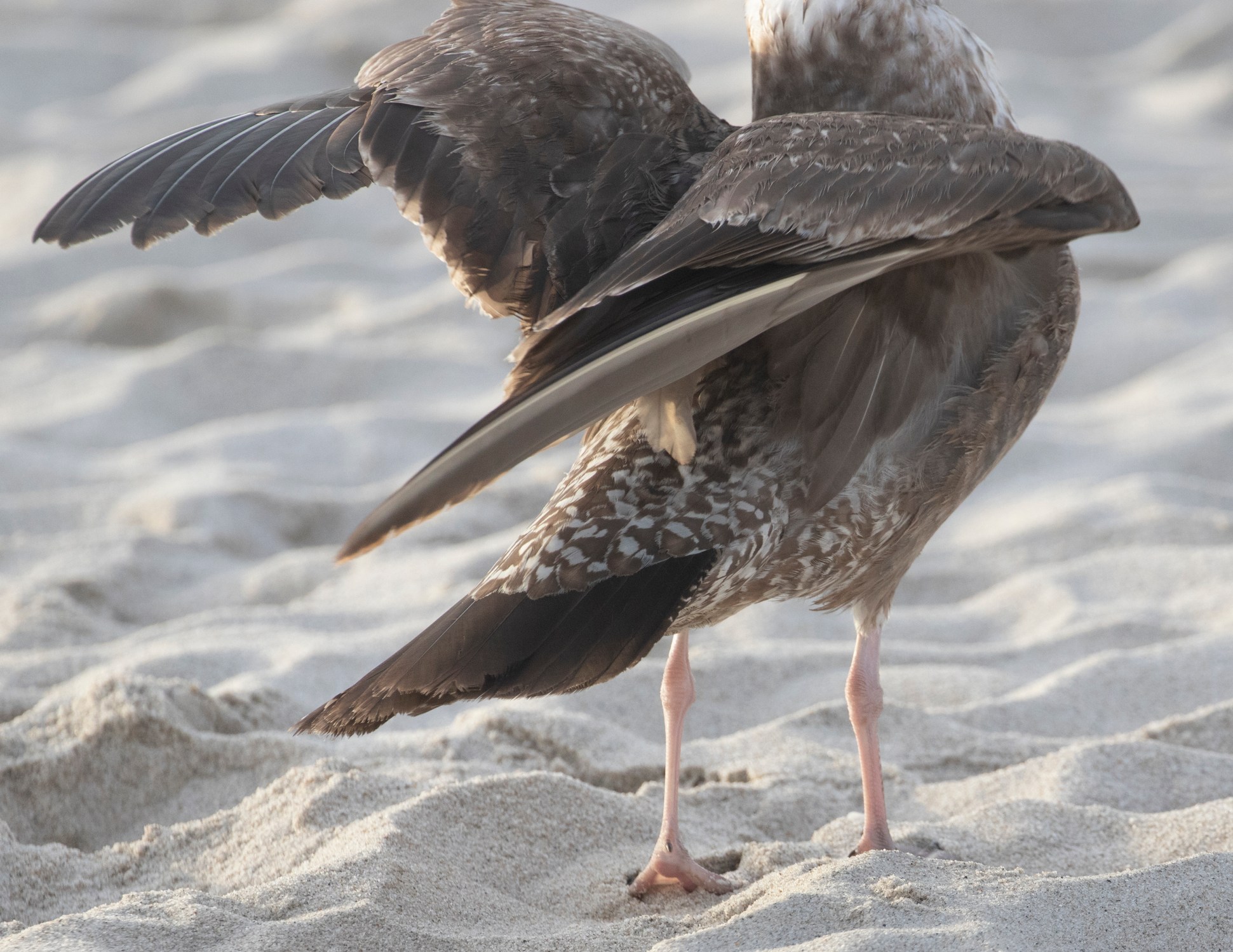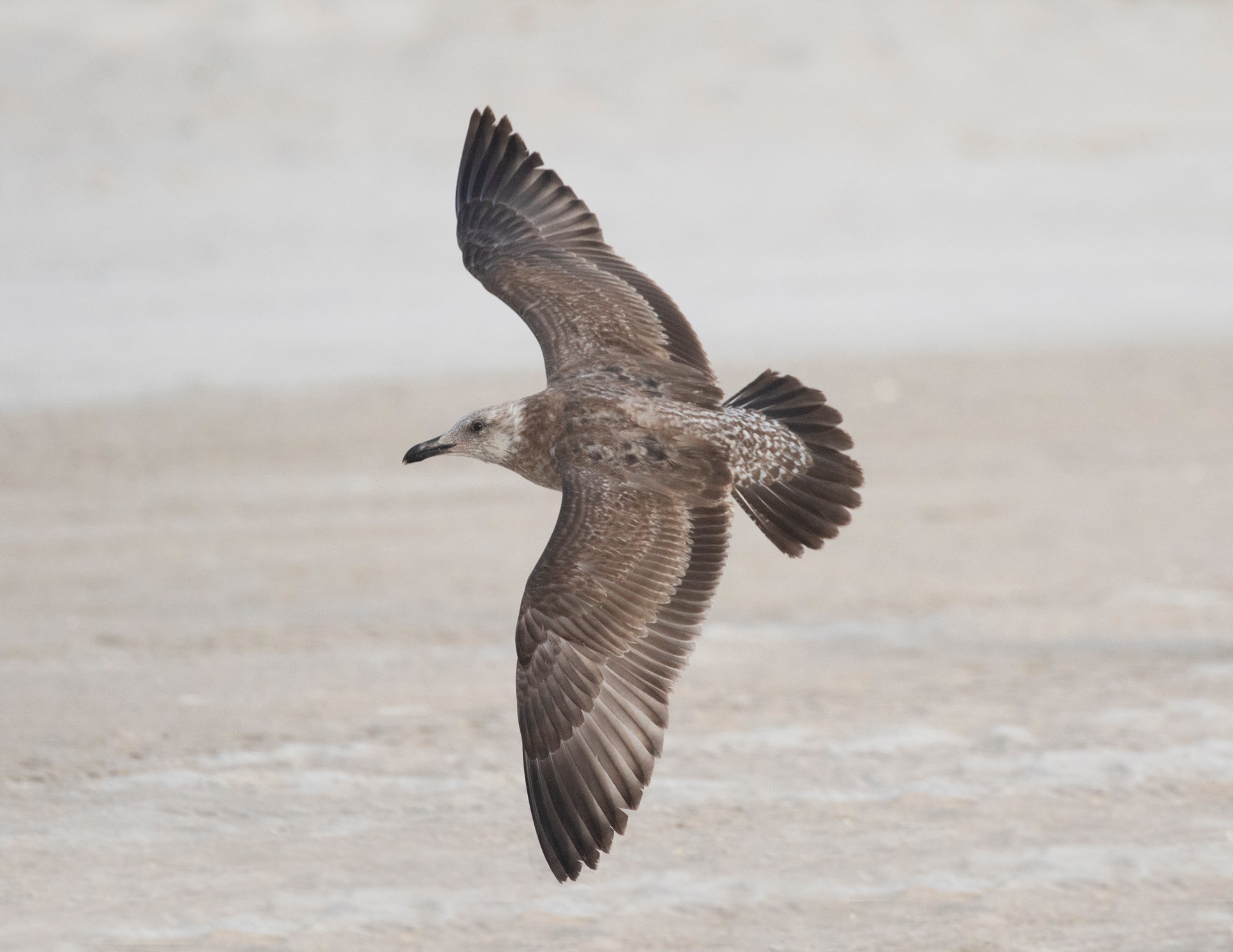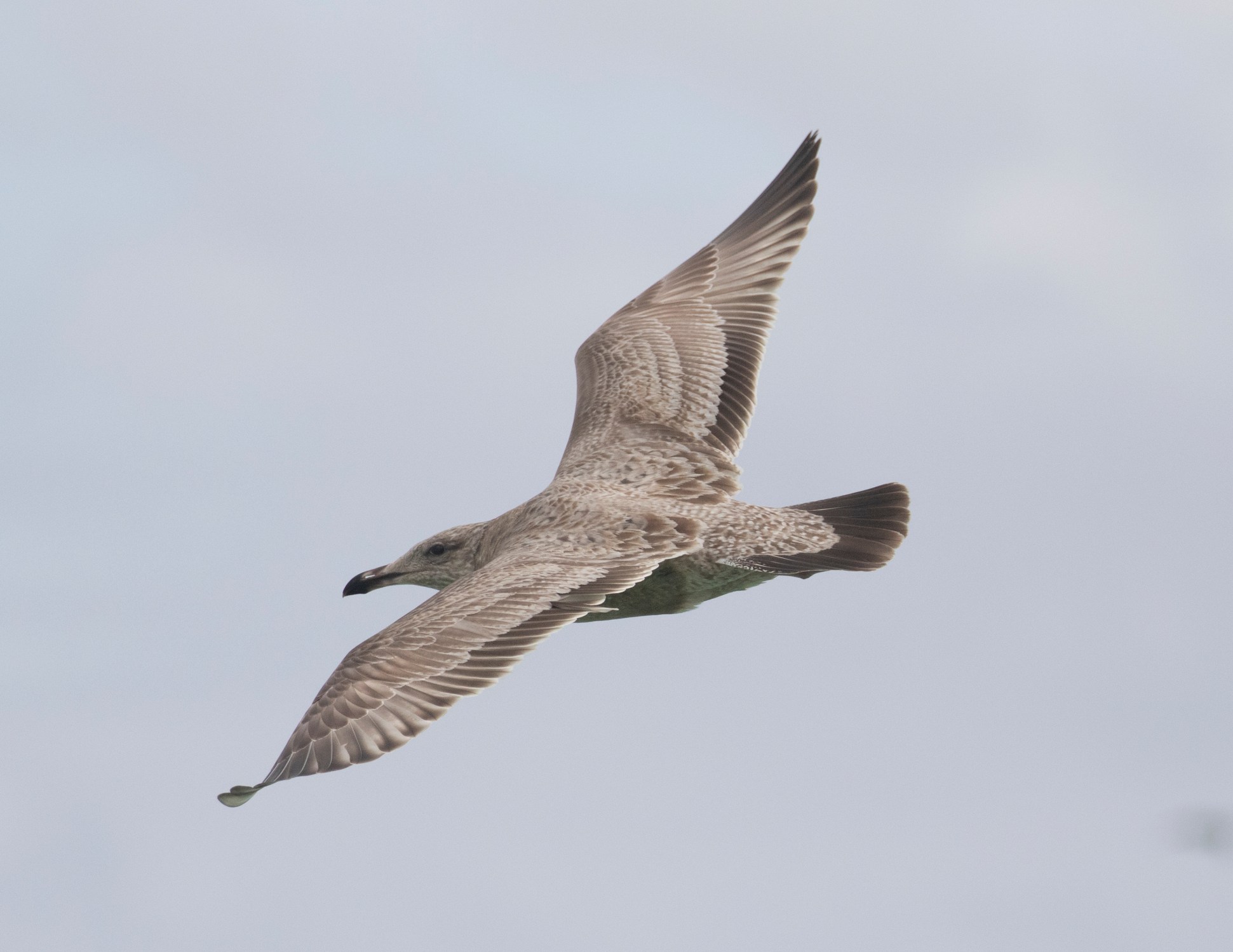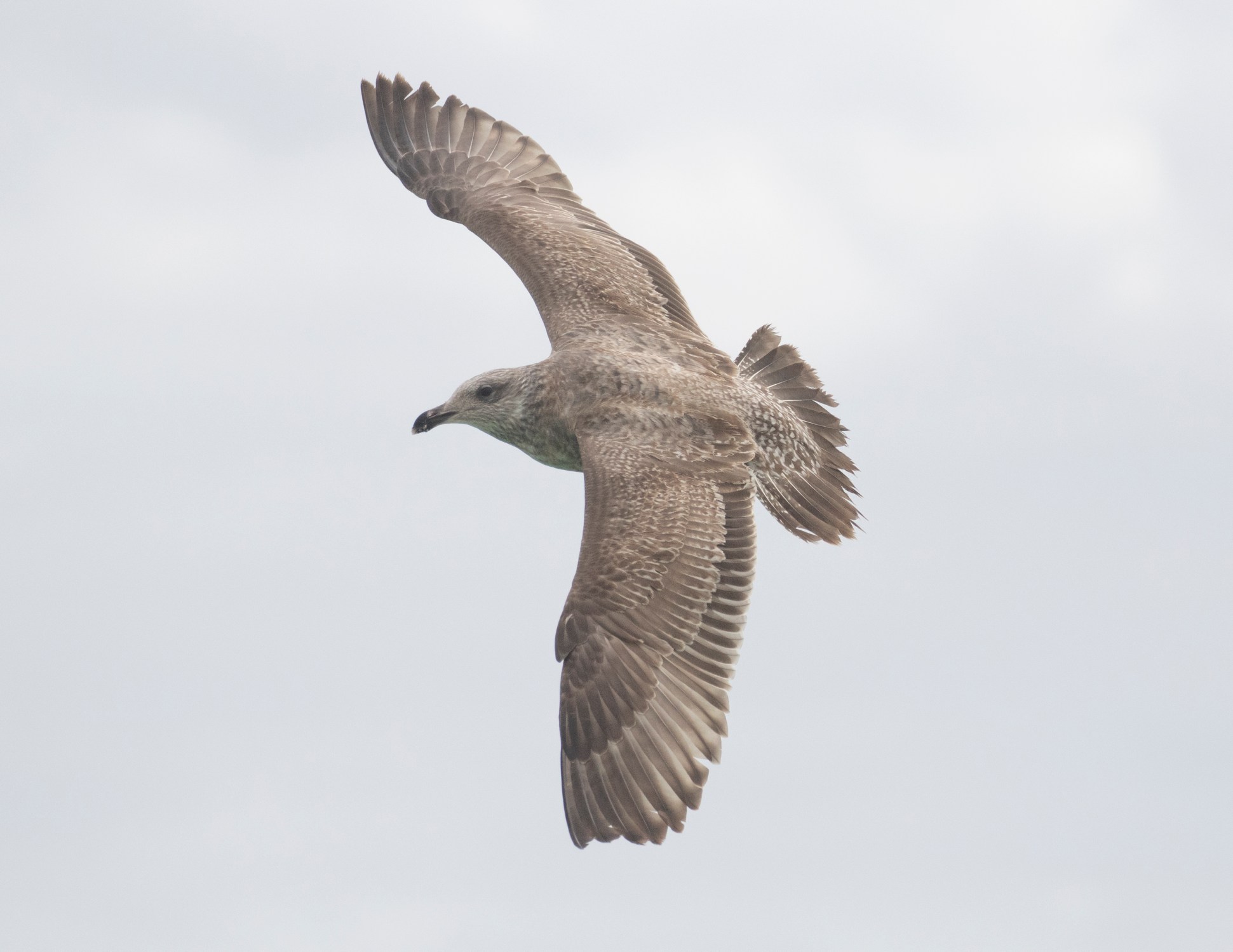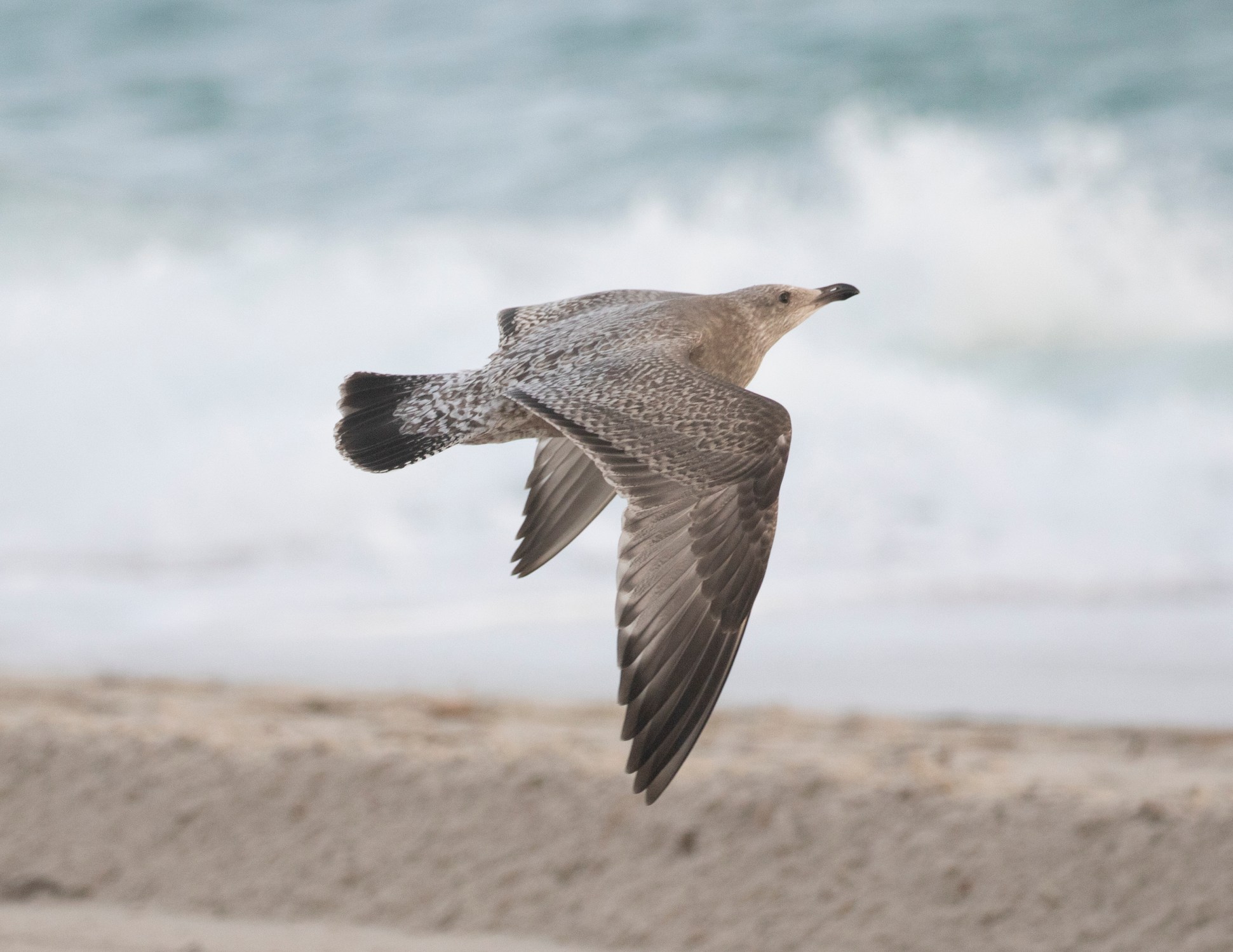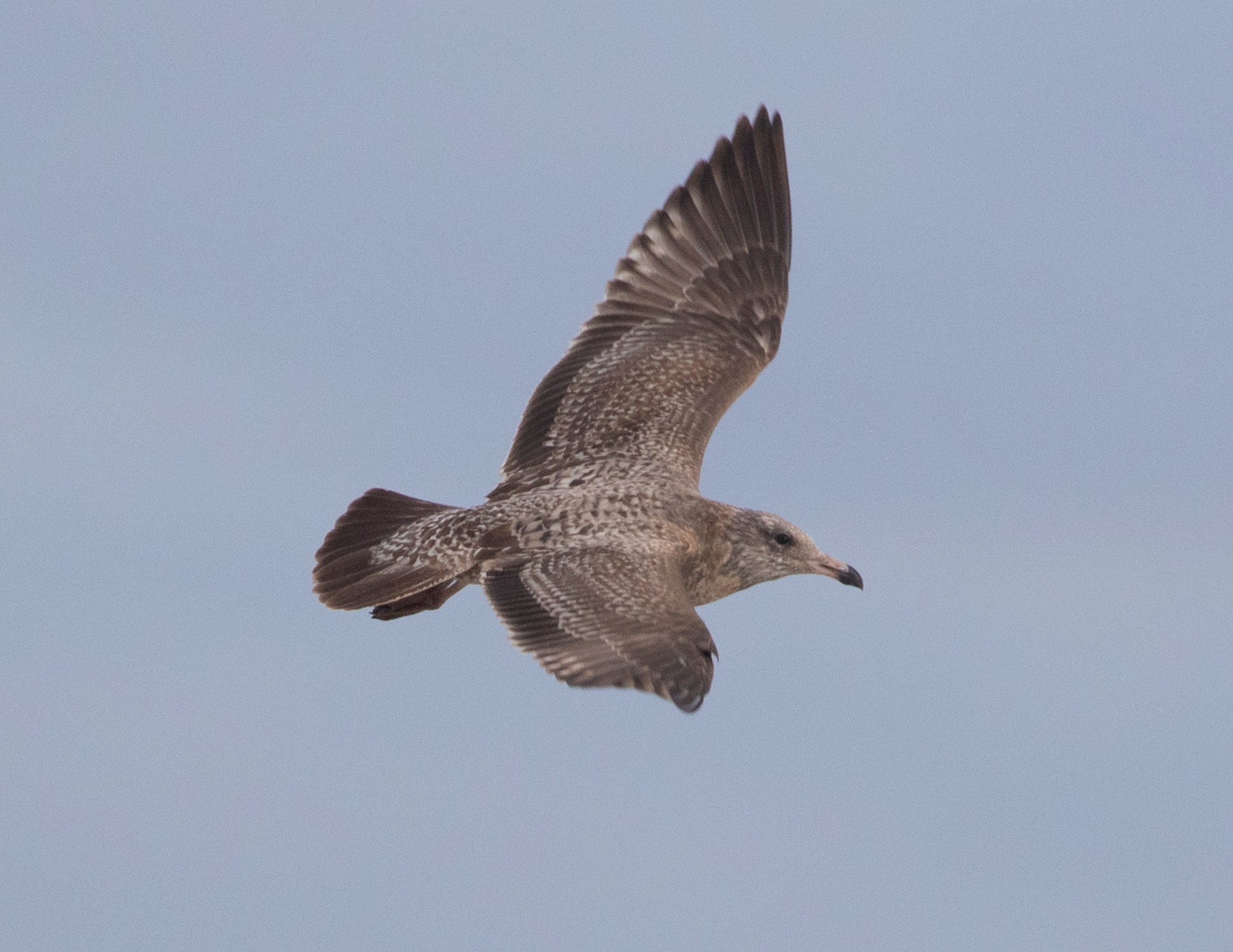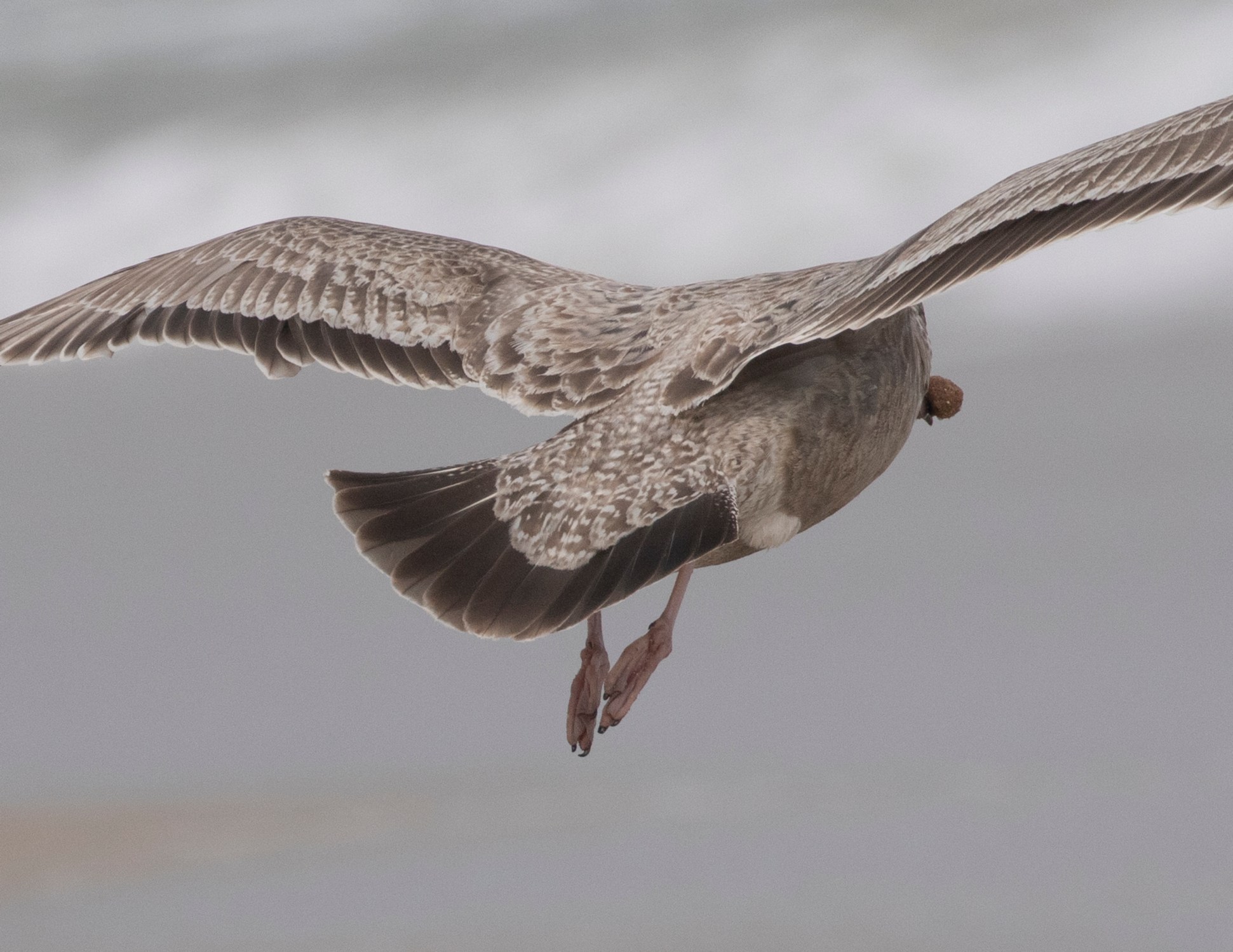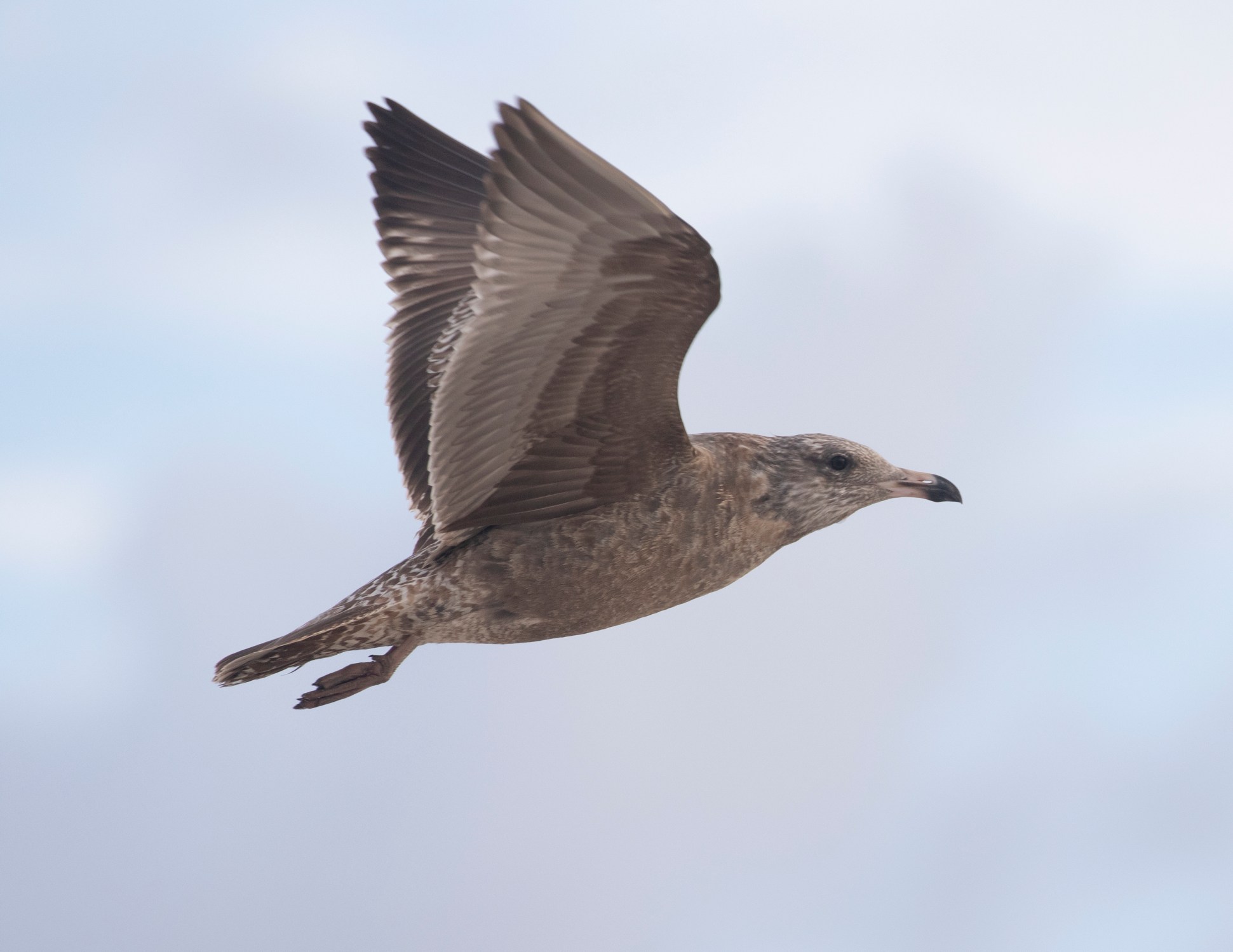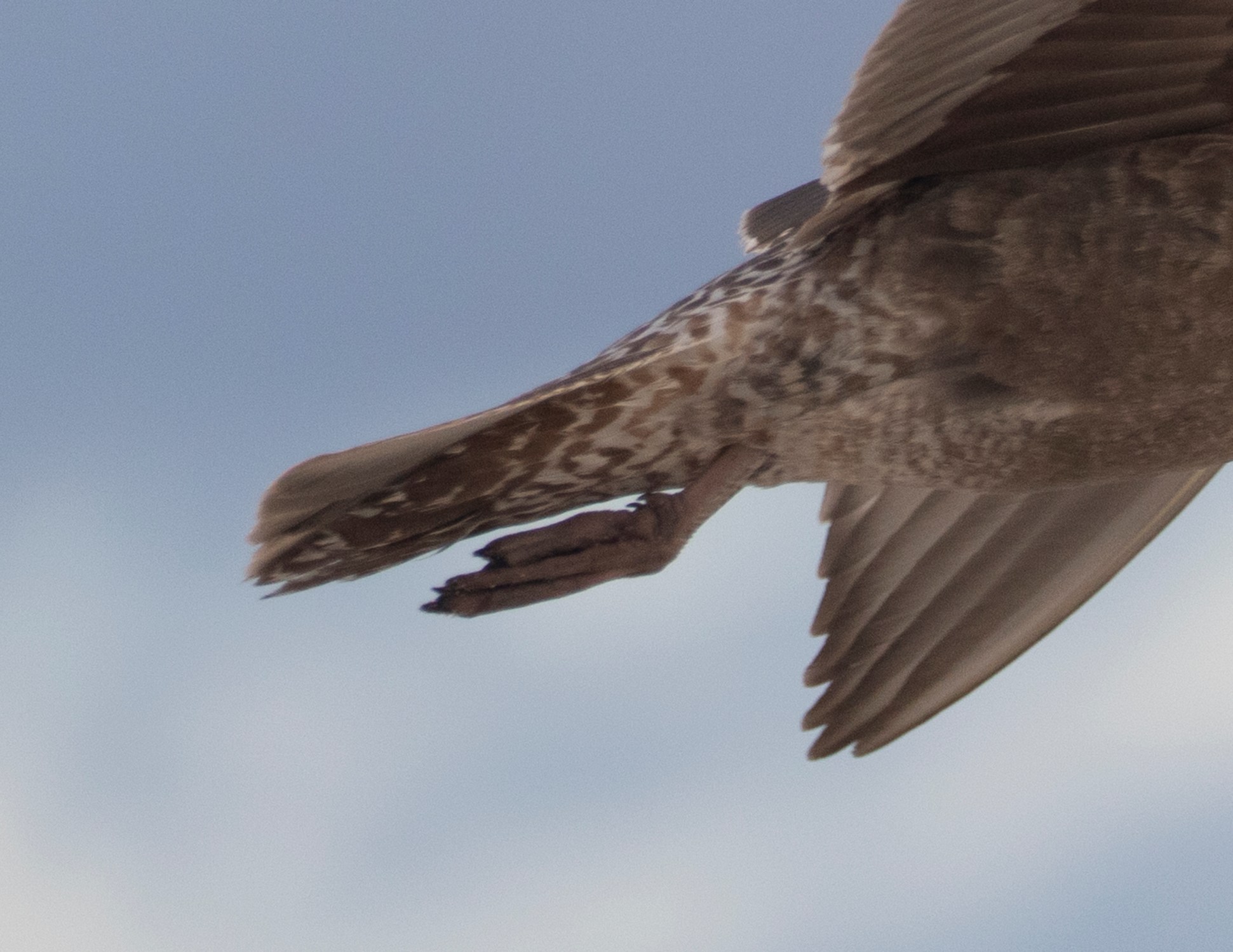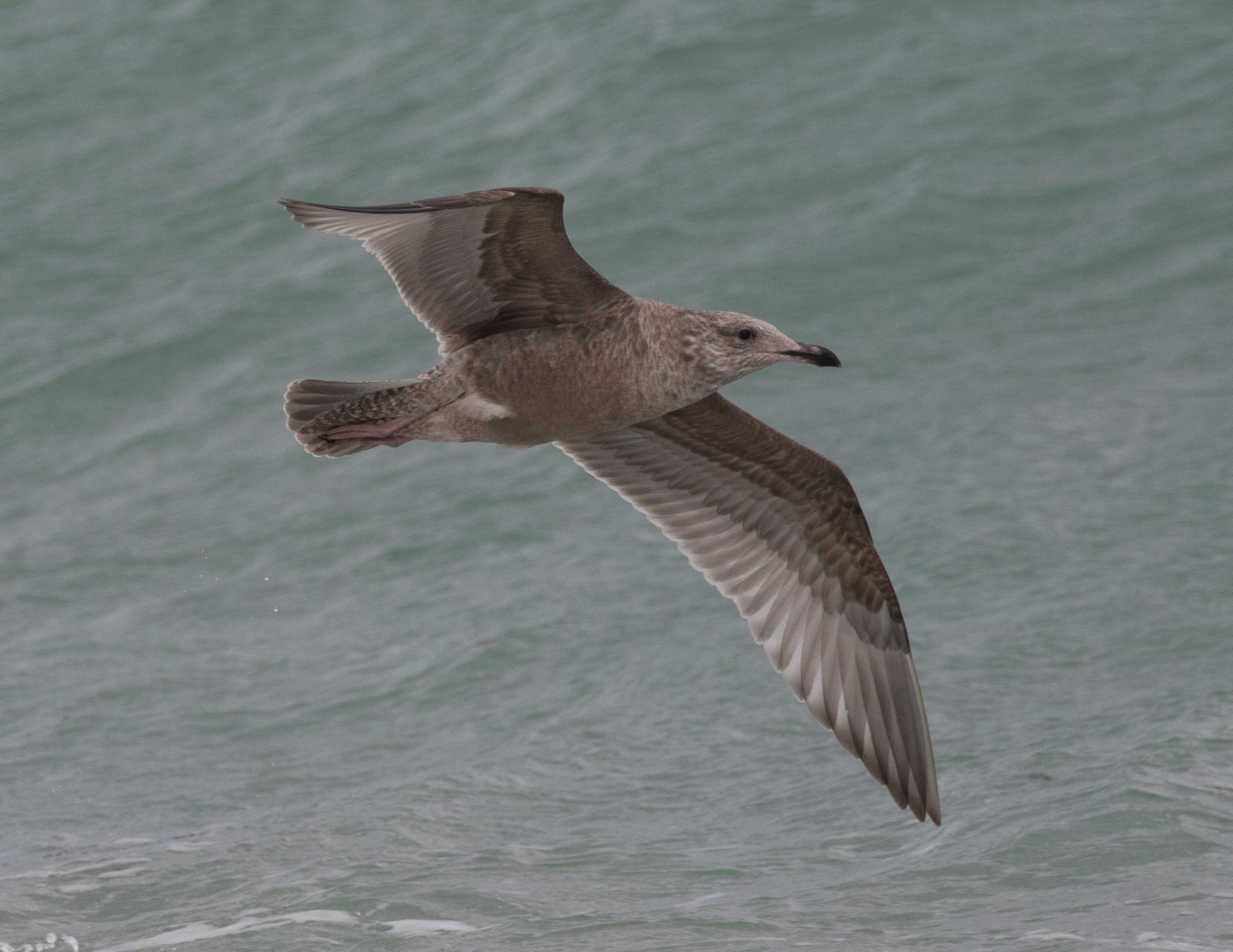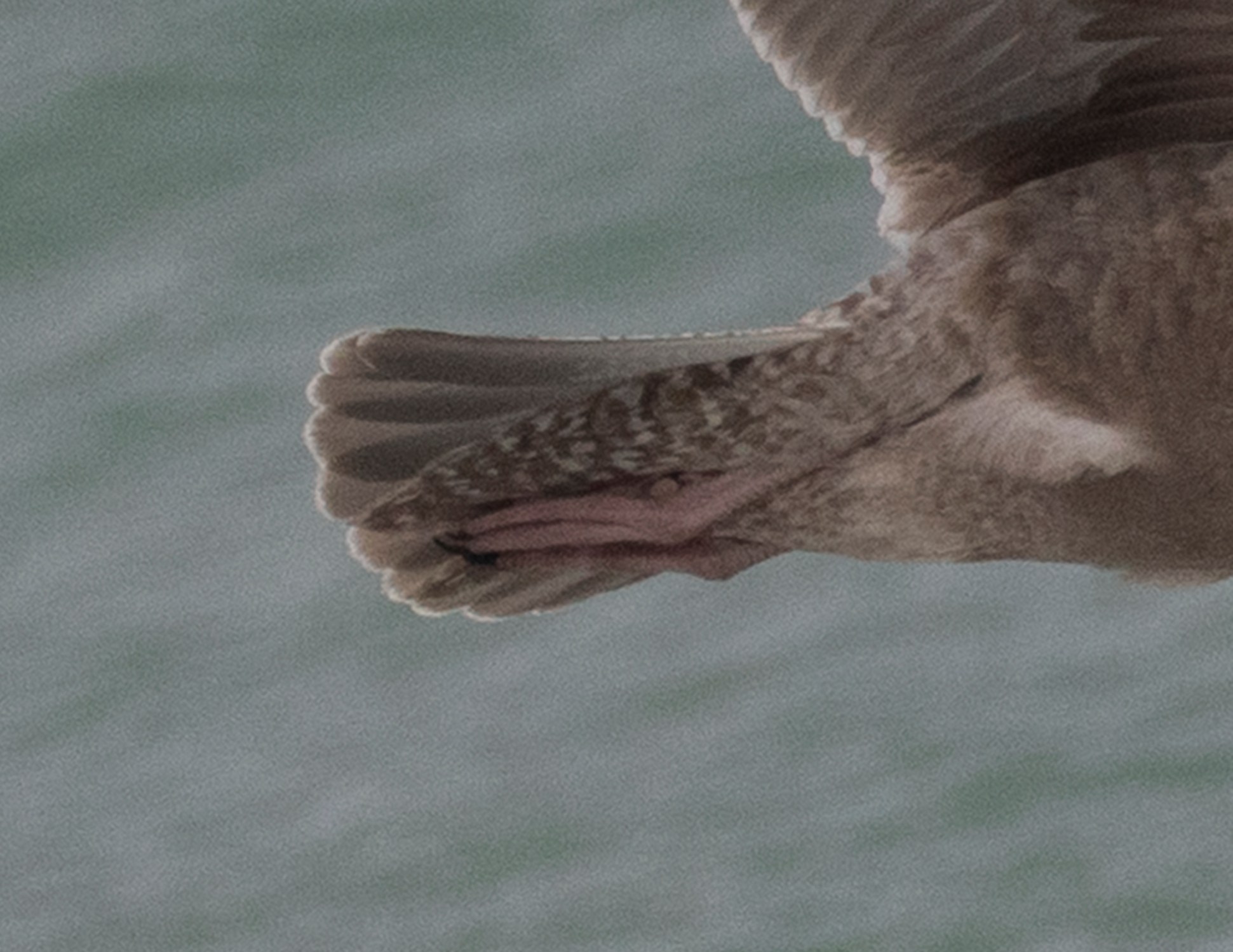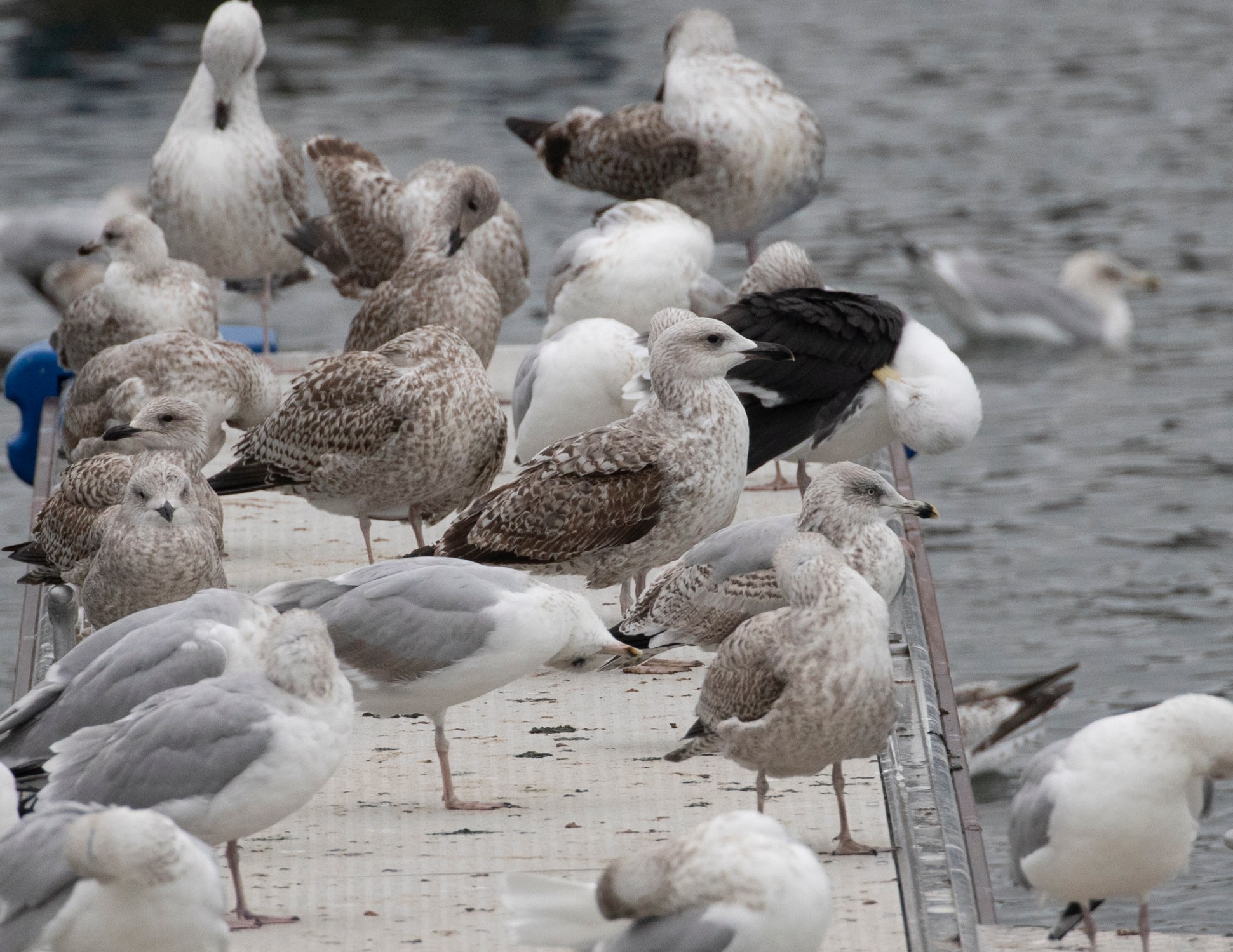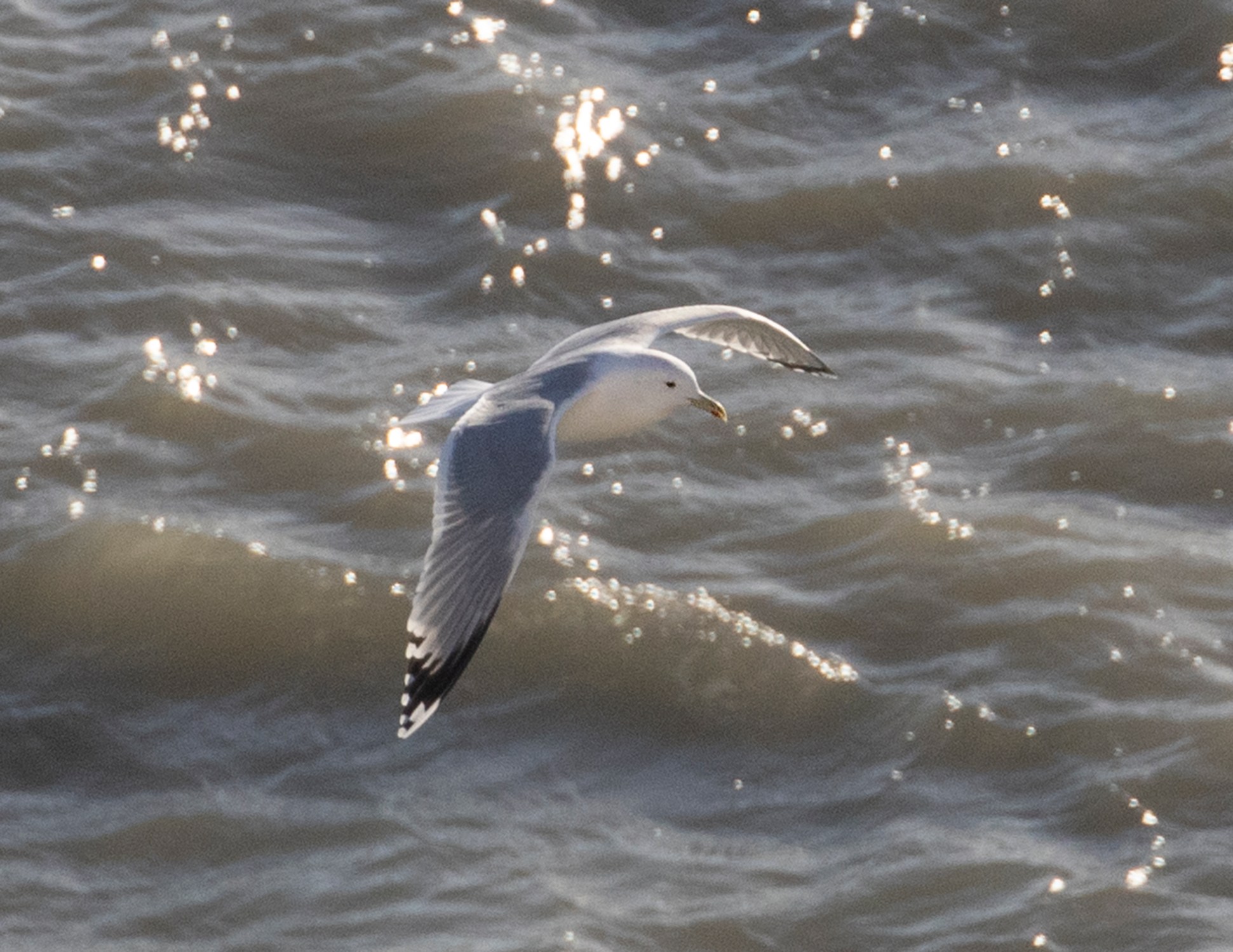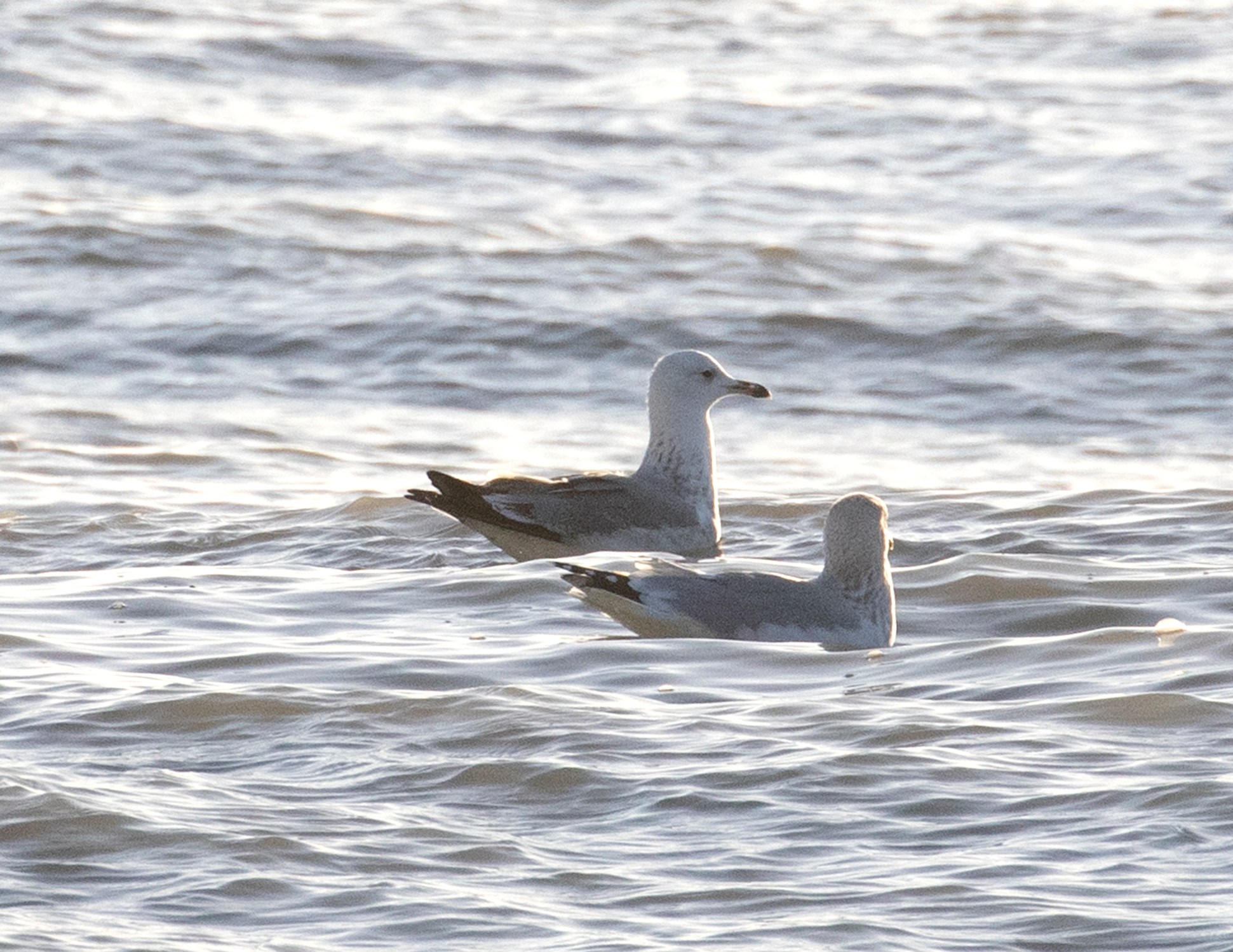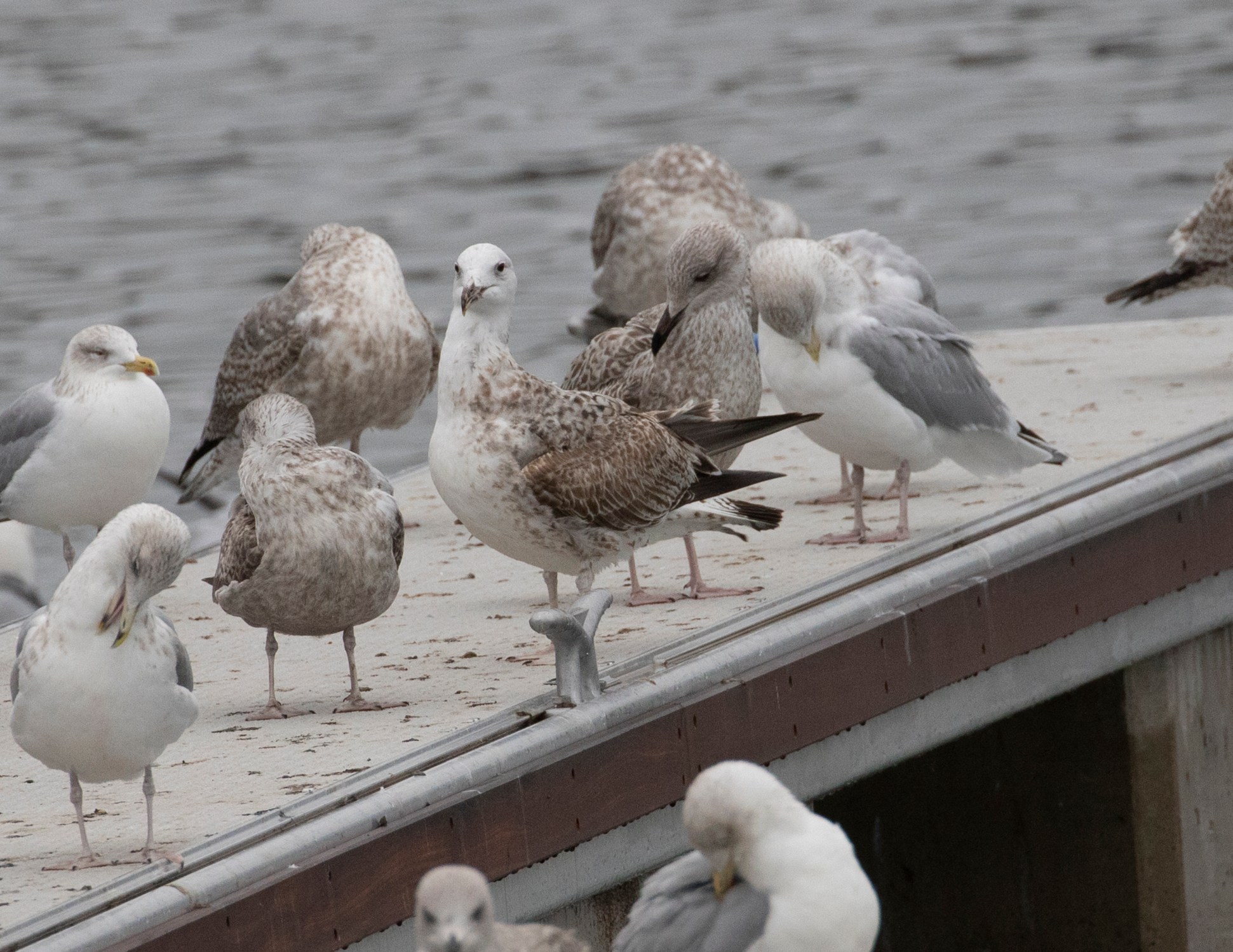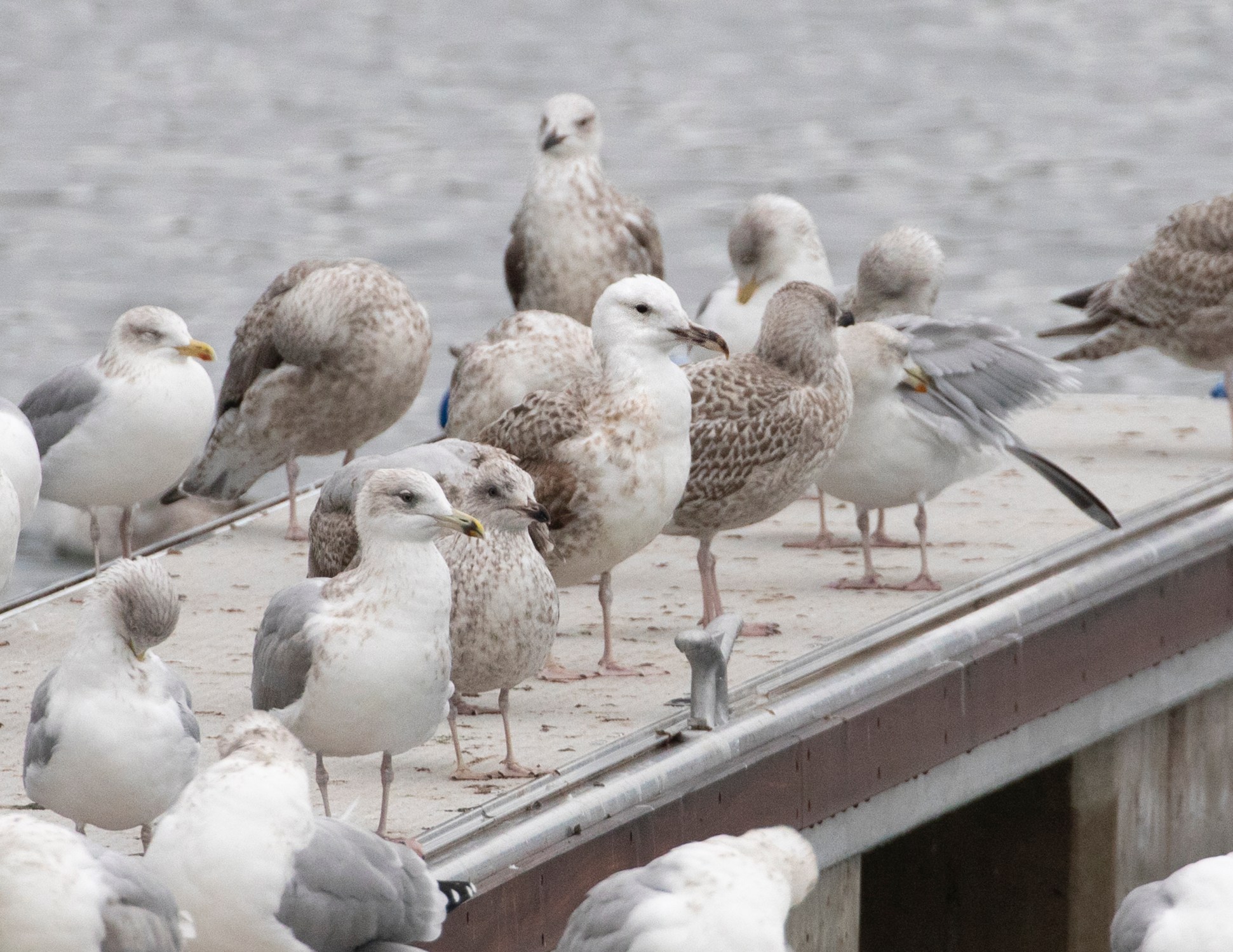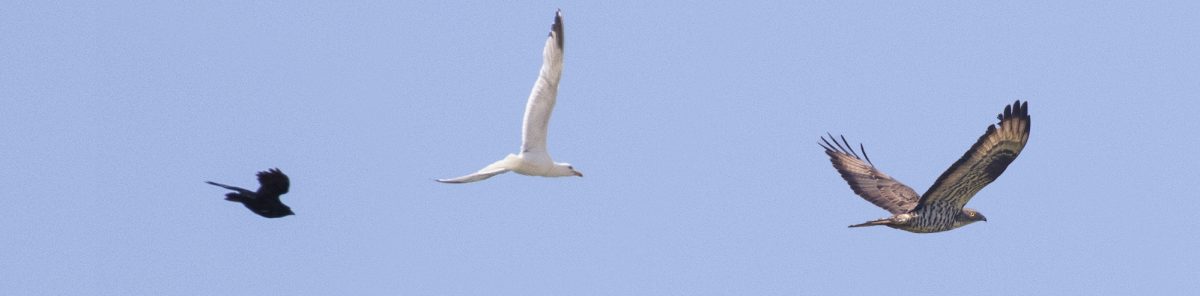
Another post about Gulls and really a photo dump detailing some of the 30 different Caspian Gulls I saw in Dover in December. Each image is a different bird and in no real order; just some of the nicer photographs I took during the month, Showing some variation within the species, enjoy!
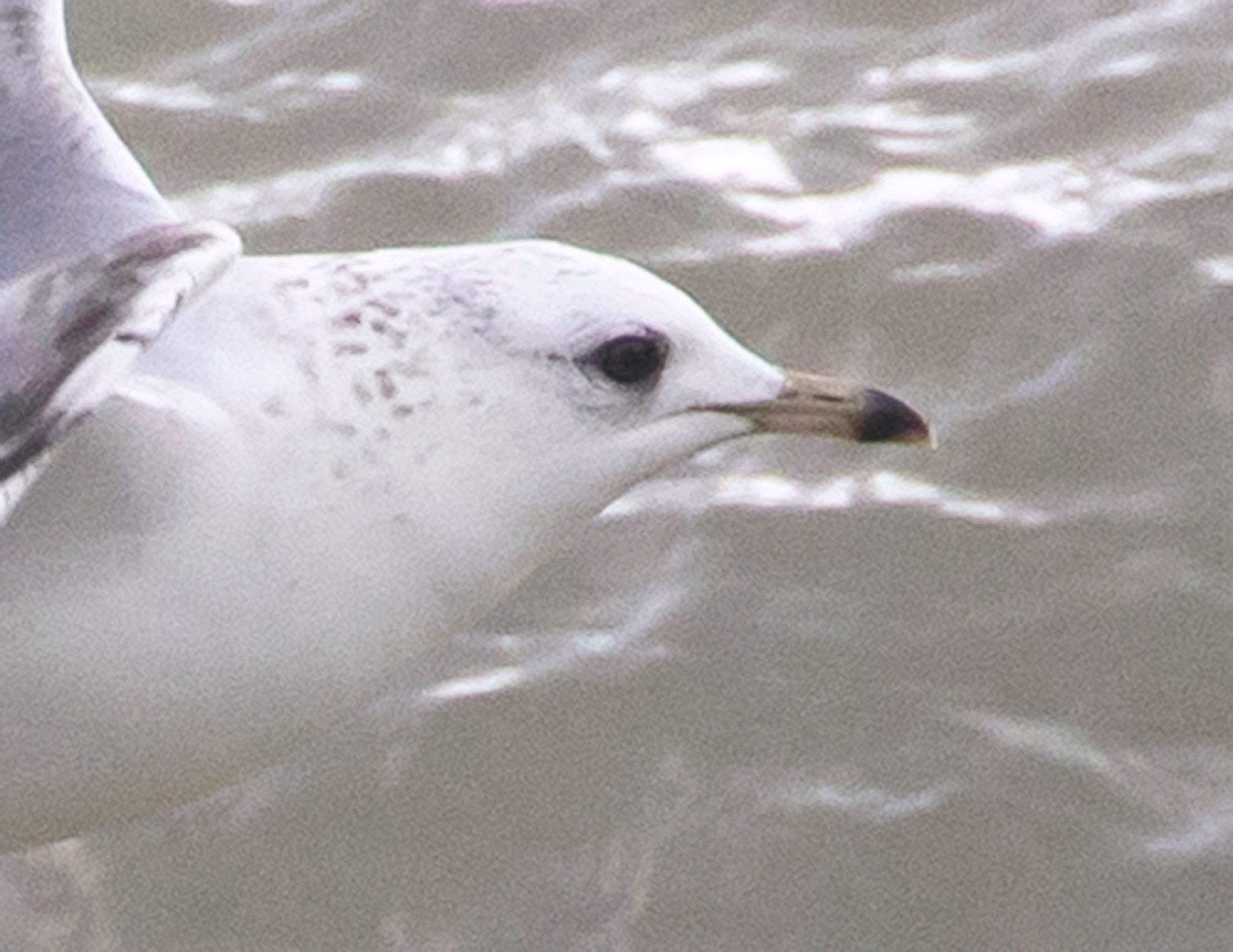
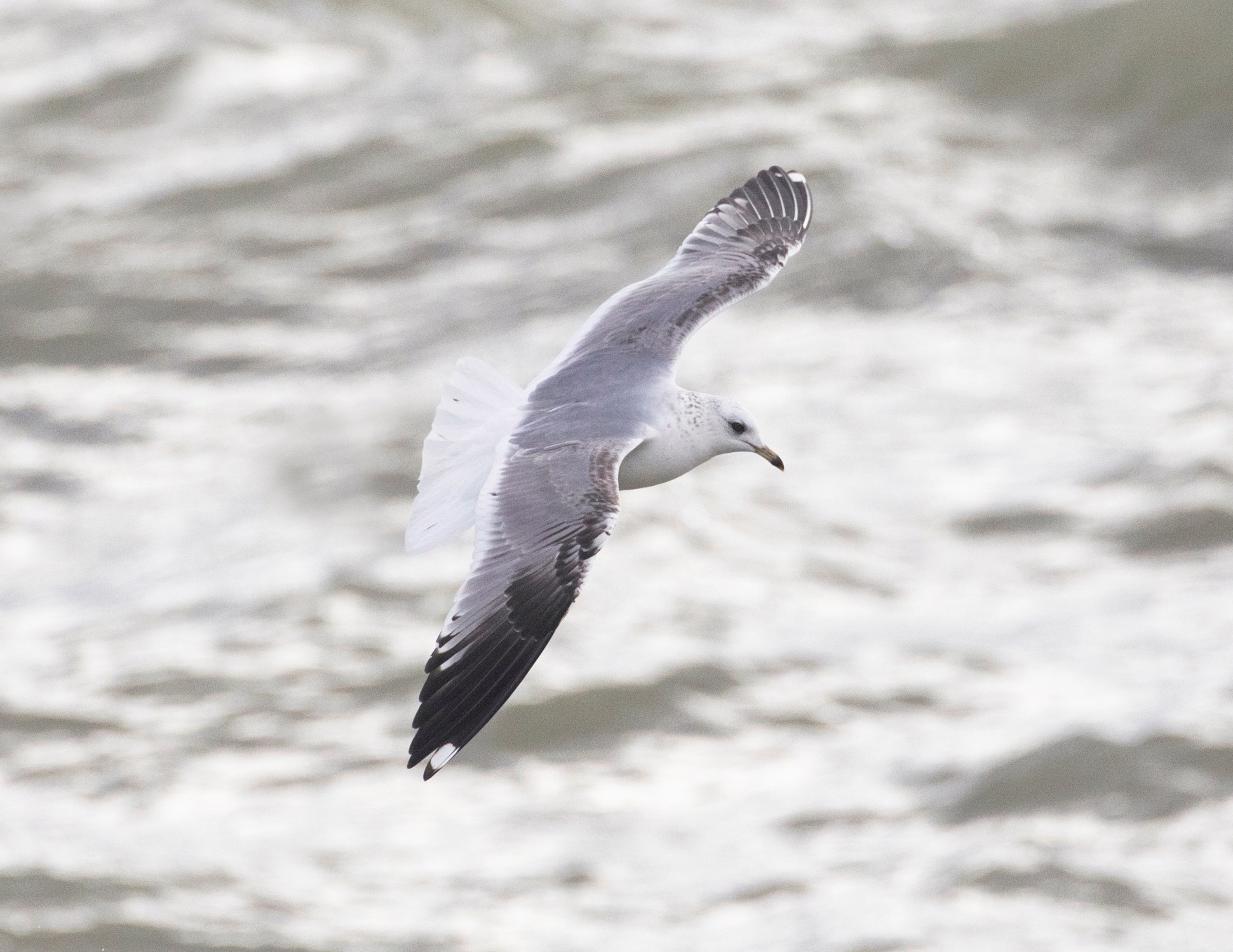
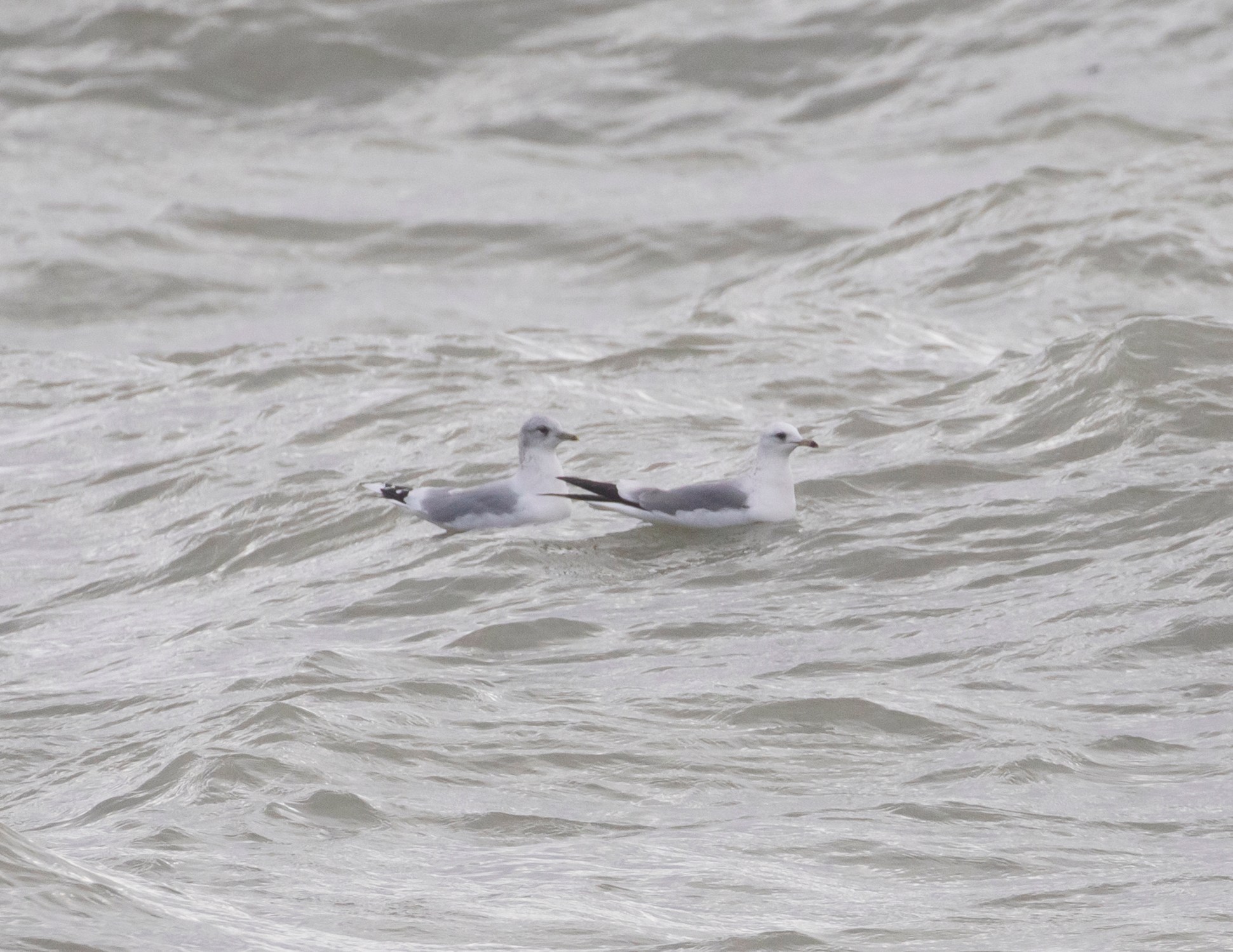
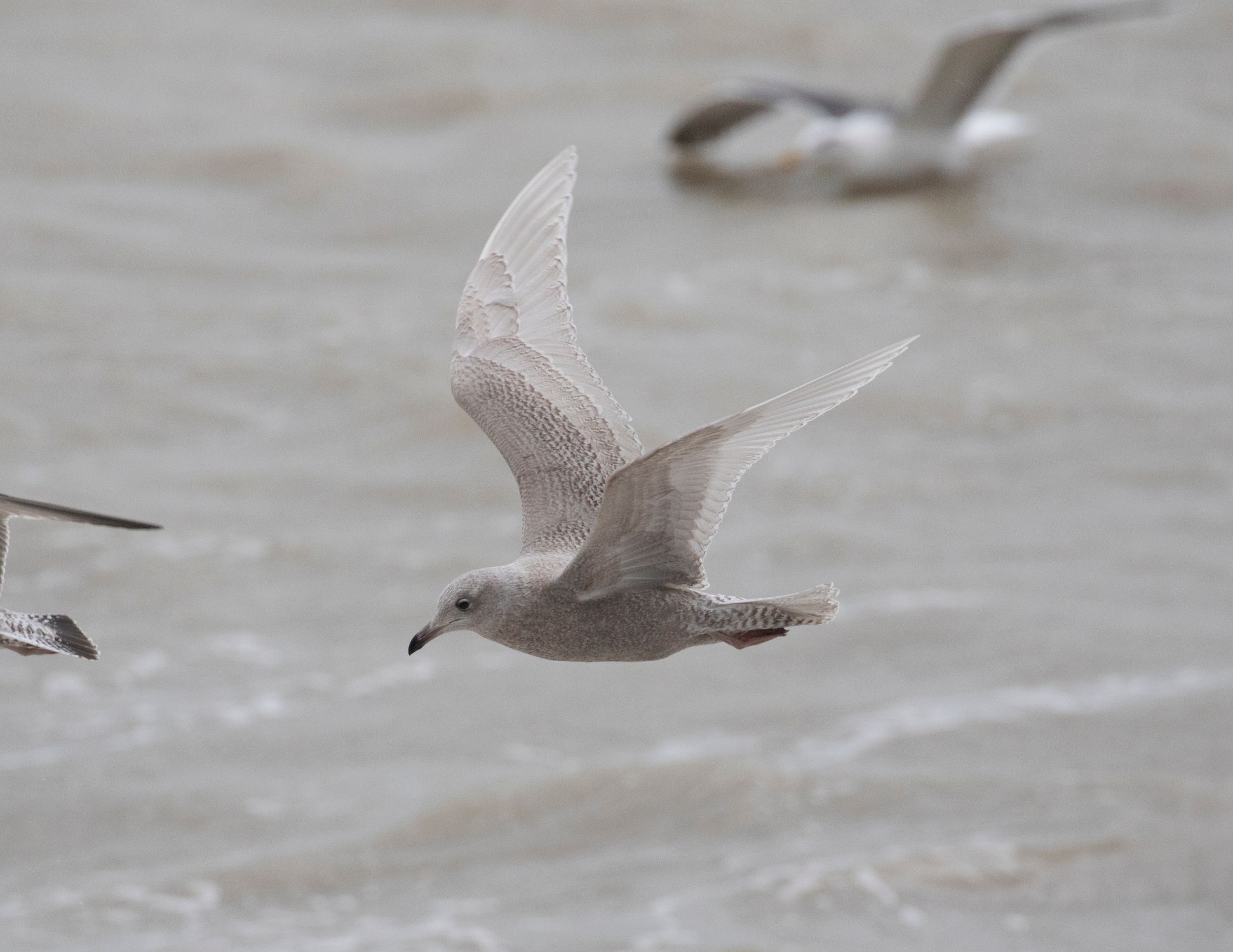
With the second winter bird I had on Christmas Eve (see previous post), and the amount of eye catching Common gulls around at the moment, I did wonder if I might see another identifiable heinei. I was however not expecting to see a 1st winter bird; I’ve never seen such a good example of 1st cycle heinei in the UK before.
The combination of all dark brown wing, pure white underparts, white head and bright pink bill base made me jump as soon as I picked this bird up. I see plenty of contrasty canus types and some with very clean head and flanks but never in combination with the dark wing like this – dark winged birds tend to be very streaked and dark elsewhere.
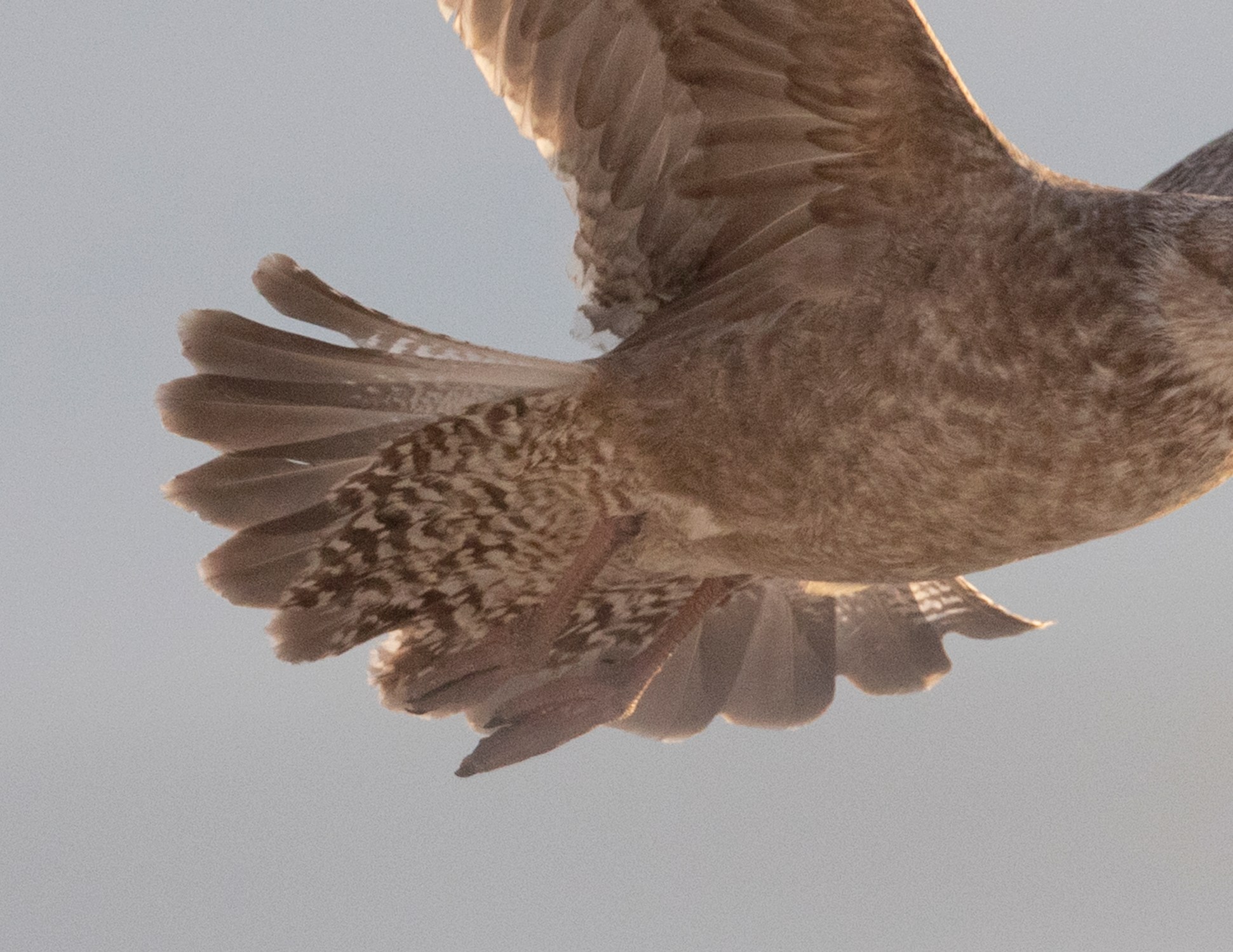
Showing a dark inner primary window above and below, the underwing is very contrastingly patterned and no barring in the auxiliaries, white feather centers with dark fringing contrasting with a solid trailing edge throughout the full length of the wing, I have read that the combination of a coarsely marked underwing with pure white underparts could be unique to 1w heinei.
I also noticed that this bird’s iris is slightly paling – Adult heinei show paler irises, and it is only known in heinei to show a paler iris in other ages (although I’ve never seen that in a 1st cylce before). click on images to zoom.
I’ve always been cautious of first winters without a primary pattern to go by, and am grateful to Peter Adriaens for his comments, helping to confirm today’s bird.
For more images of 1st cycle heinei have a look here.
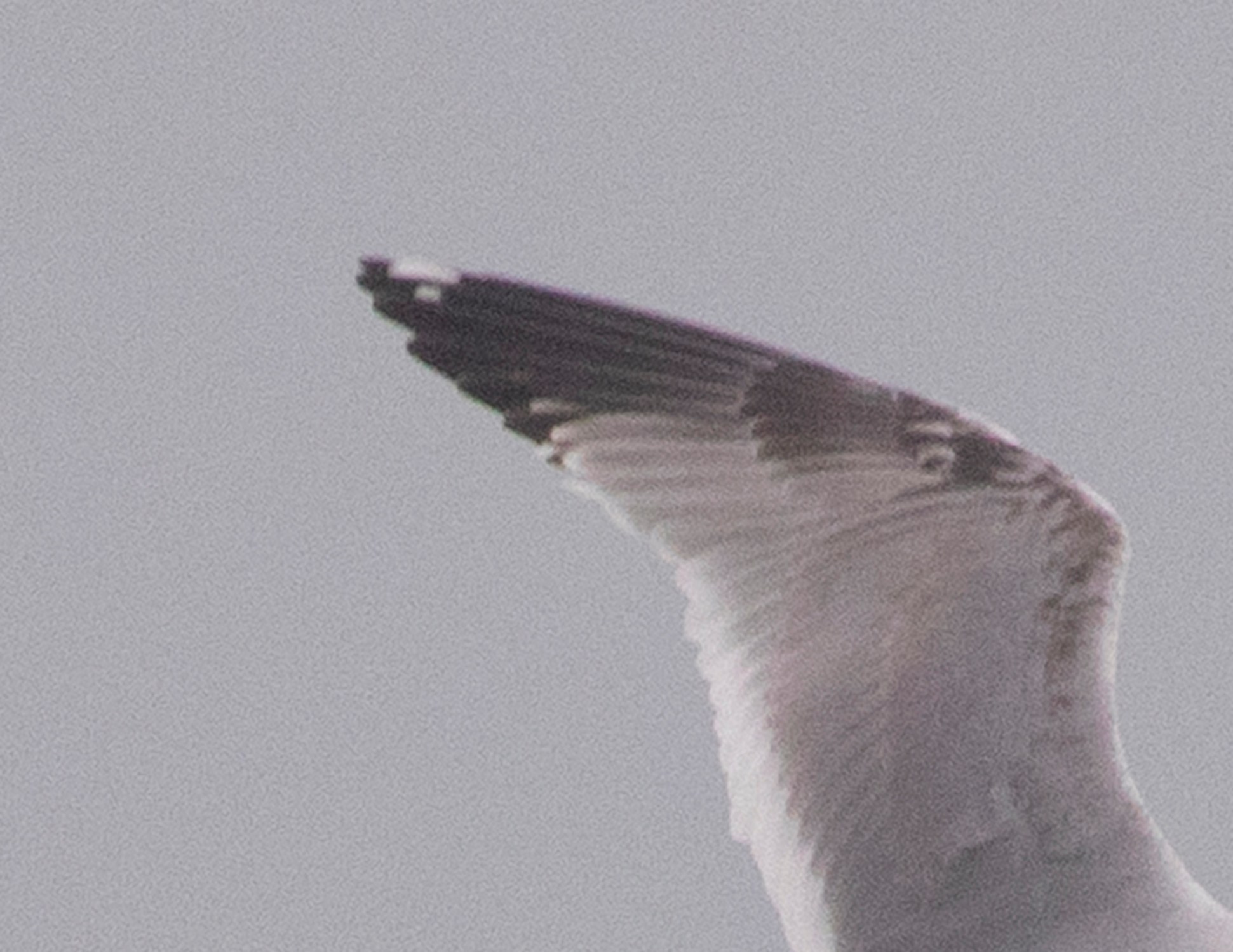
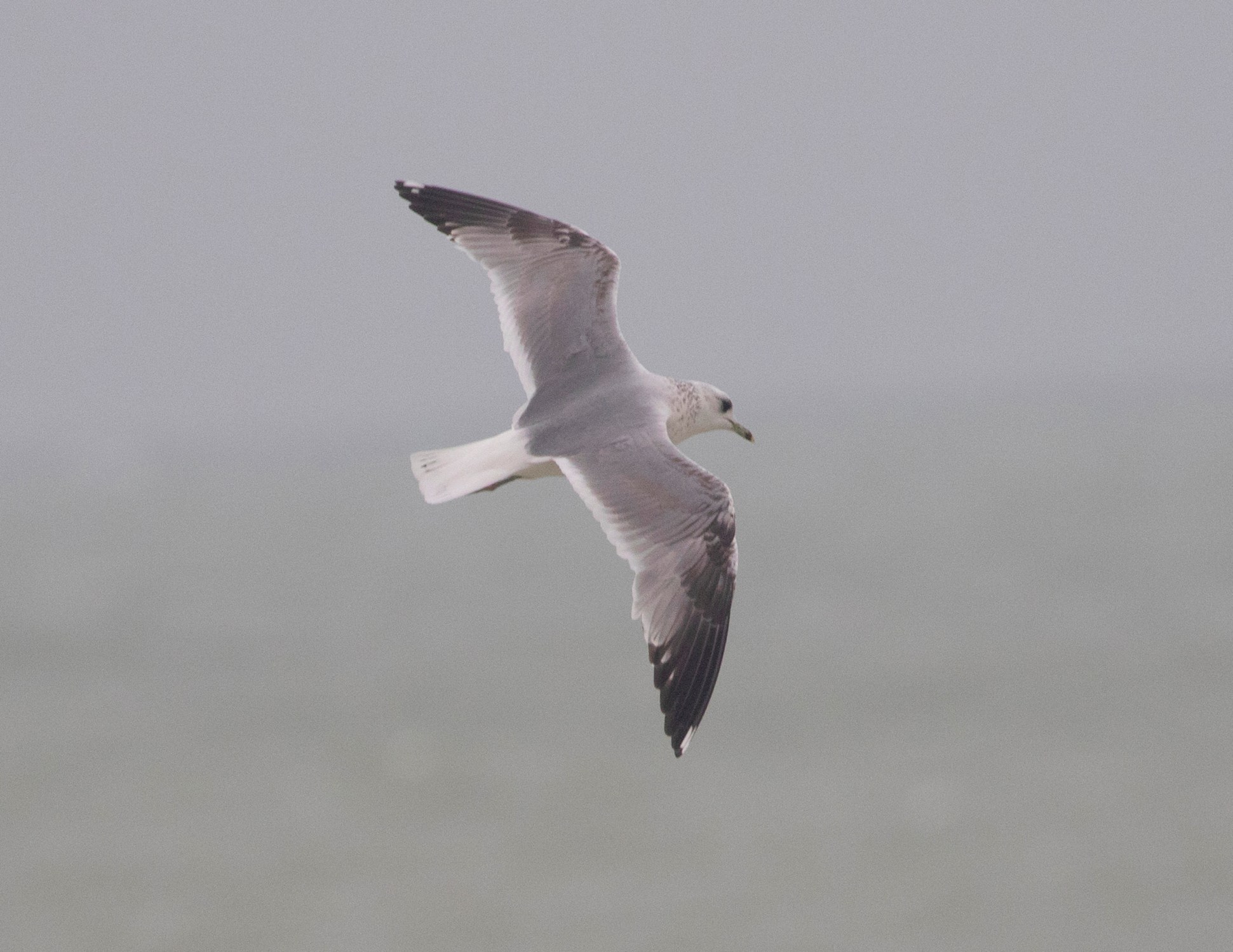
A second winter Russian Common gull came to bread at Shakey Beach this afternoon. The same spot that I had one of the same age back in Feburary. It really stood out as a contrasty long winged and large bird. In flight I could see it had alot of black in the primaries, a nice clean head and boa of neck streaking along with one of the diagnostic primary patterns for this age group, (there are a few different diagnostic primary patterns for this age heinei)
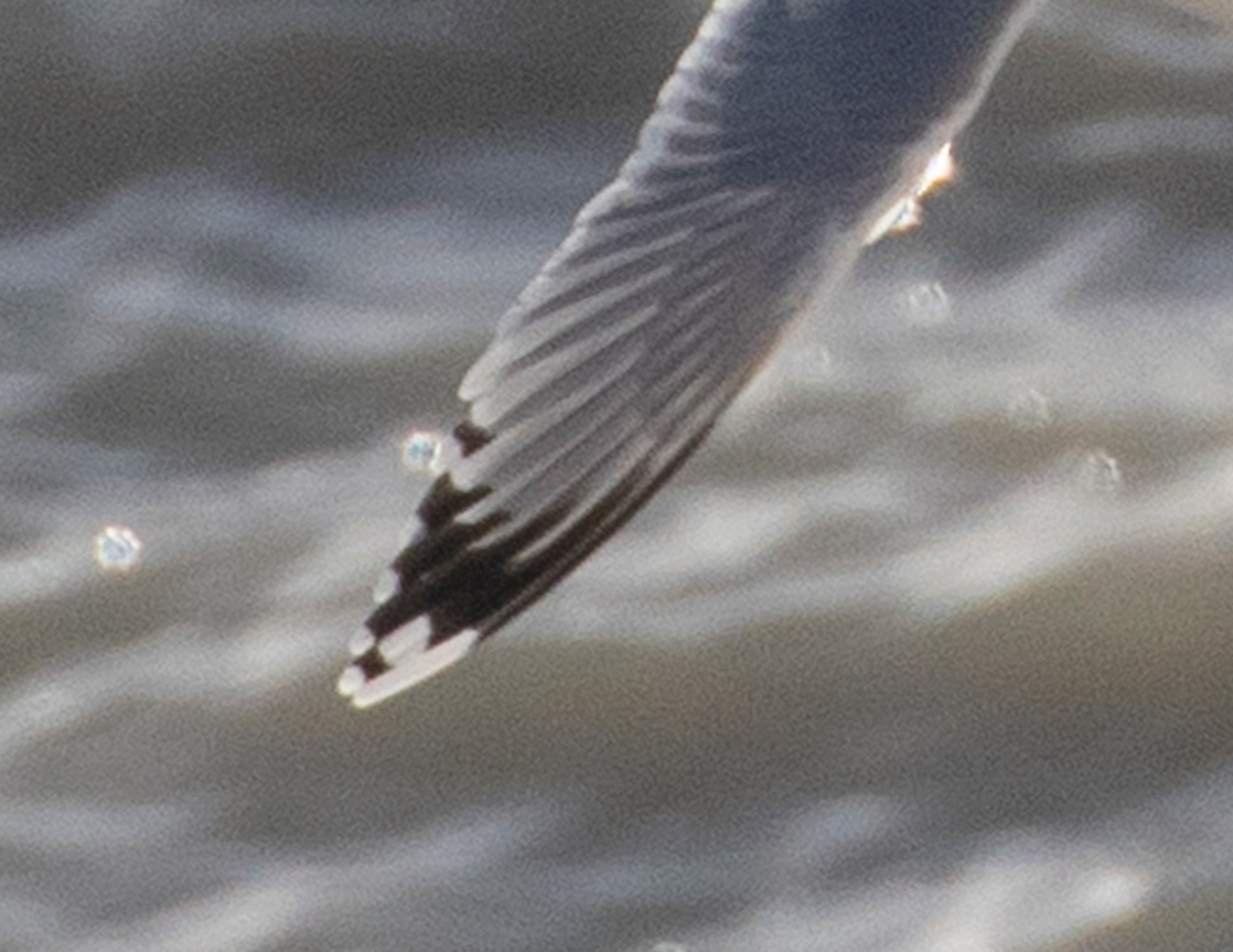
A Small mirror on p9 confined to inner web only, no white tongue tip to p7 and a black band on p4 – (Black markings on both webs of p4 would also be acceptable according to literature.)
The bird also has black marks in the tail and greater coverts which is also indicative of heinei. One thing to remember with these features is that they must be present in conjunction with a white head, boa of neck streaks and bright bill for safe heinei ID.
Back from Miami and straight up the cliffs. A light NW both y’day and today, with a Westerly movement of large Gulls along the cliff tops taking place on the 14th. Highlighted by 7 CaspianGulls – 2 First winters, 3 second winters and 2 third winters . The gulls were coming through in loose flocks of around 50 at a time, its abit of luck if you get onto a casp and then get time to photograph aswell so I only got a few of them. A fun way of gulling and often produces decent numbers of ‘rarer gulls’.
1st Winter Caspian Gull
2nd Winter Caspian Gull
3rd Winter Caspian Gull
8 YellowleggedGulls (2nd winter below) were also counted among the 100s of Herring and Greatblack–backed, with only a handful of Lesserblackbacks.
2nd Winter Yellow-legged Gul
Today was a similar weather situation but basically no gulls moving except for this large, probably male adult Caspian Gull which flew east past fan bay.
Adult Caspian Gull
An almost perfect primary pattern let down only but the incomplete black band on p5, (you can see the ghost of the inner web’s portion) though nice long grey tongues eating into the black and very limited black on the underside of p10. perhaps some mixed genes in its family tree but could also be variation.
Other birds of note were 3 Chiffchaf, a Blackcap 2 Firecrest and a Woodcock that flew up ovr the cliff at fan bay mid morning.
Another post about American Herring Gulls, after one a couple of years ago on the same subject. A photo dump detailing some features and variation observed during my recent work trip. All photos taken along South Beach miami, a short walk from my hotel. If youre not into the finer points of AHGs then look away now!
Above, flanked by 2 Lesser Black backed gulls – far more common along the beach this time of year.
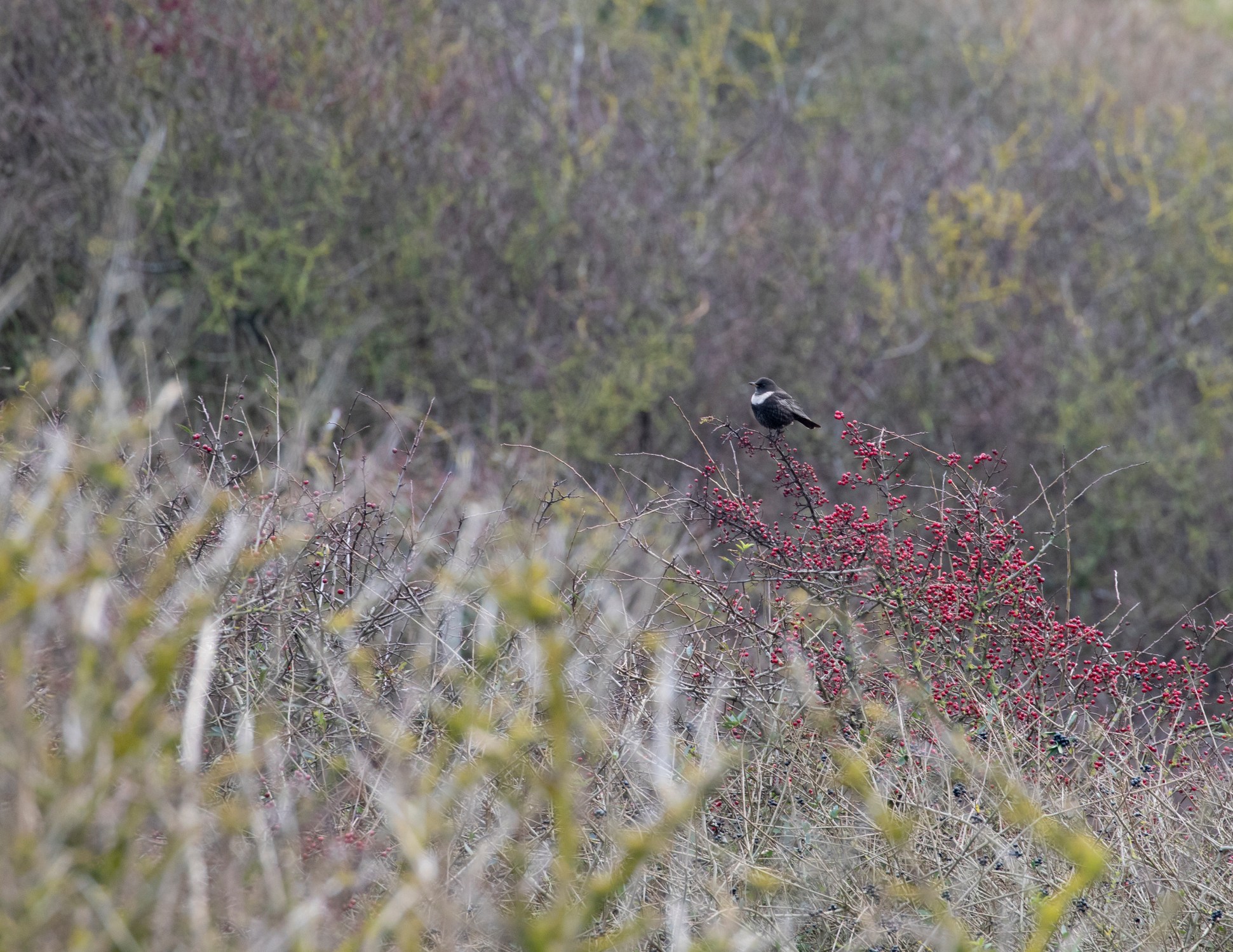
Another morning with light NE winds and the coldest of the season so far with a frost in our sheltered little garden. Thrushes were more noticeable, though hardly numerous with 10+ Songthrushes and c40 Blackbirds on Fox hill down. A Brambling, 5 Redwing and a late RingOuzel in Langdon Hole
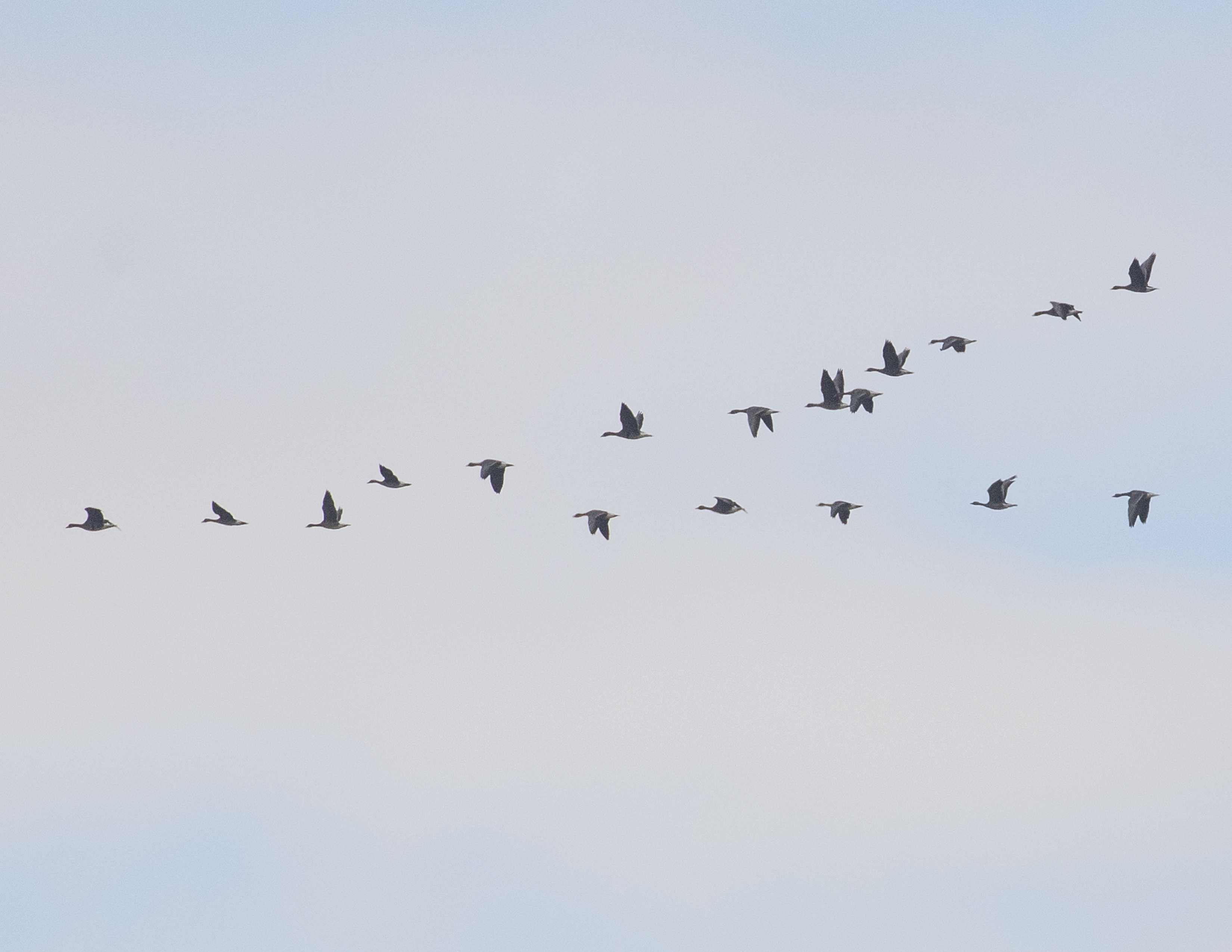
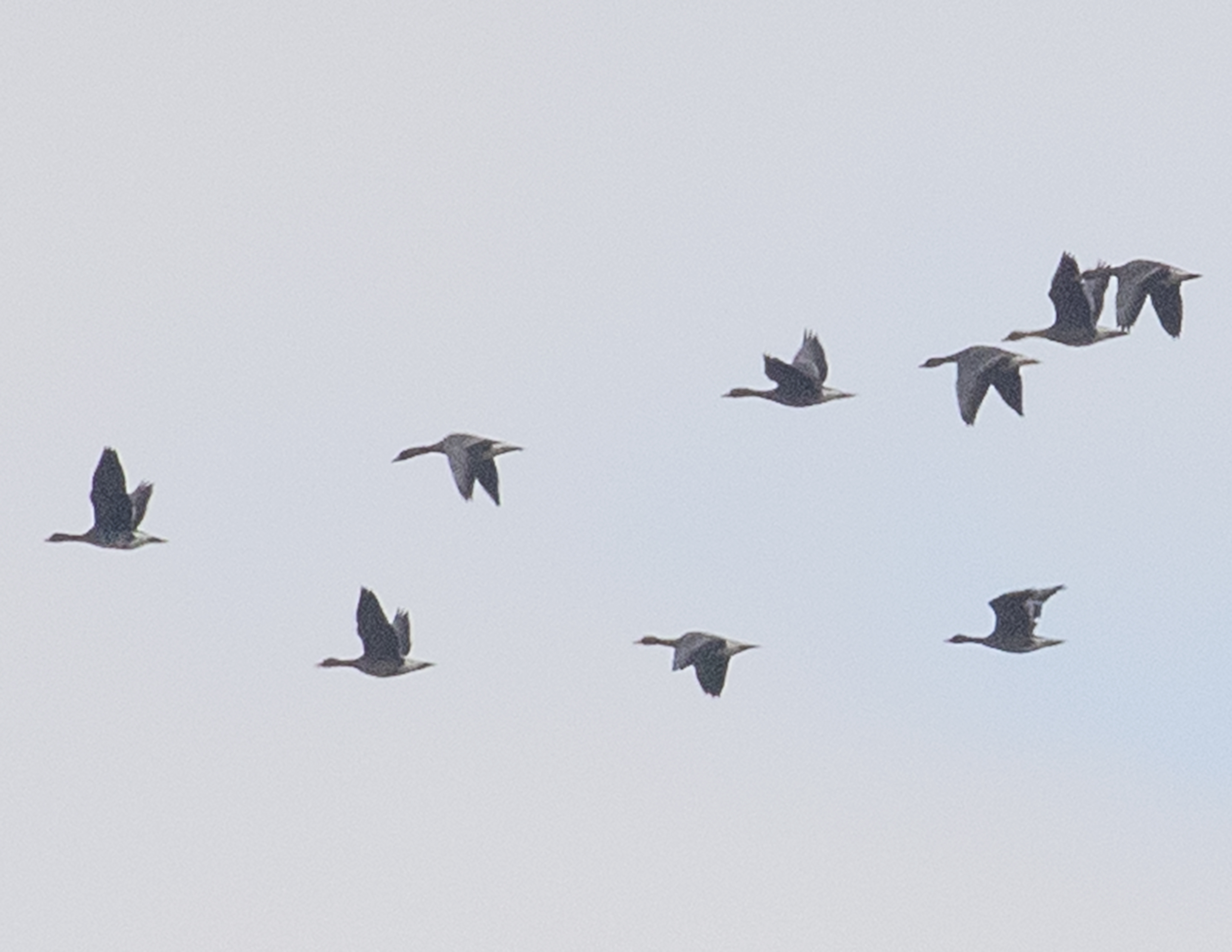
Just west of Fan Bay I picked up a flock of 18 WhitefrontedGeese flying in V formation out over the channel. They were heading for the cliffs and came in off the sea at Fan bay and continued North. A new species for me here on the patch, they were later followed by 4 Goldenplover who took a similar line in off the channel.
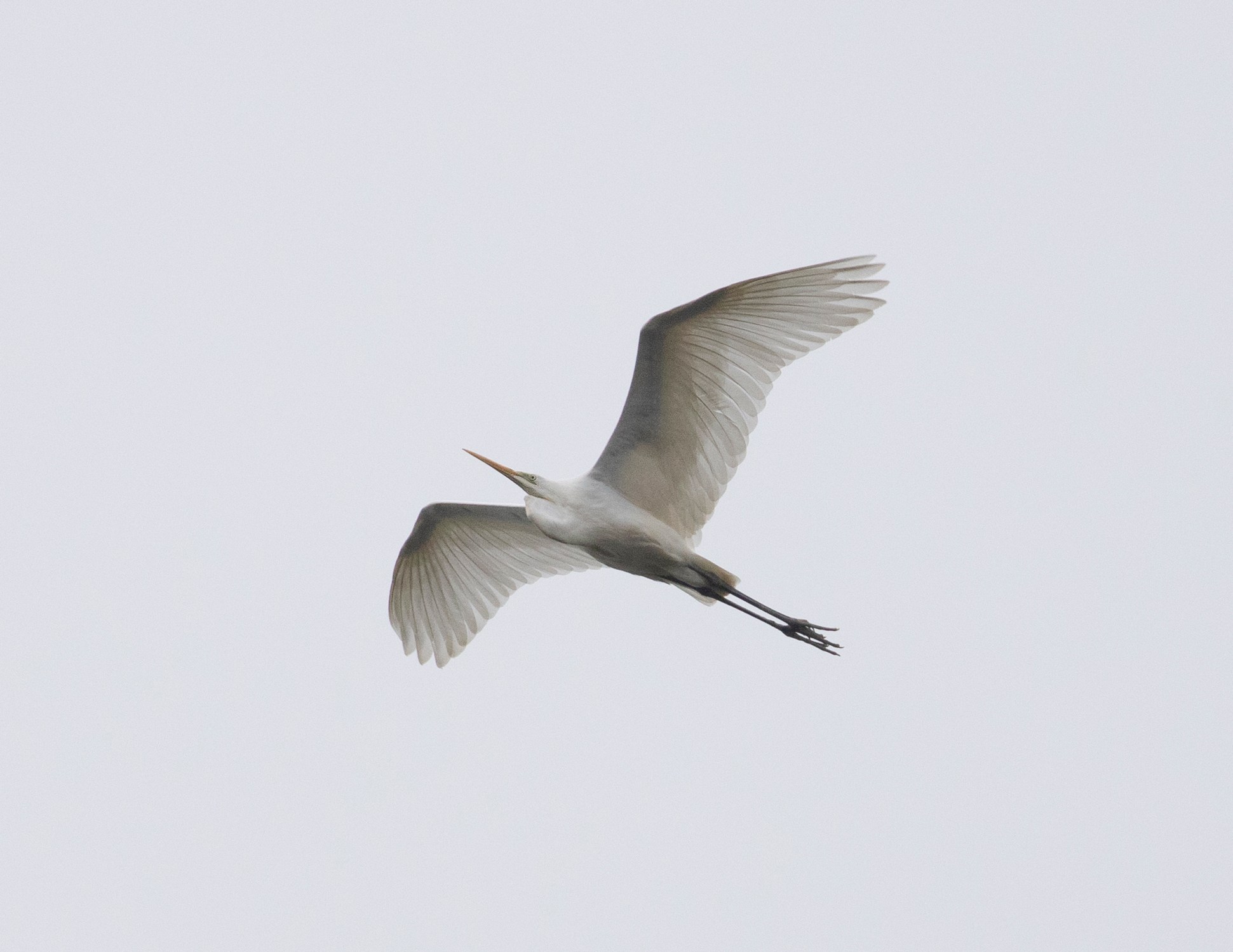
More Redwings in Top wood but not much to report until a GreatwhiteEgret flew over lighthouse down and the valley, coming over my head near the bottom wood and moving off inland. Nice views and In no way a common bird here as far as I’m concerned only the 4th Ive had locally.
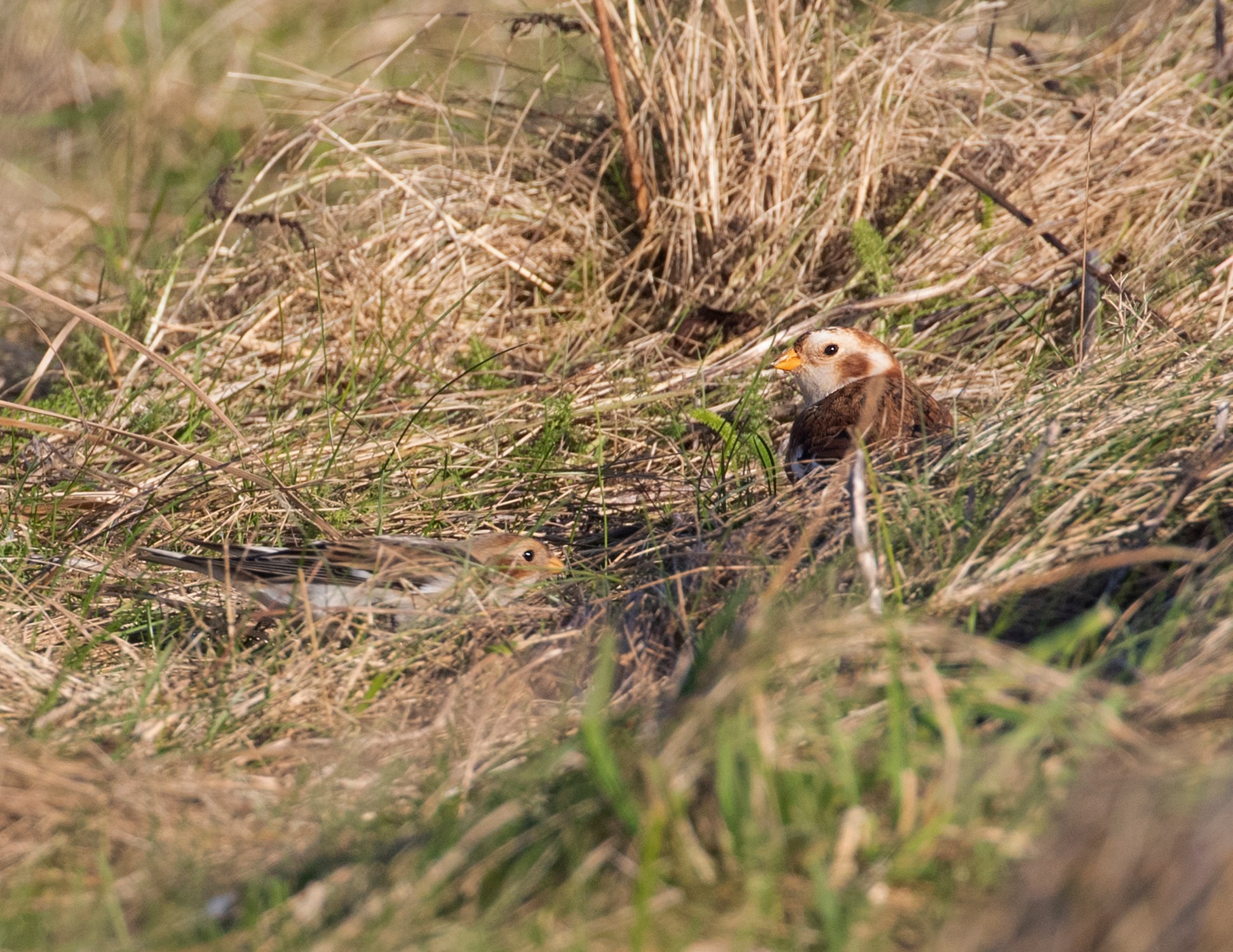
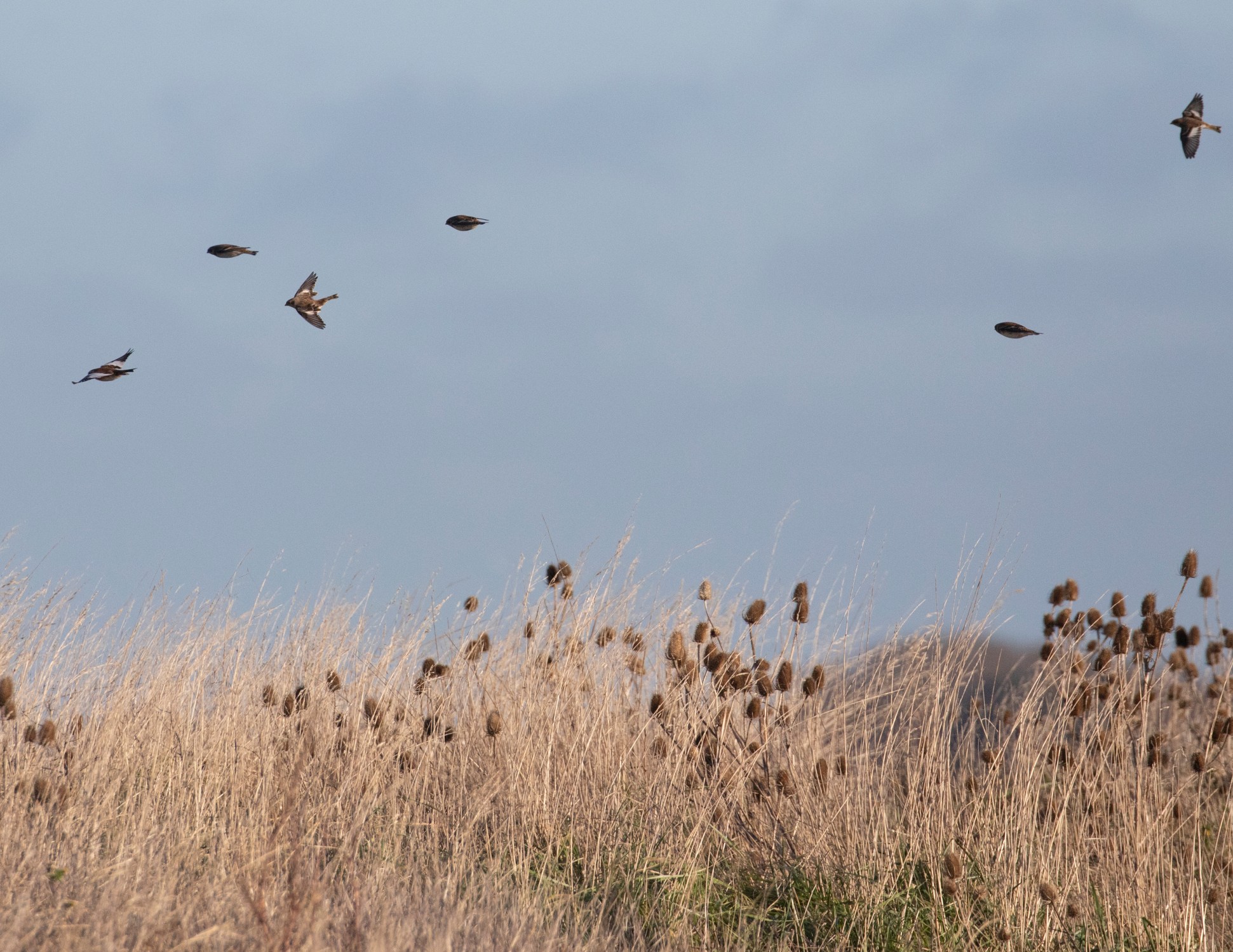
The 6 Snowbuntings were along the tarmac path and in the first field West of the Lighthouse on the 28th but no sign today.
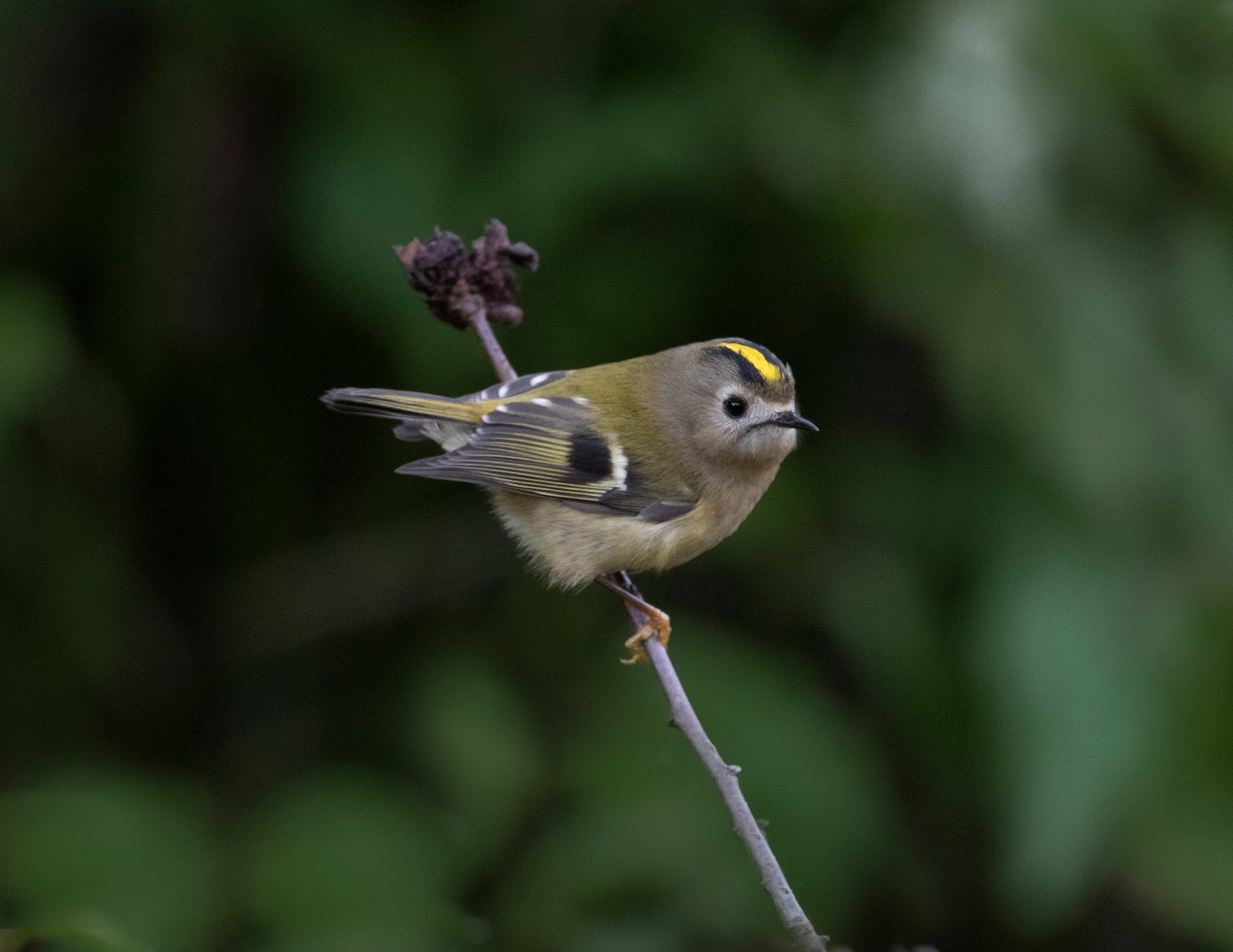
An increase in Goldcrests today but alas no Pallas’s warbler with them, Ive looked everyday and nothing this November sadly.
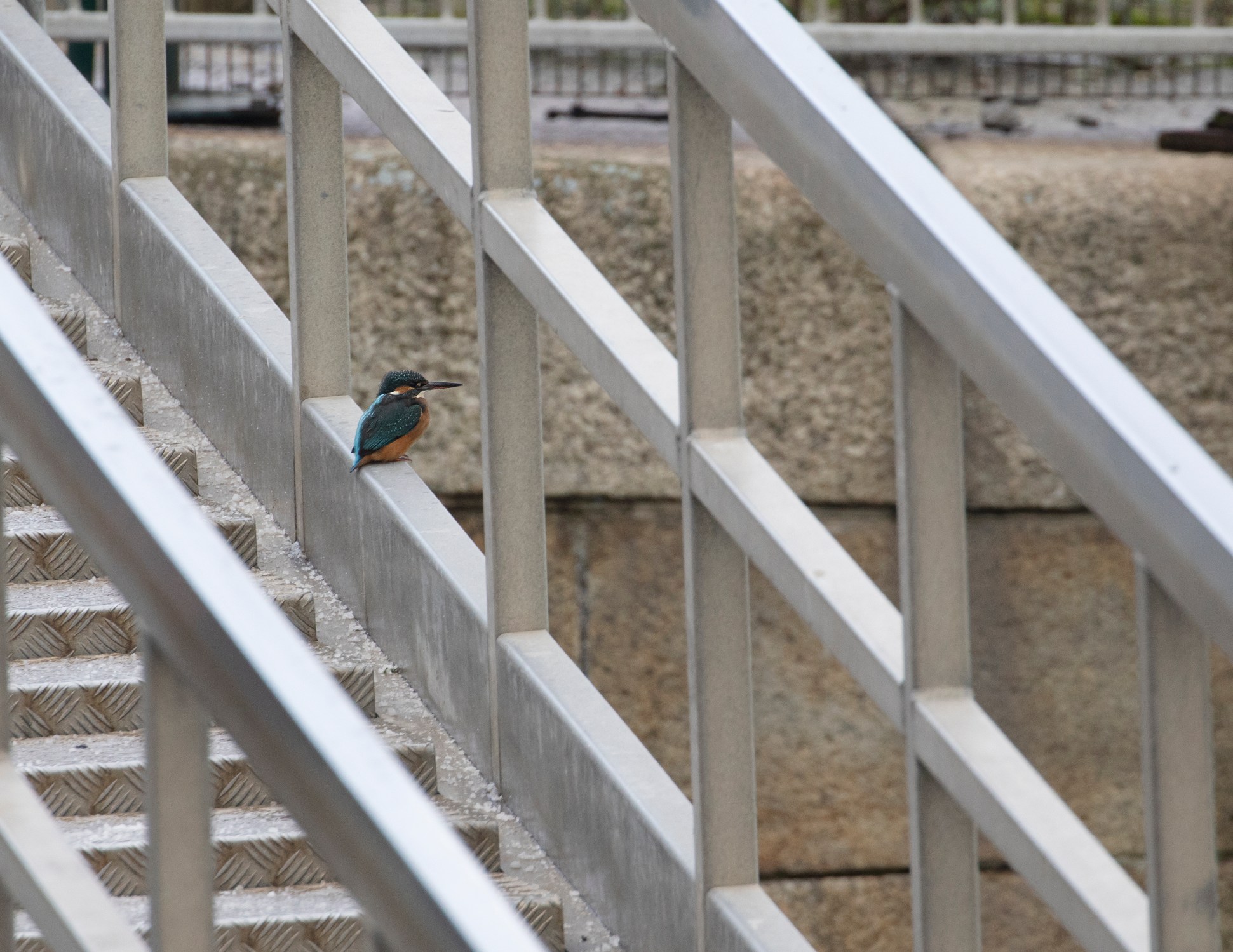
A 1st Winter YellowLeggedGull was on the Pontoons in the Wellington dock, the GreatNorthernDiver was still near the life boats as were 2 Kingfishers and a Guillemot, 5 CommonScoter in the outer harbour.
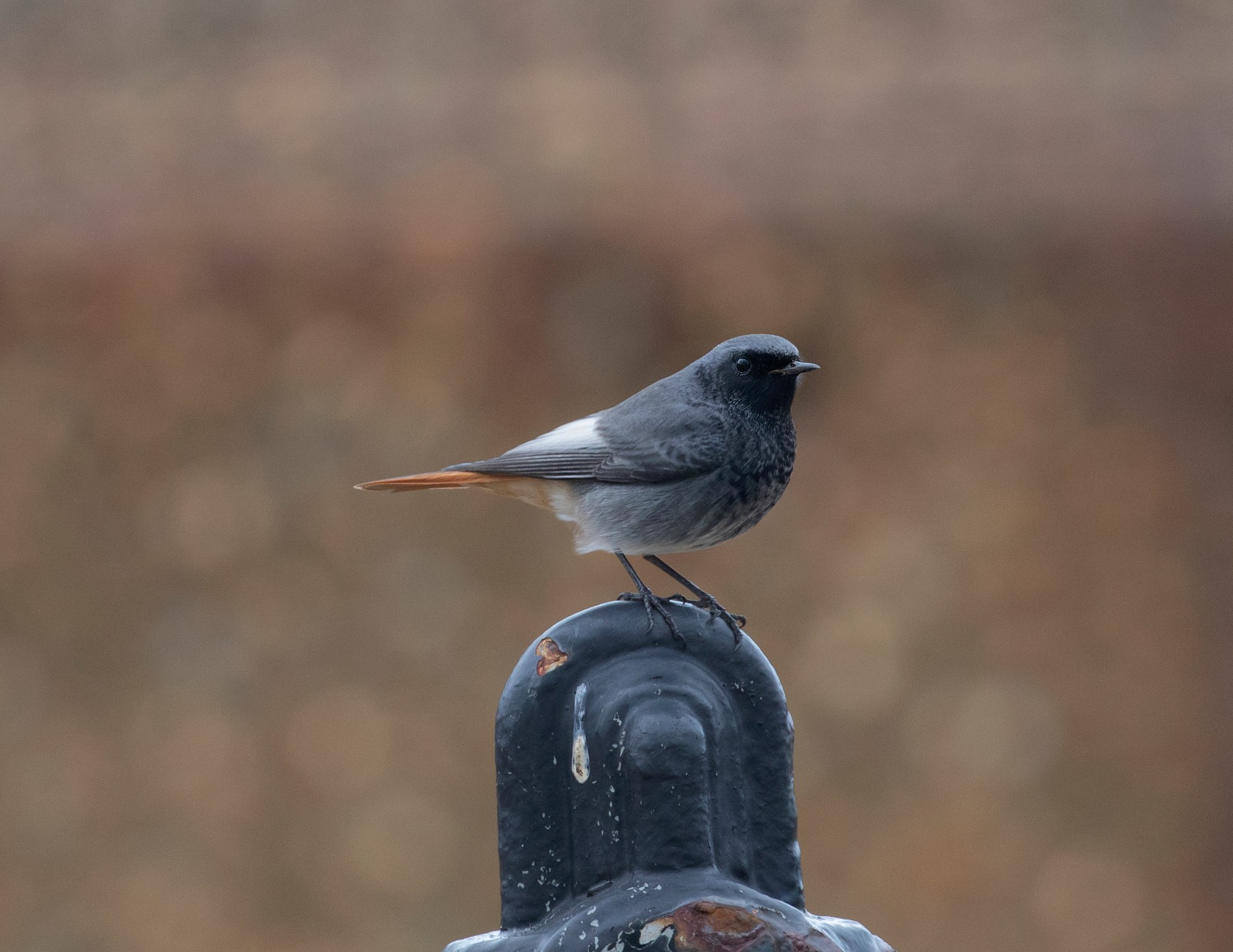
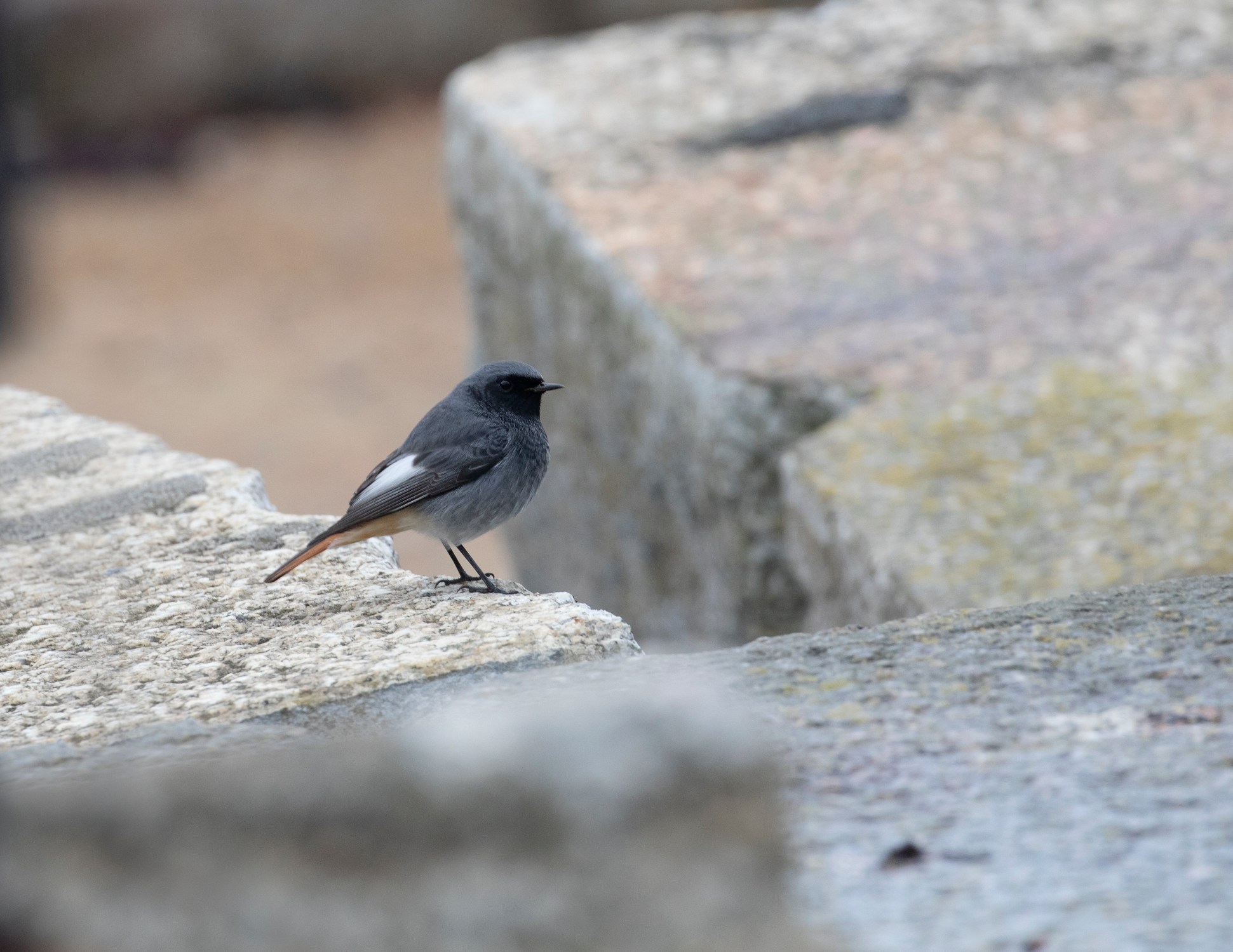
A quick check of Shakey beach was predictably poor with the calm weather but the local male BlackRedstart showed nicely. One of 3 smart adult males I know of around Dover at the moment.
Im off for Florida for 2 Weeks tomorrow. Hoping for some local Waxwings when I get back.
Northerly winds prevail and the Gull theme continues. 7 Different CaspianGulls on the 25th: 6 in st Maragret’s bay (3 adult, 2 Second winters and a third winter) and then another adult from the cliff top. Strong sun light made it slightly hard work in the bay at least.
A Small female adult CaspianGull above and a larger probably male bird below viewed from the cliff top.
One of two 2nd winters present at the bay (above). A quick circuit of the headland produced a Woodcock flushed from the cliff edge on lighthouse down and 6 Snowbuntings that were flying around along the Tarmac path, a much flightier flock, which I eventually pinned down in one of the fields with the help of the Johnsons.
Fast forward to today (monday) 3 Snowbuntings still in the field behind the newly dug out Gun emplacement at Fan bay and 4 CaspianGull (3 on the Pontoons in Dover harbour (2 x first winter and a 2nd winter) and a 2nd Winter in the Bay at st margarets.)
Im seeing alot of ArgentatusHerringGulls since the recent increase in Gull numbers, adult below.
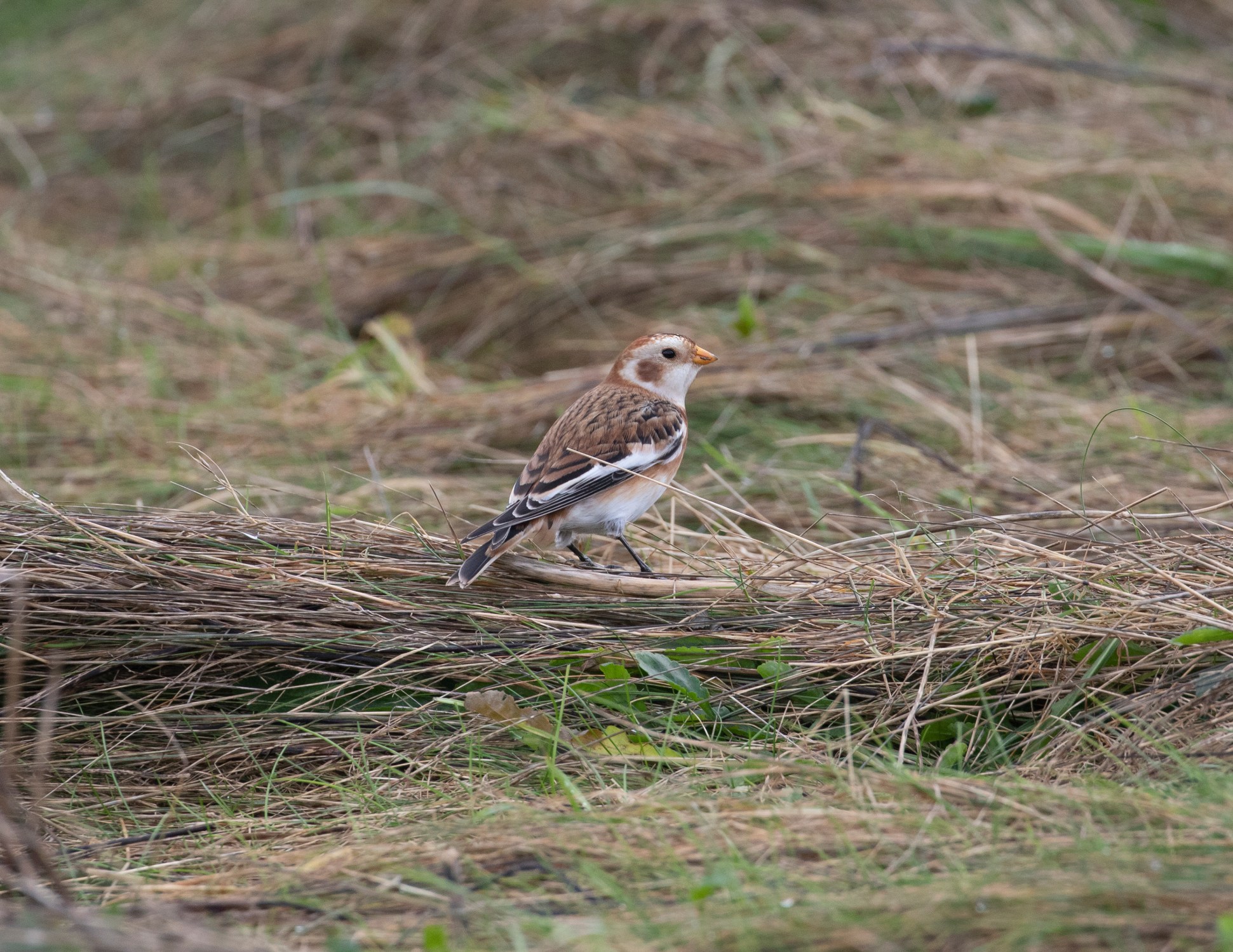
18mph North westerlies and a noticeably colder day yielded the autumn’s first SnowBuntings. I could hear one calling somewhere and suddenly it appeared over my head at Langdon hole and flew NE along the cliffs.
A few minutes later it was on the path in front of me as I arrived at the highest point in the cliffs just West of Fan bay, A very tame bird.
The second was a much brighter male along the Tarmac path as I walked home, it flew in from the track to the farm and fed along the edge as they do.
Earlier in the morning I had been studying the cliff face, as i have promised myself i will do every morning in November, when I realised there were 100+ large Gulls feeding (on what i don’t know) on a recent cliff fall, The best of which was an adult CaspianGull, a rare age for Casps here! see distant pics below.
A trip to Deal later on revealed a first winter CaspianGull. I could have got better photos but I got distracted trying (unsuccessfully) to catch a Common gull with its head caught in fishing wire. Keep an eye out for that.
The only other notable thing was 12 Crossbills low and North over the valley.
A bright morning with a moderate and straight Westerly gave me hopes for a late hirundine. My hunch was right as 2 Swallows flew along the cliff top near Fan bay, my latest here ever by 3 days.
Just as they flew through a HenHarrier floated over and continued South out to sea where I lost it as a tiny dot. Colin had separately seen both of these two things and let me know just as I was texting him the same thing.
100’s of large Gulls were moving into the wind along the cliffs in what seemed like an actual movement from the North sea into the channel (rather than a disturbed flock).
Made up by predominantly HerringGulls, including many Argentatus and GreatBlackbackedGulls and after a few minutes I picked up a 2nd winter Yellow–leggedgull followed by a 2nd winterCaspianGull (below)
A 1st Winter and later on another 2nd winter Caspian gull (below) were added to the count, I would imagine many more were moving as I only gave it 40 mins or so all in all.
Colin and I walked through the Valley and had 5 Chiffchaffs, 4 Firecrest (added to 3 at Langdon) I also saw 19 GreyPartridge at the East end of the patch.
The 22nd saw a small arrival of Woodcock, I had one nearly take my head off on Fox hill down but at least 3 others were seen by Russ B and the Johnsons. I also counted 121 Lapwings moving West.
A switch round to Northerly winds delivered an enjoyable but squally and wet morning up the cliffs, therefore my camera mostly stayed in the bag.
I watched a pair of Peregrines fly out to sea over the harbour as I climbed the cliff, expecting them to intercept a racing pigeon or perhaps woodcock even. However they had gone out to buzz an incoming ShortearedOwl which they half knocked out of the air. I lost sight of the three of them behind some trees but I hope the Owl made it in safely. A Golden Plover and 2 Snipe flew in off also. Other notables include a HenHarrier hunting over the top fields, a MarshHarrier was seen here too and a Woodlark flew around with the Skylarks before dropping into the middle of one of the big fields.
9 Firecrests were counted between lighthouse down and the valley, 2 Chiffchaff, 3 Blackcap, a Great–spottedwoodpecker was in Top wood along with a party of 20 or so Blackbirds plus a single Redwing.
A juv CommonScoter was the only notable thing in the harbour along side the incoming pre roost gulls.