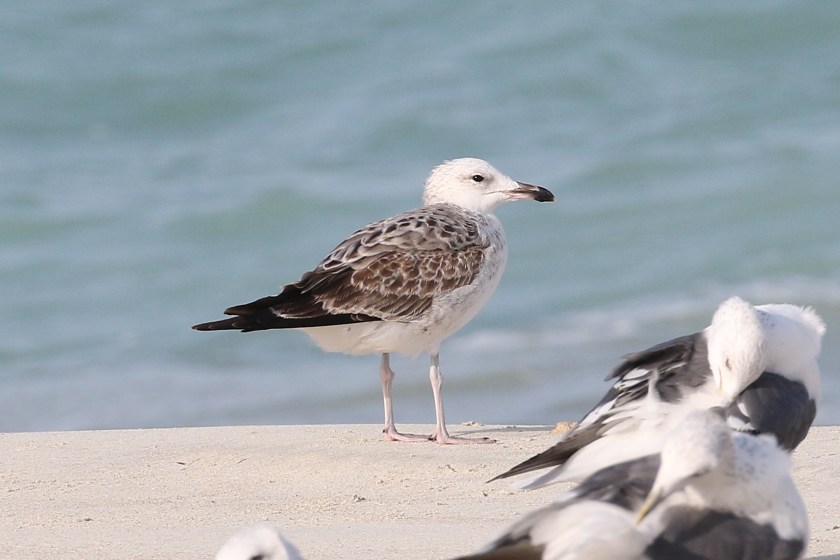
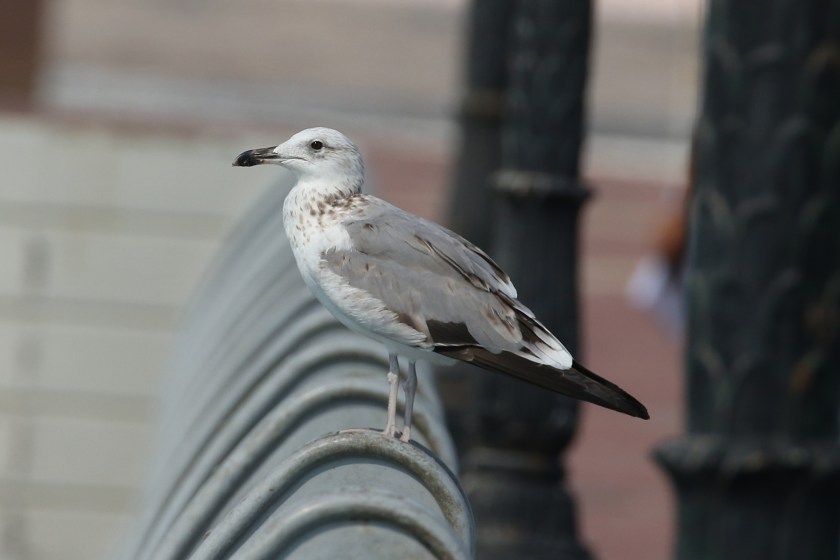
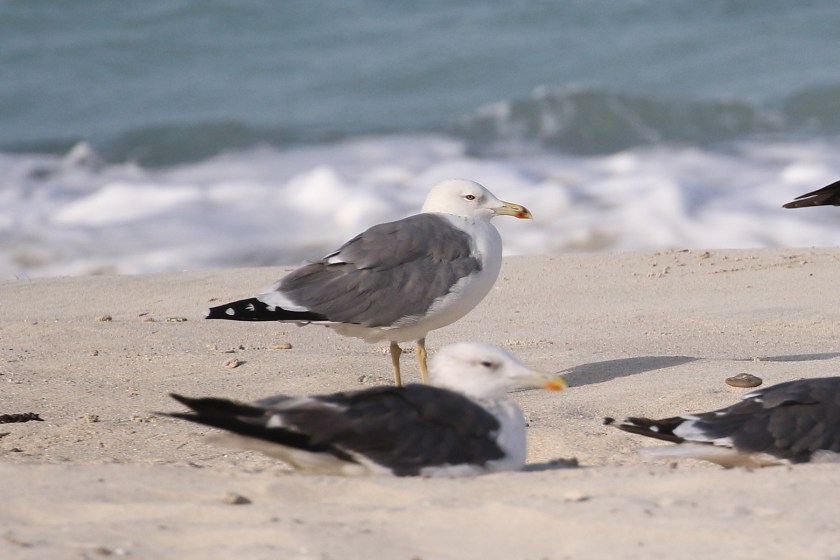
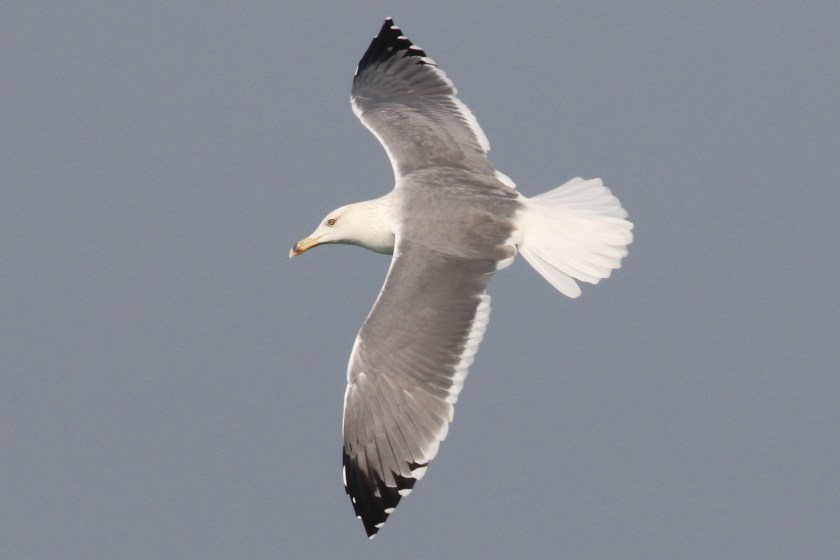
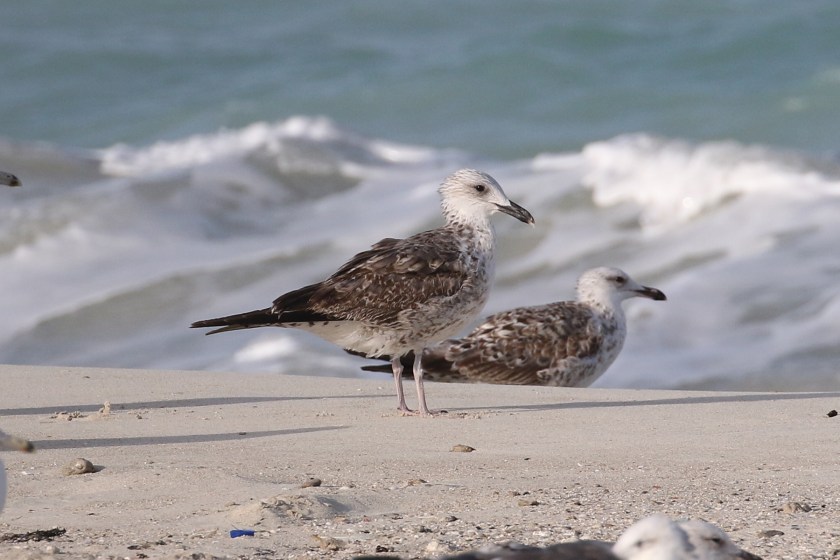
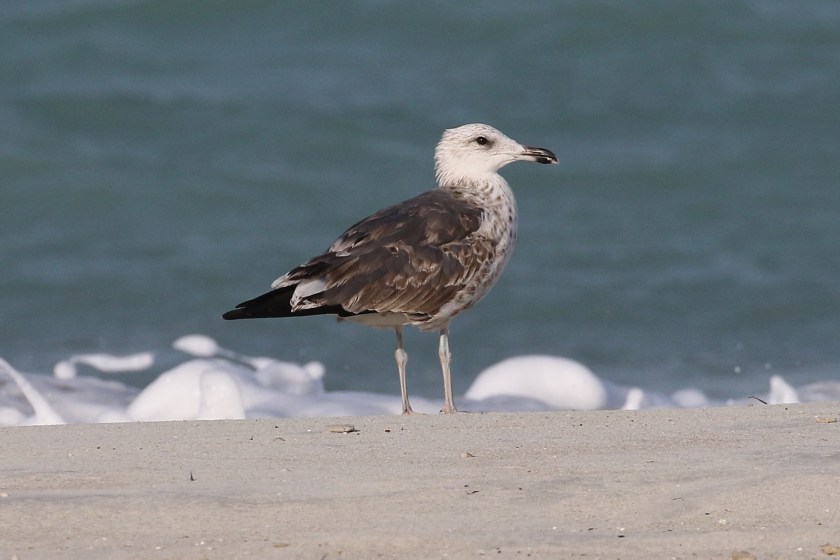
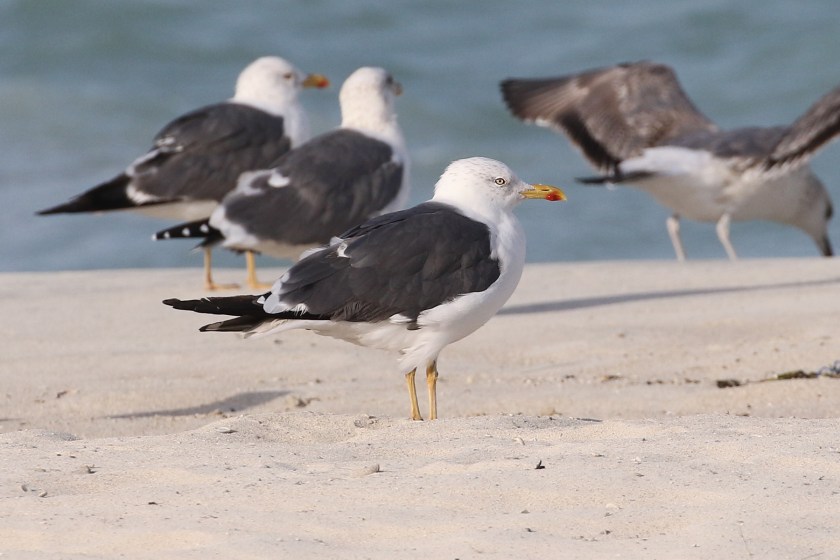
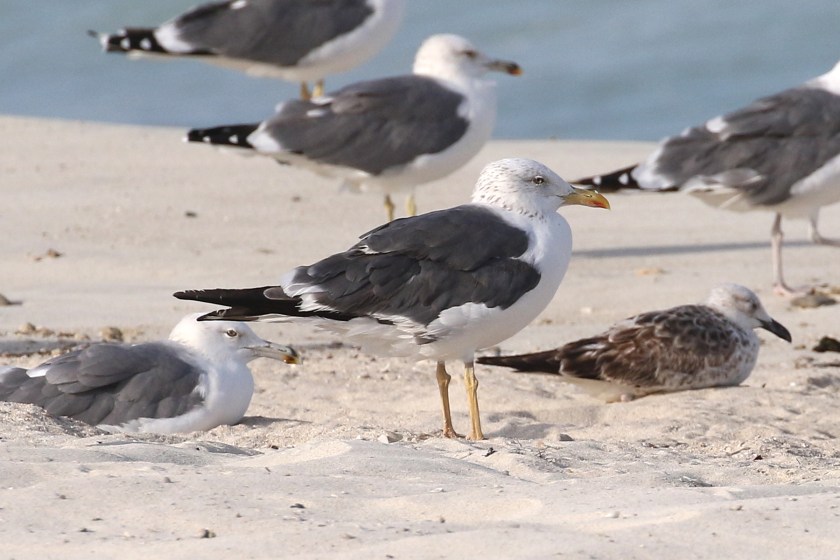
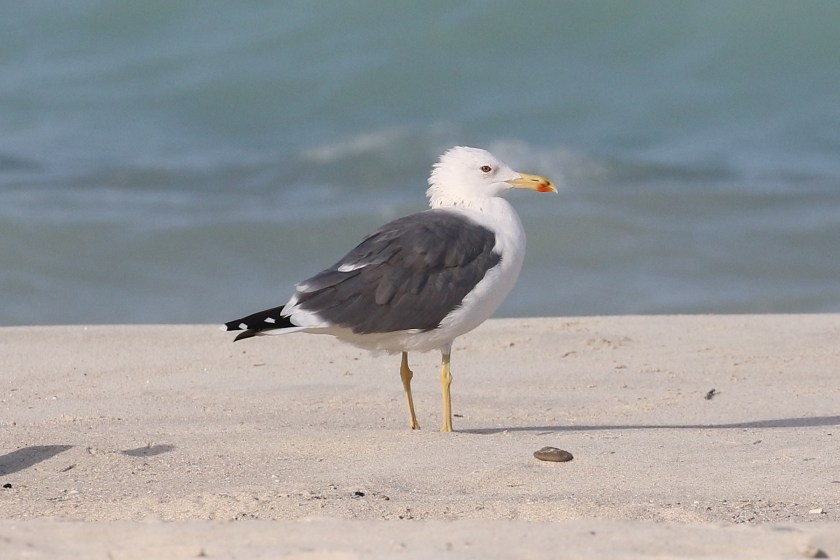
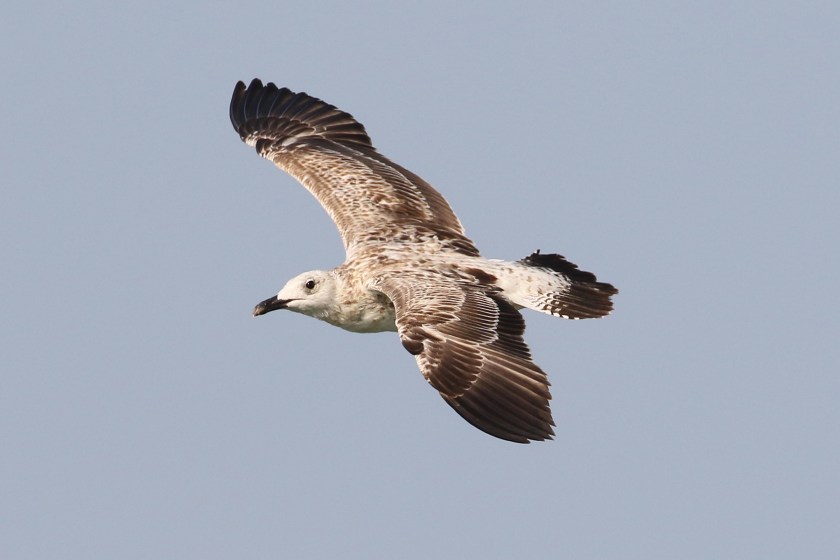
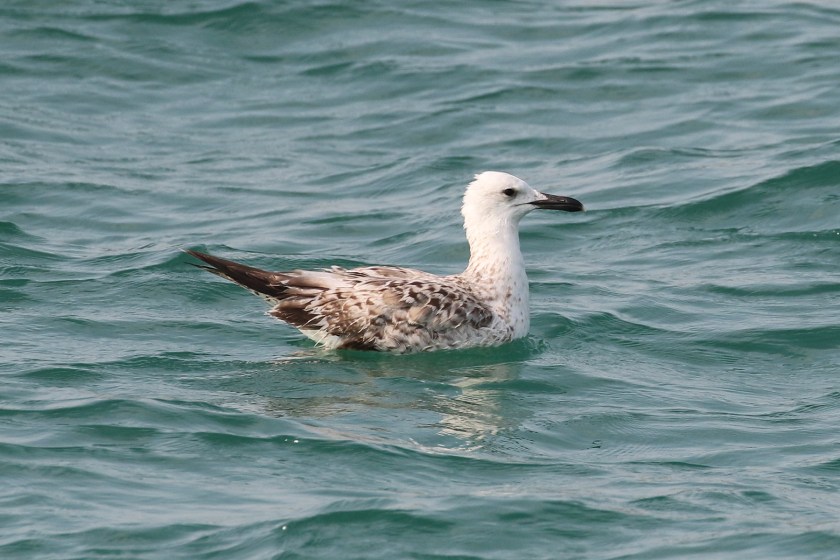
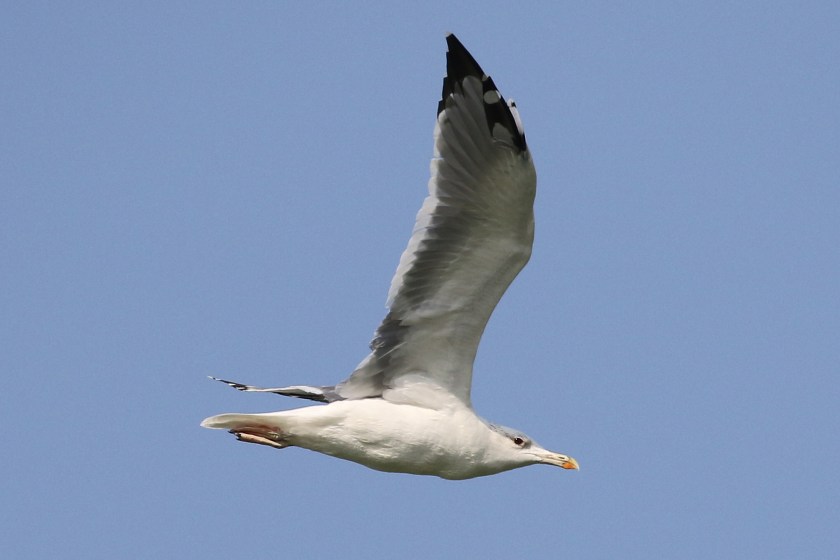
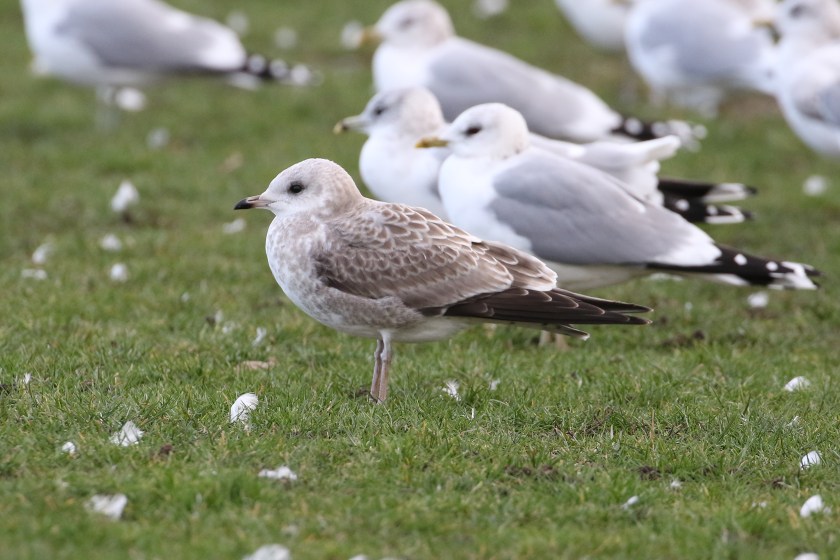
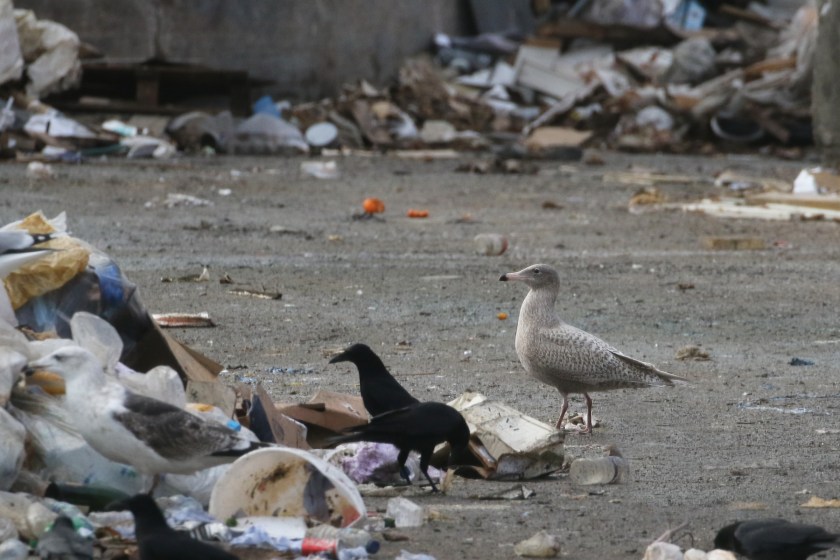
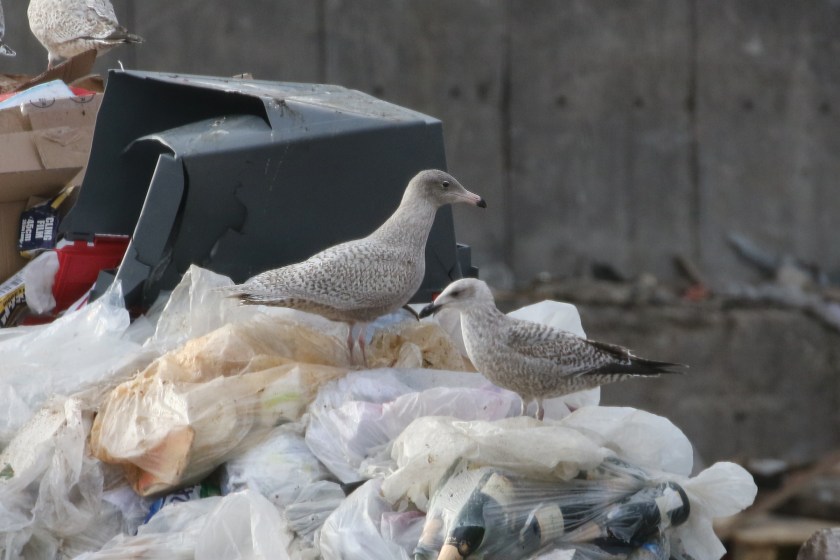
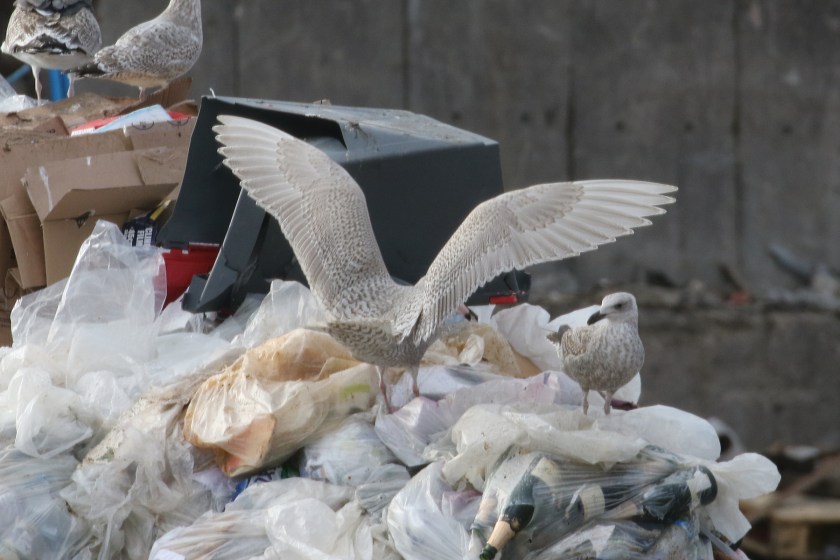
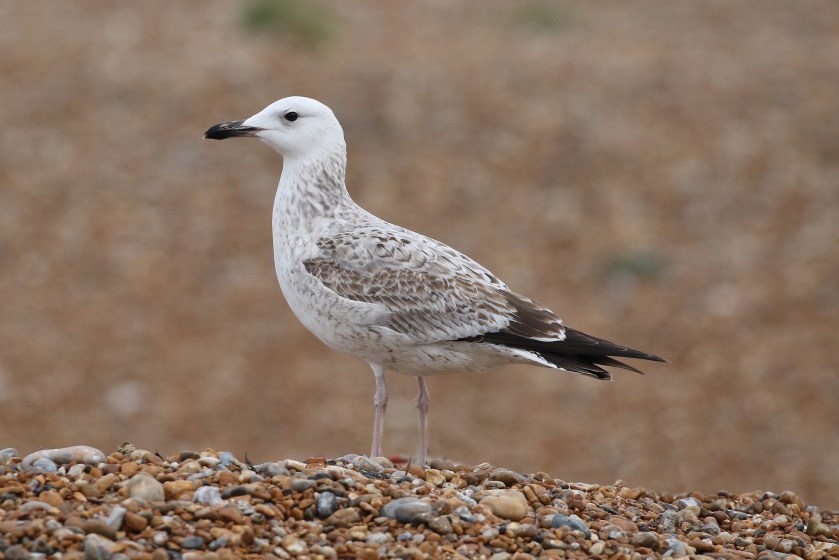
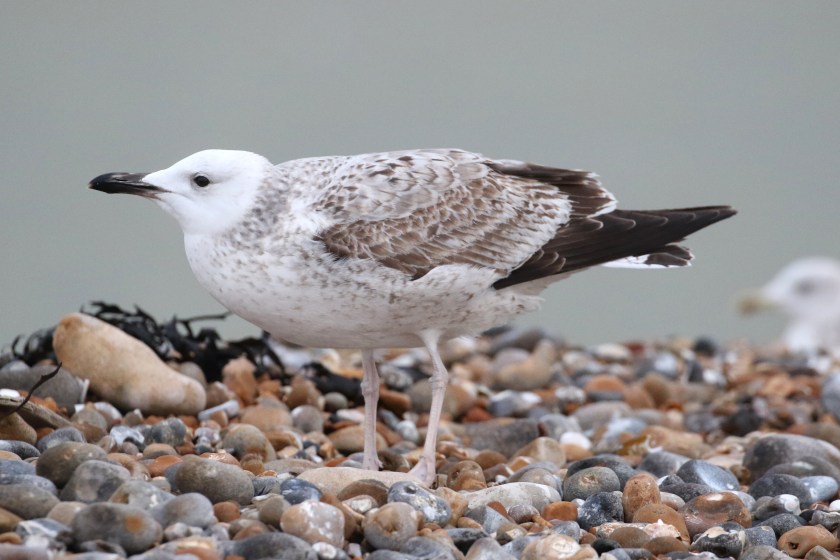
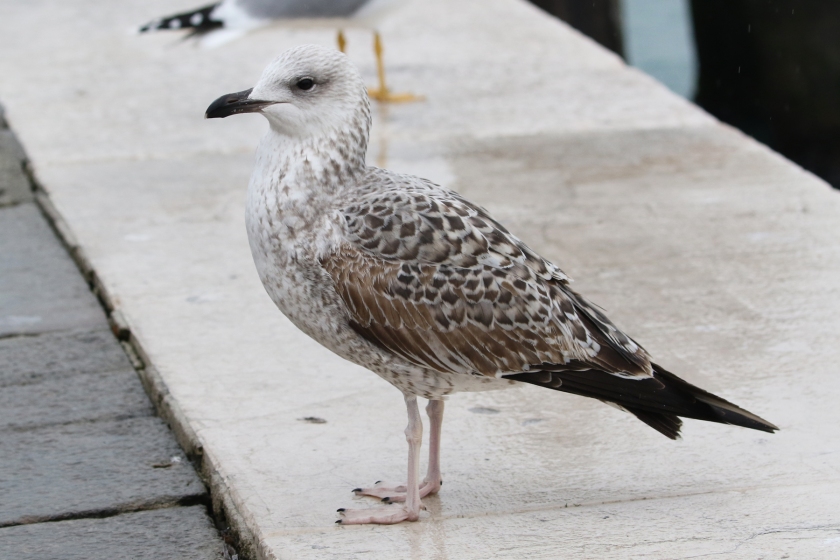
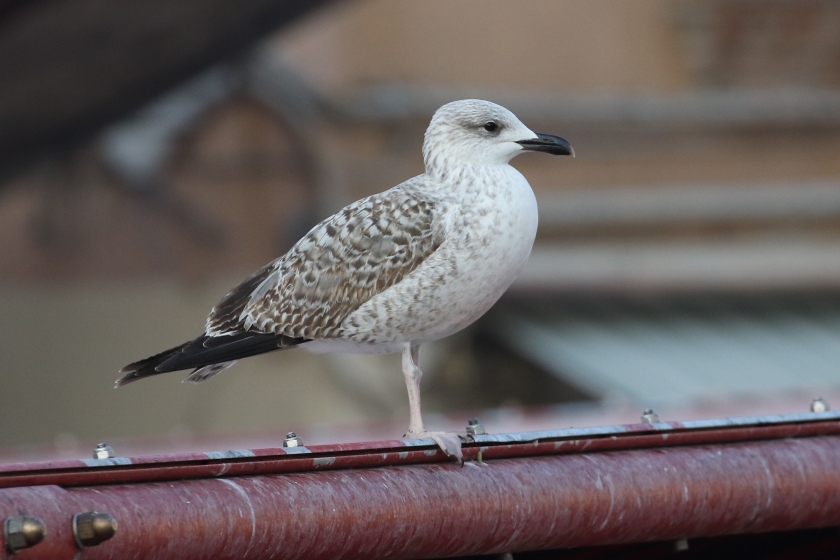
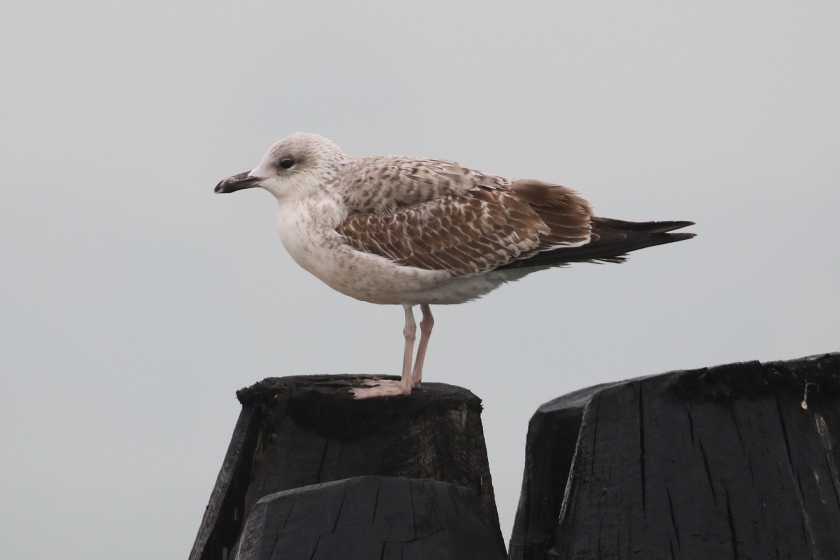
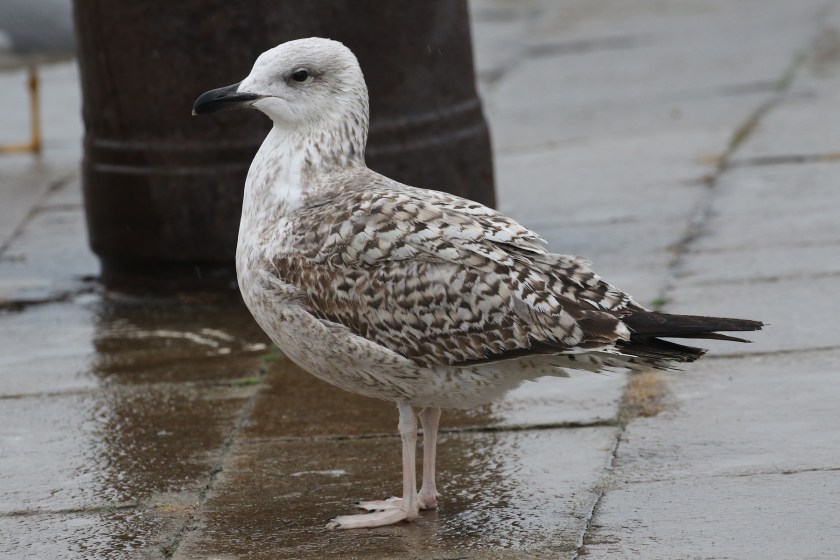
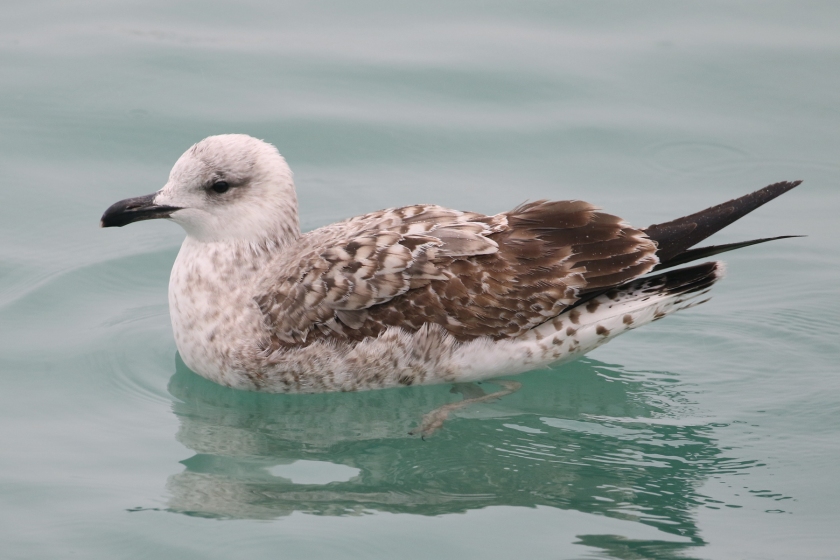
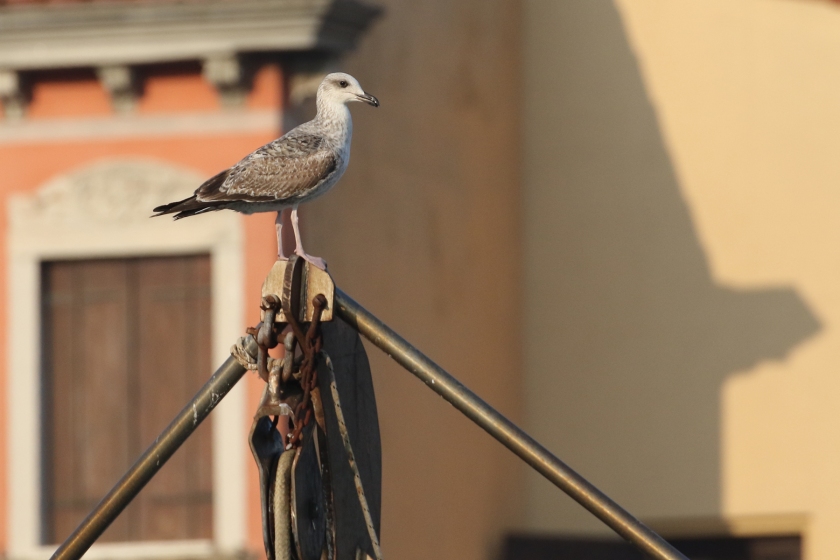
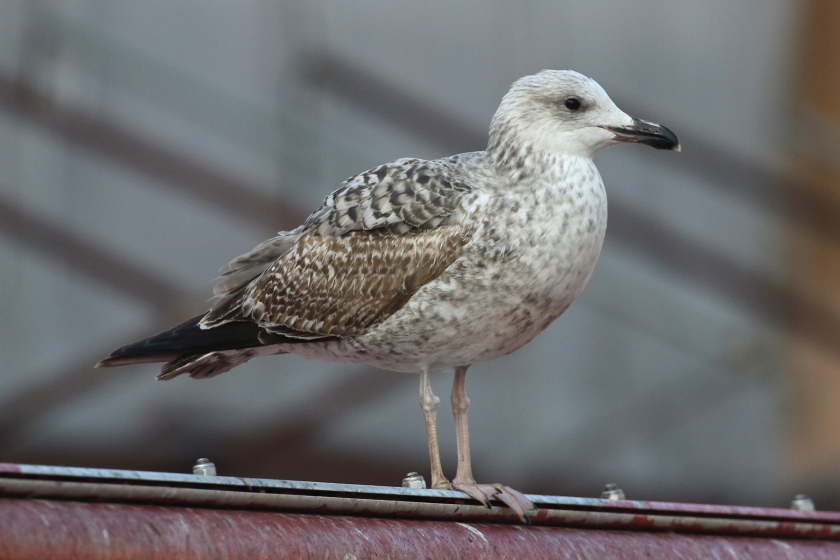
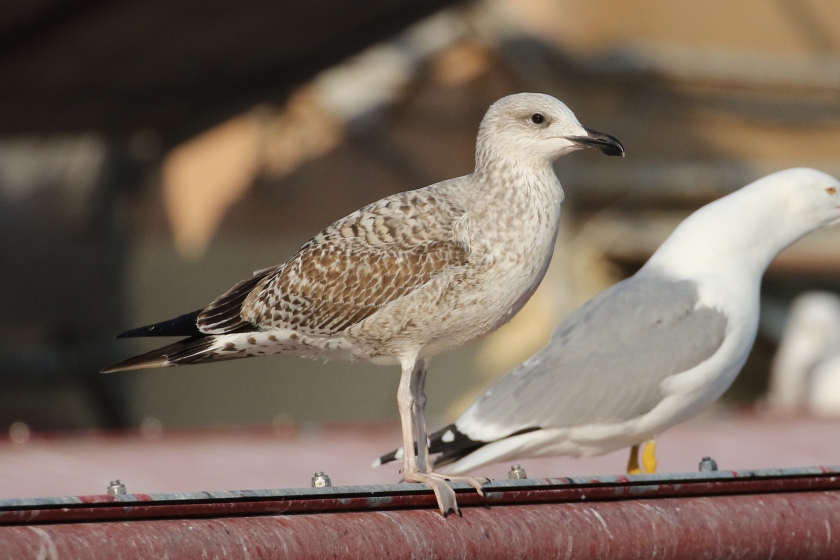
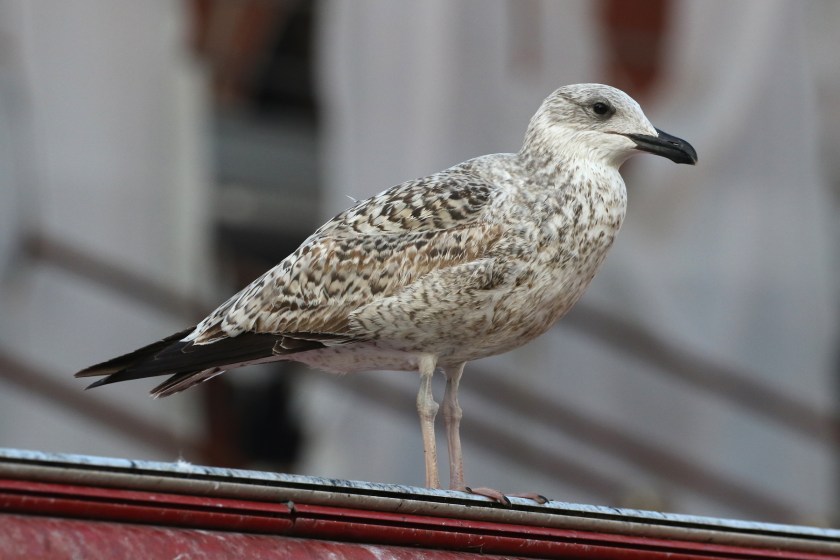
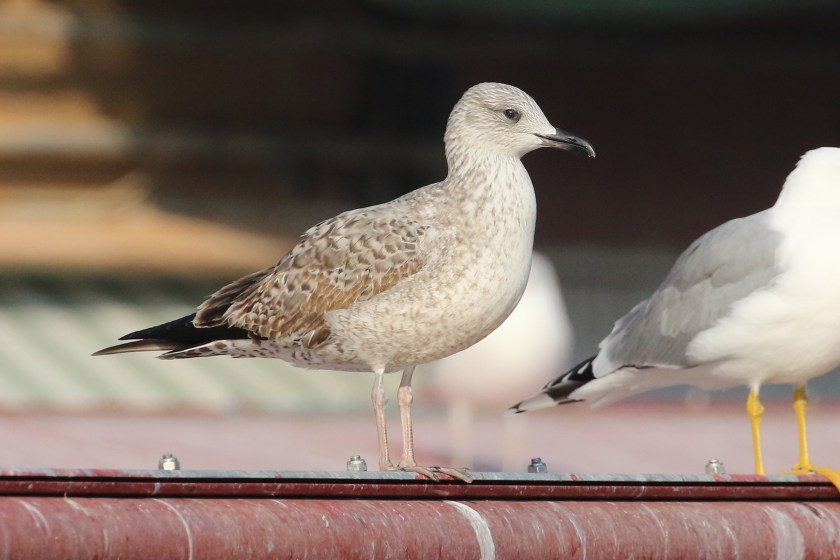
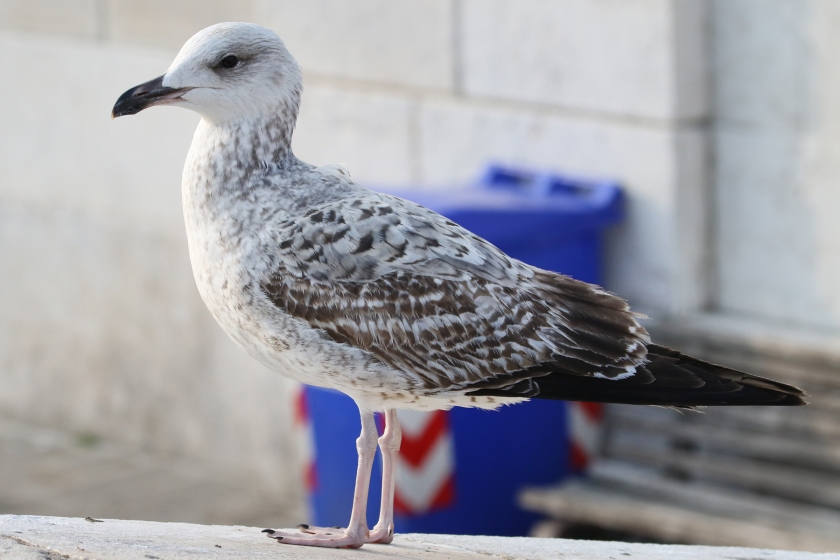
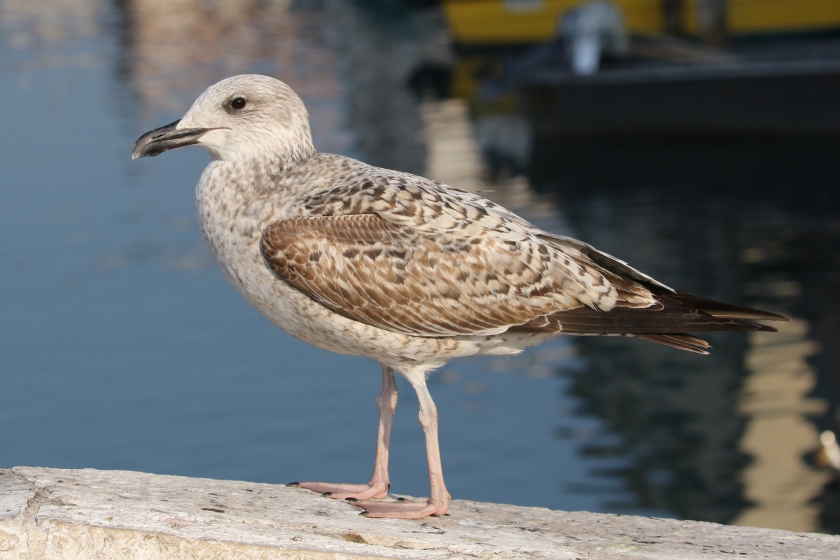
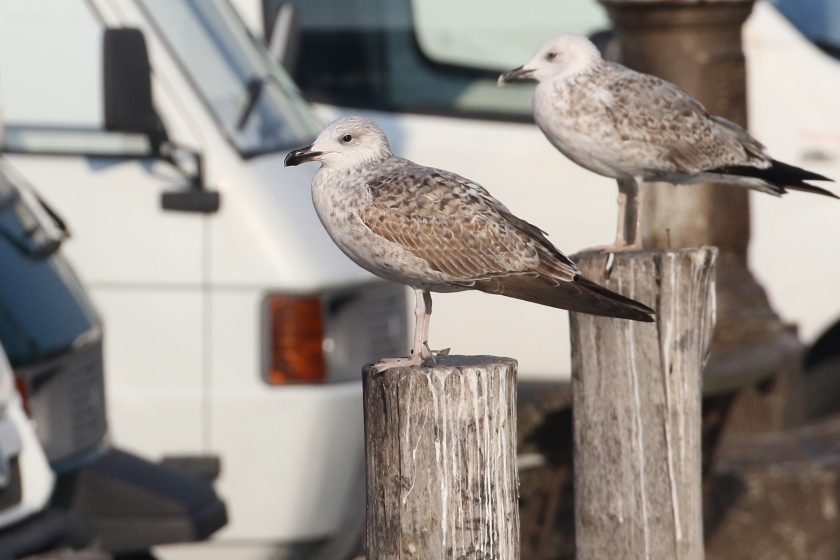
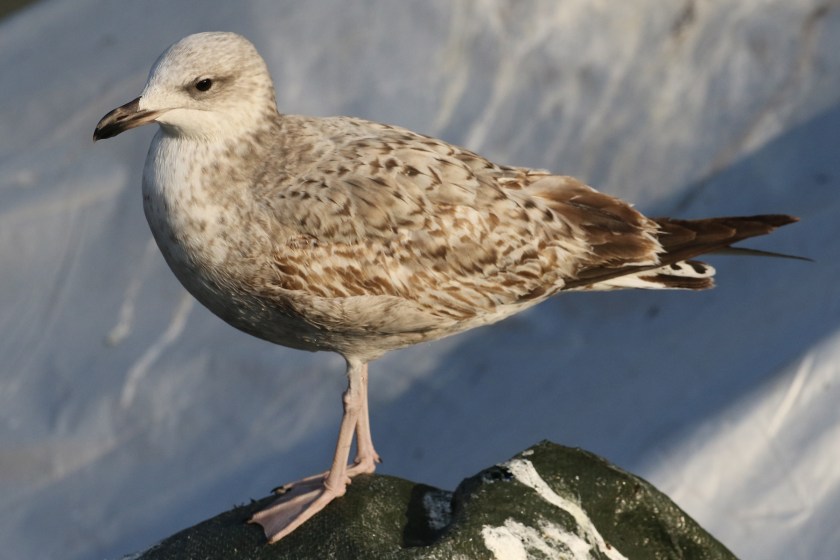
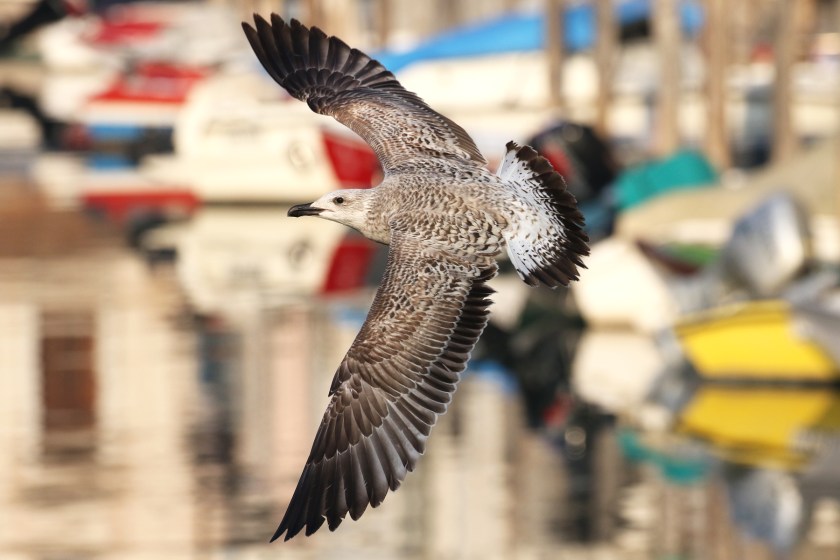
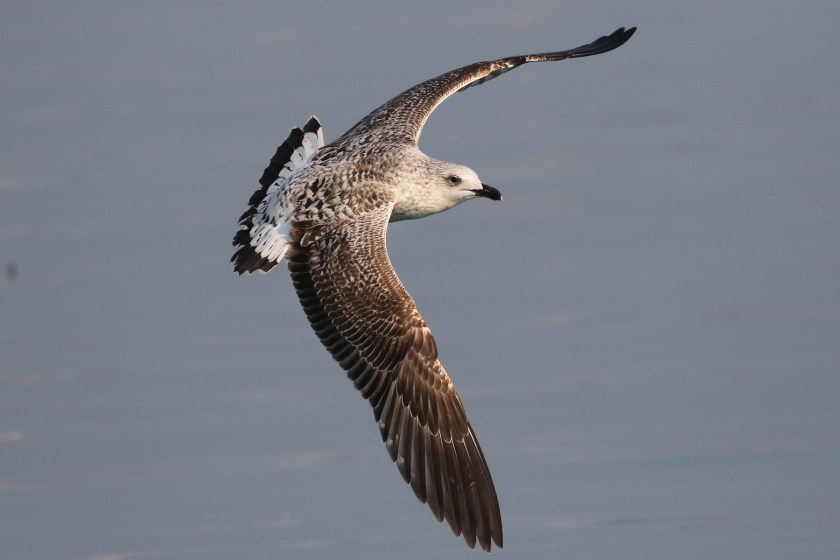
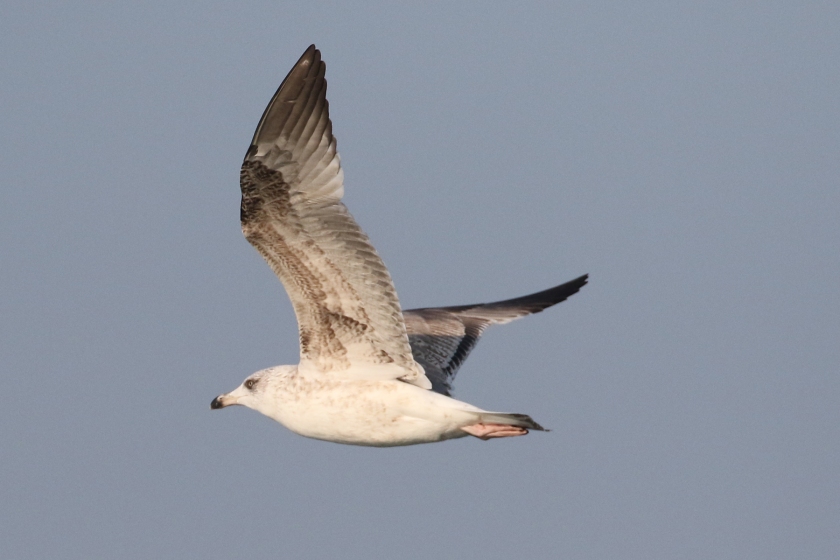
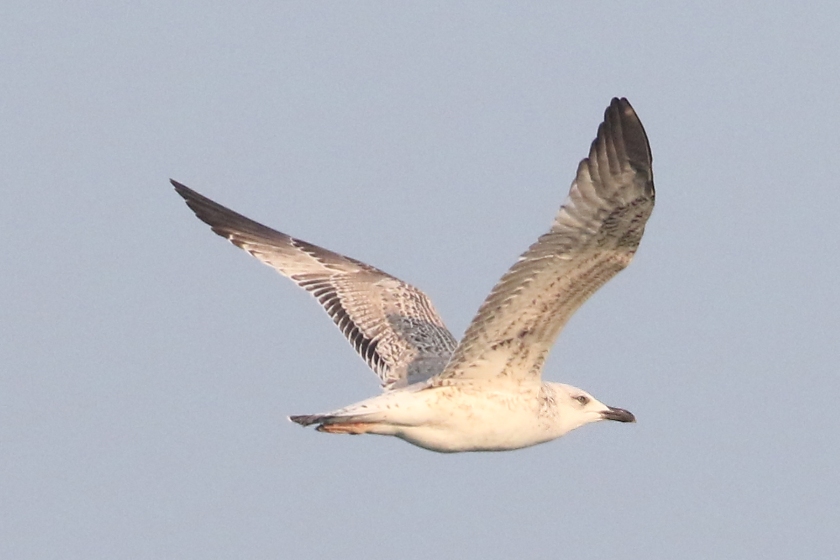
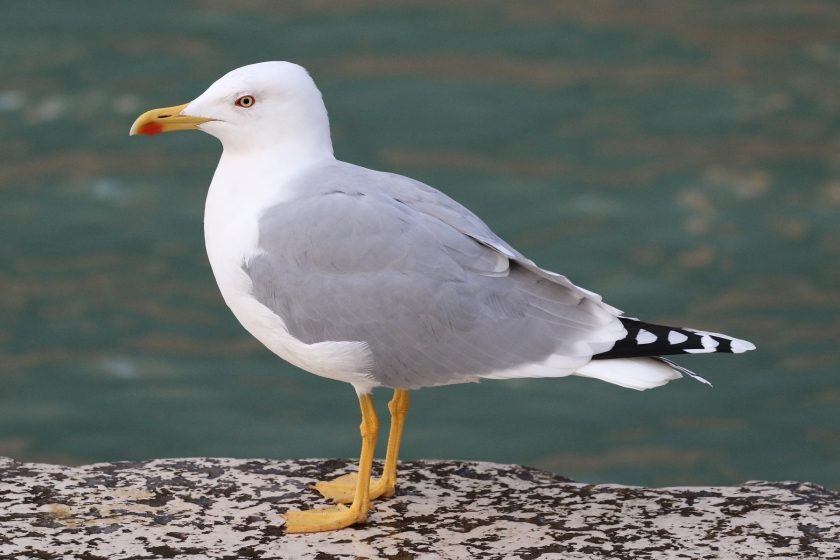
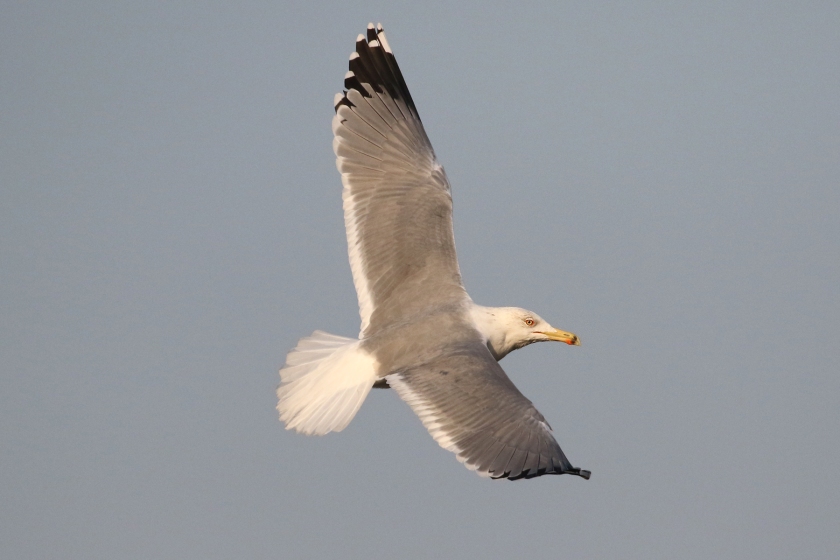
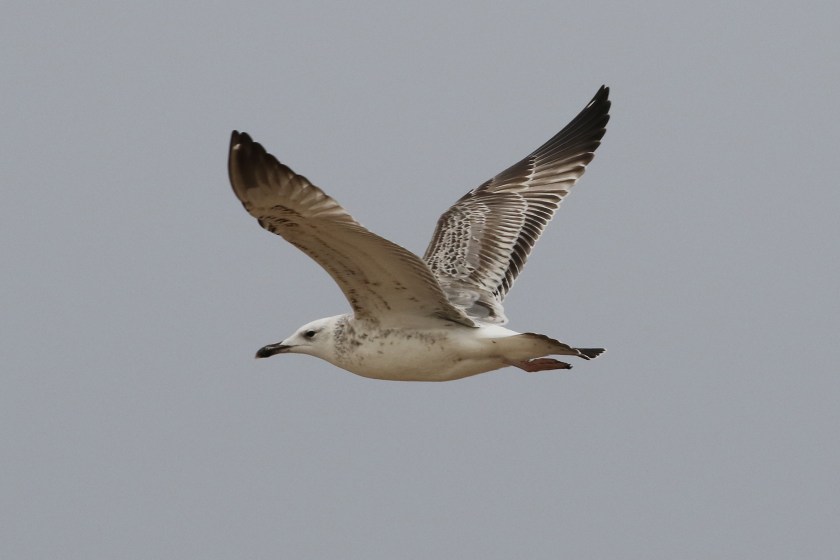
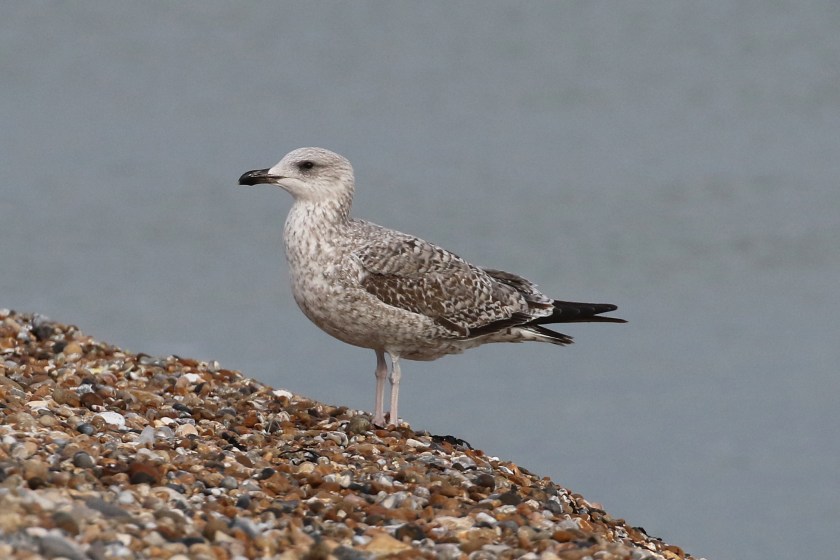
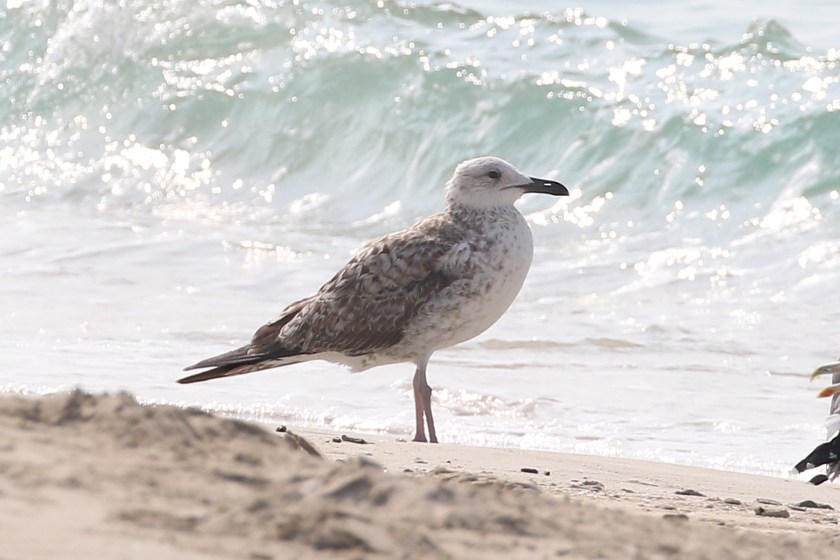
1st winter Yellow-Legged Gulls, Venice

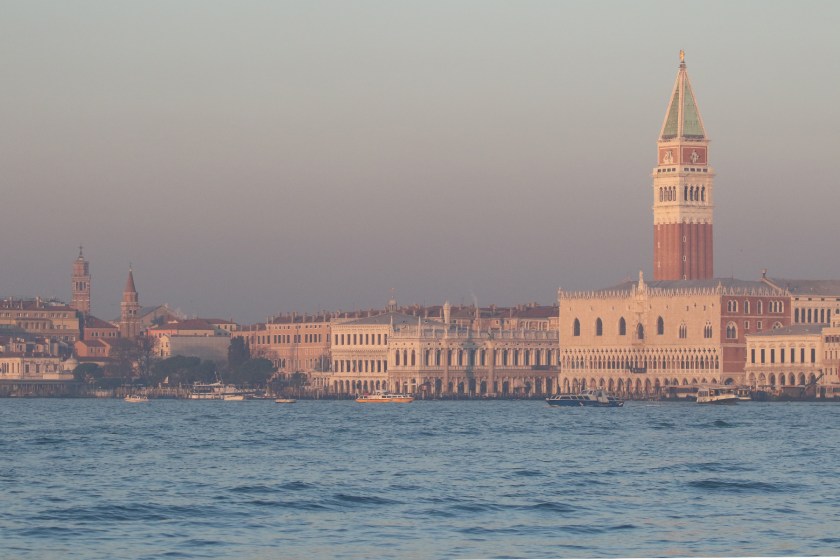
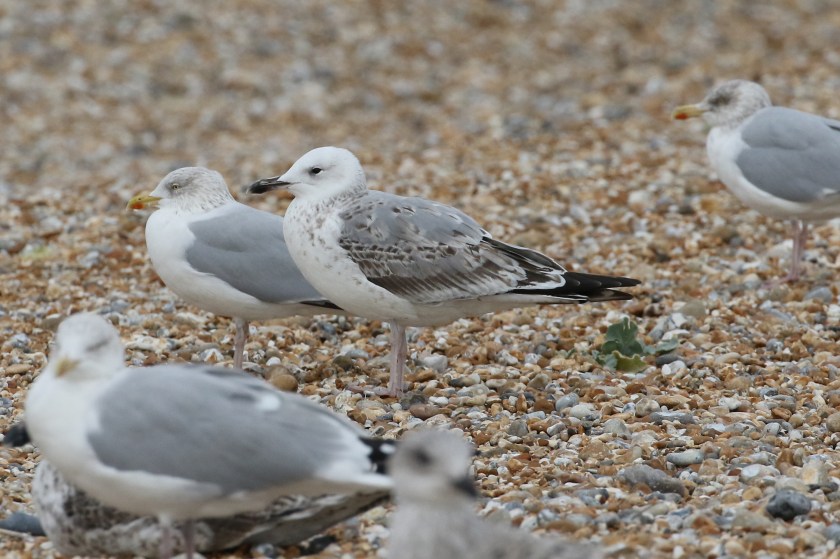
Another work trip, this time fiddling with some Art at Venice Biennale. I had the odd hour during lunch or before work to spend some time photographing local larids. This post, inspired by one of my favourite of Chris Gibbins blog posts from a few years back, will hopefully be just as helpful as a reference point and display of variation within Yellow Legged Gulls as post in the link was for me with Caspian Gulls. Dont give a shit about gulls??? Fear not you can scroll right down to the bottom and there are some Black Redstarts and Black-Necked Grebes thrown in too!

V87A9743

Just a load of images really, showing variation throughout the plumage tracts and structures of these first winter birds. You’ll notice some birds with no replaced wing coverts, showing that it really can be 0-100% of coverts included in the post juvenile moult.

V87A0339

V87A0258

The next bird showing a ‘softer focus’ scapular pattern – closer to that of Caspian.

V87A0324

Folowed by a really grainy contrasty 2nd generation scapular and covert pattern.

V87A0355

V87A0342

V87A0331

V87A0247

The below birds 2nd generation coverts are taking on the adult grey.

V87A0112

V87A0284

V87A0135

V87A0156

V87A0270

V87A0152

V87A0110

V87A0118

V87A0128

The bird behind the first winter here looks quite Caspian like in this shot, the following image shows 2nd winter Yellow Leg, bit of a Caspy looking one in my opinion.

V87A0127

The following pale bird had me thinking I’d found a Herring gull there for a moment, Ive never seen a YLG with such a soft/delicate scapular pattern. The covert moult and tail pattern rule out Herring for me but certainly not how I like my Yellow legs! I think fading and wear are at play here. Note the funny pattern on the replaced central tail feather.

V87A0173

V87A0176

V87A0261

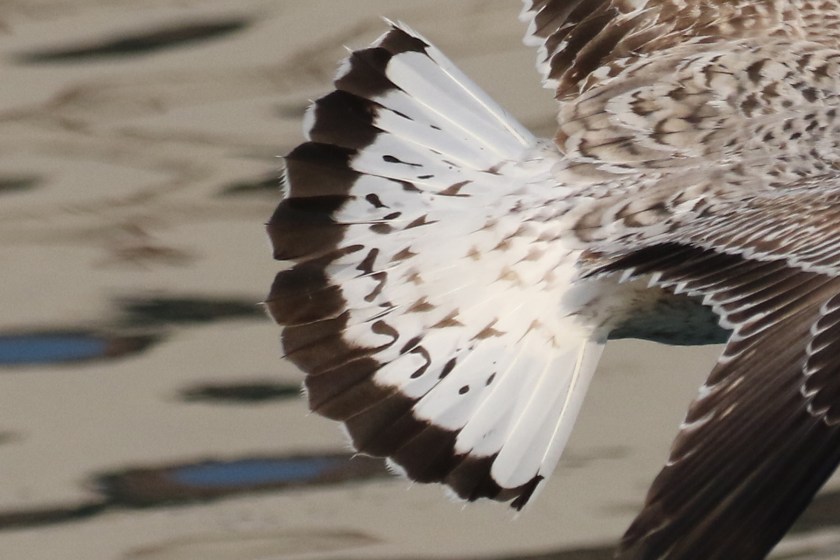
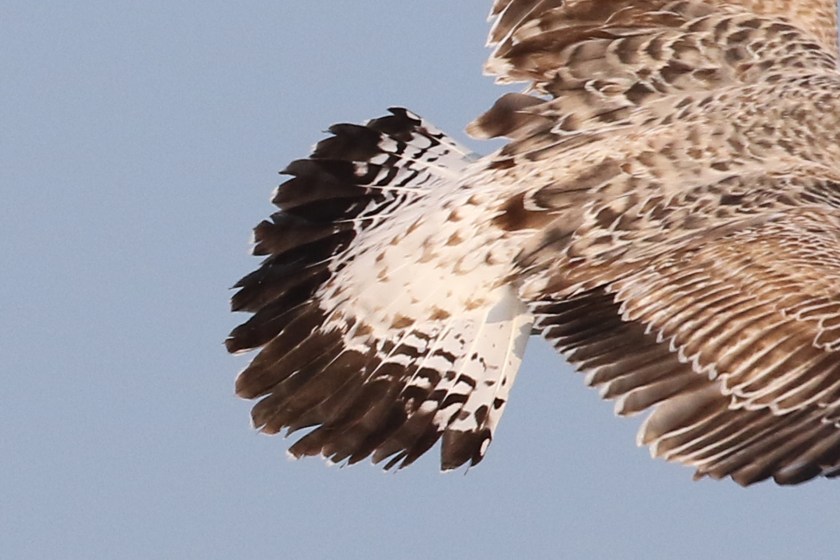
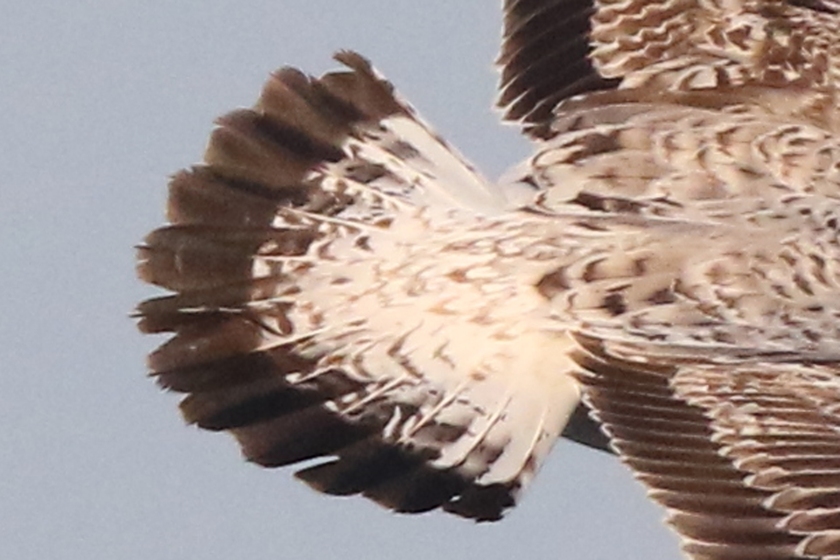
This spread wing and tail shot nicely segways into some tail pattern variation.

V87A0146

V87A0083

V87A0081

V87A0059

V87A0187

Another little anomaly that I noticed were 2(!) 2nd winter Yelow Legs with a faint p10 mirror. The holy texts say this is extremely rare and really only a Caspian / sometimes argentatus feature. Just goes to show- its never one feature alone with gulls!.

V87A0212

V87A0040

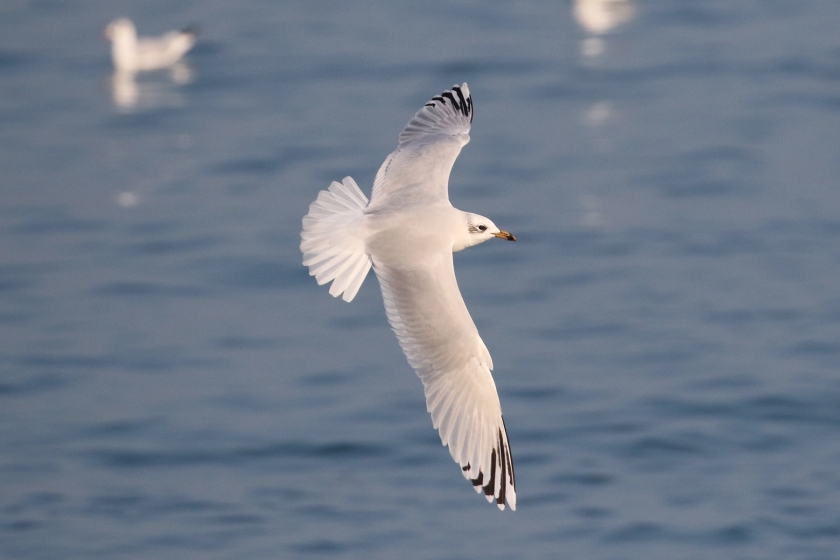
Not a yellow-Legged gull i know but a second winter Med Gull with a particularly lovely primary pattern.

V87A0231

I couldn’t not post this. A great looking adult, pretty much all of the adults I was seeing had this slightly larger white tips to the primaries than i’ve traditionally expected. Looks amazing though! Some with complete white tip to p10.

V87A9762

V87A0278.JPG

Thats probably going to be more of less it from me regarding Yellow-Legged Gulls untill the 2nd winter birds begin getting saturated bills and eye rings around March…Love that!

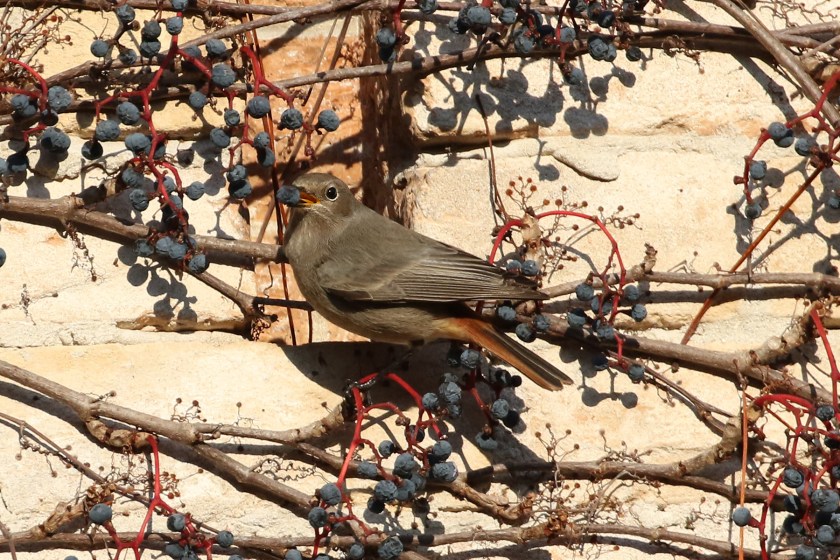
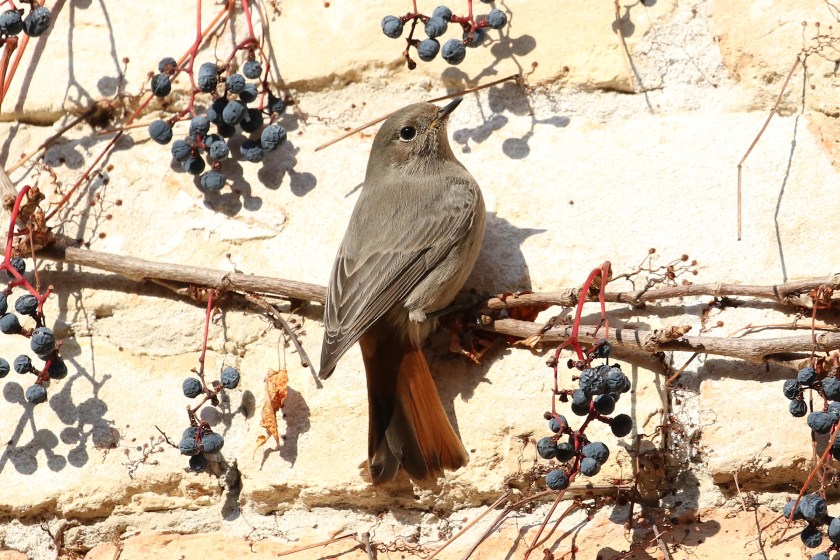
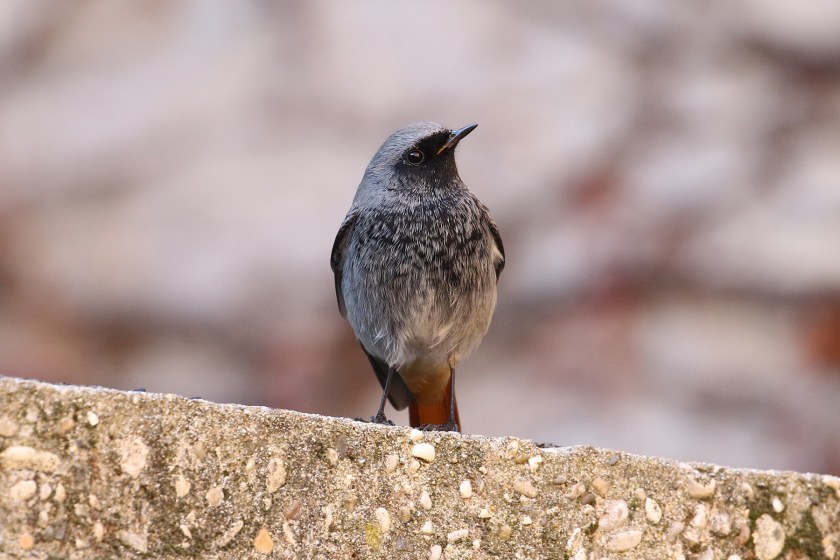
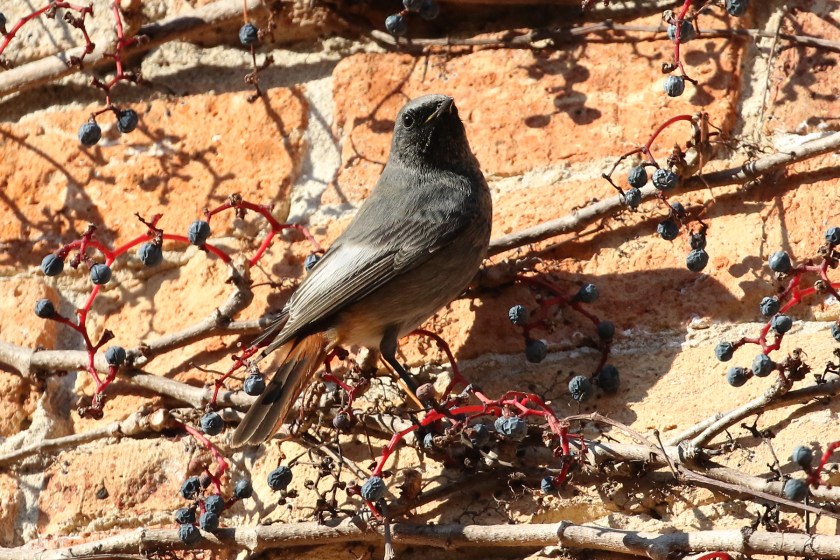
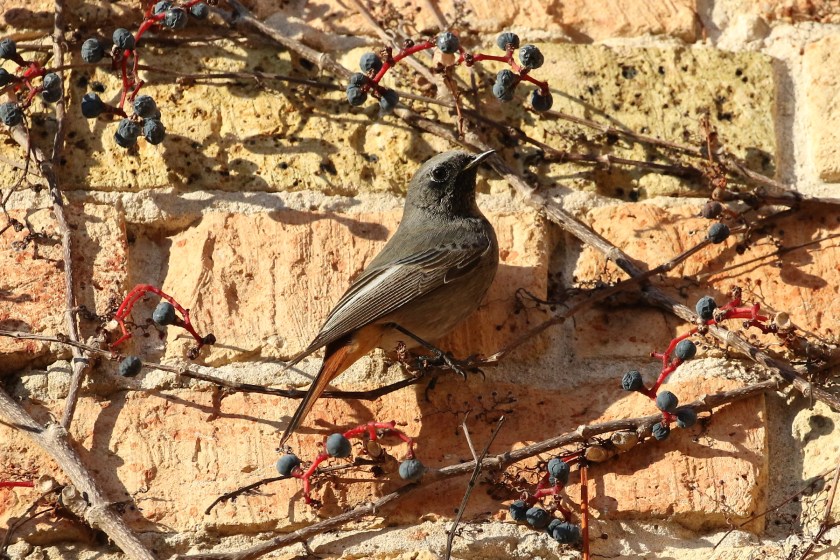
There was abit of waiting around during the day so just outside where i was working I could see multiple Black Redstarts feeding on the berries of a huge Virginia Creeper growing in a little courtyard. There were up to 11 birds at one point, all different ages/sexes, almost like a tit flock they would come and go during the day.

V87A9796

V87A9893

V87A9958

V87A9973

The following bird seems to be a first winter Male, note the moult contrast across the greater coverts, the new black shiny inner feathers contrasting with the browner juvenile outer feathers,also all median coverts are new. The face pattern is coming in and more of the wing is second generation. It seems more advanced than they often are at this age in the uk. Probably (similar to gulls) as they’re born earlier than birds from northern/central Europe. therefore have longer to develop.

V87A9987

One last thing. Venice is full of Black-necked grebes, must have seen 100’s from boat trips to and from the airport

V87A0016


Abu Dhabi Nov ’17

I was debating on whether or not to organise the birds in this post taxonomically or not . However if I were to do so the first 20 or so photos would depict a load of scruffy eastern Gulls, so to keep peoples attention I thought id just write in whatever order they pop into my head.

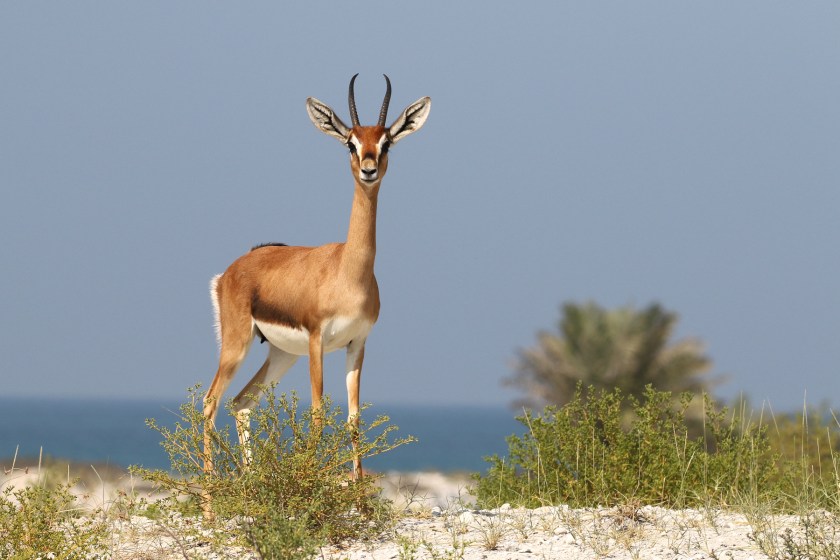
12 Days away with work and a lot of spare time in the mornings and late afternoons. Birds were concentrated into any ‘green’ space, with a racecourse and a golf course being the best areas in the city.
V87A7523

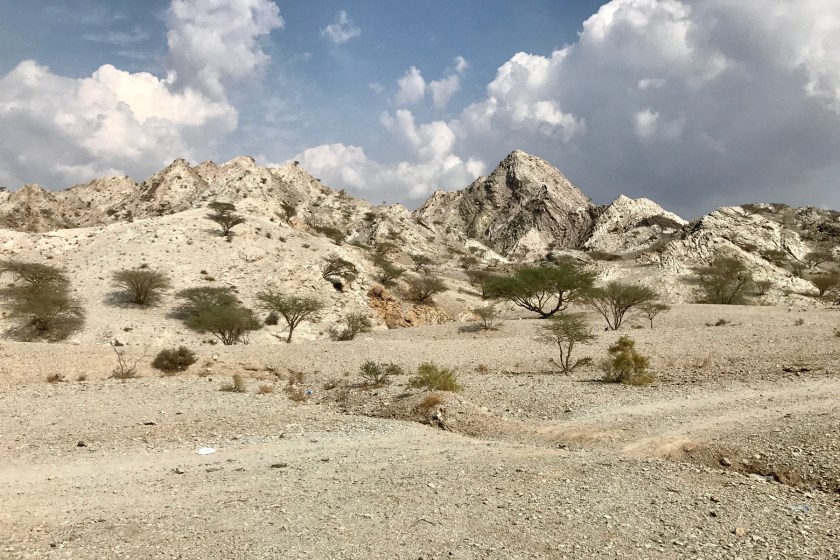
Most birding was done on Abu Dhabi island itself however a day trip out with Abu Dhabi resident Oscar Campbell into much more remote and spectacular habitat was a better reflection of the regions avi fauna.

IMG_7004

FullSizeRender (5)

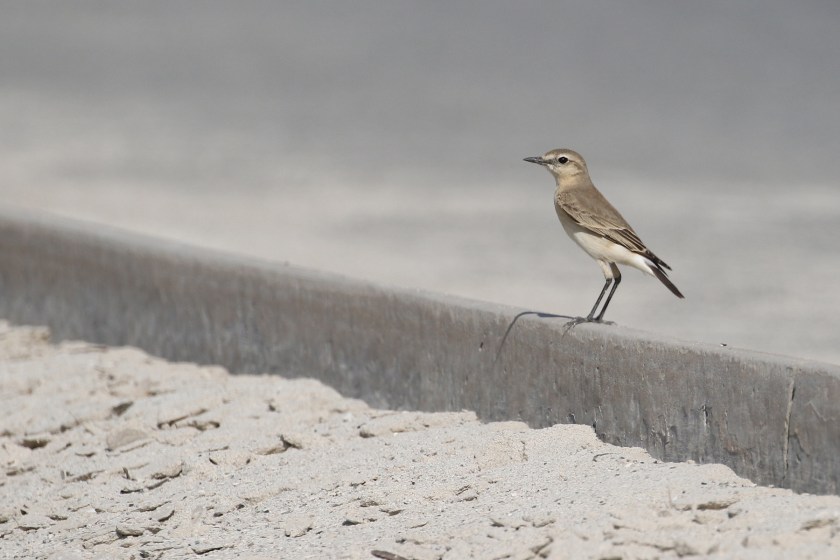
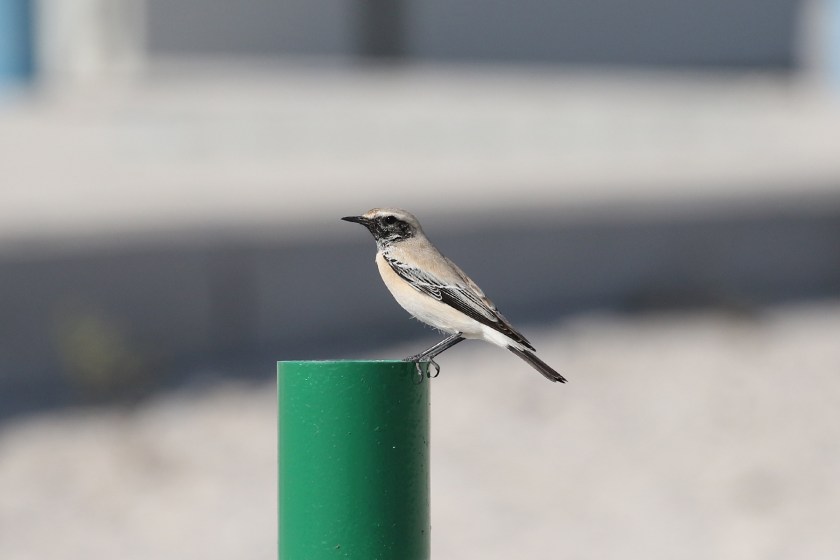
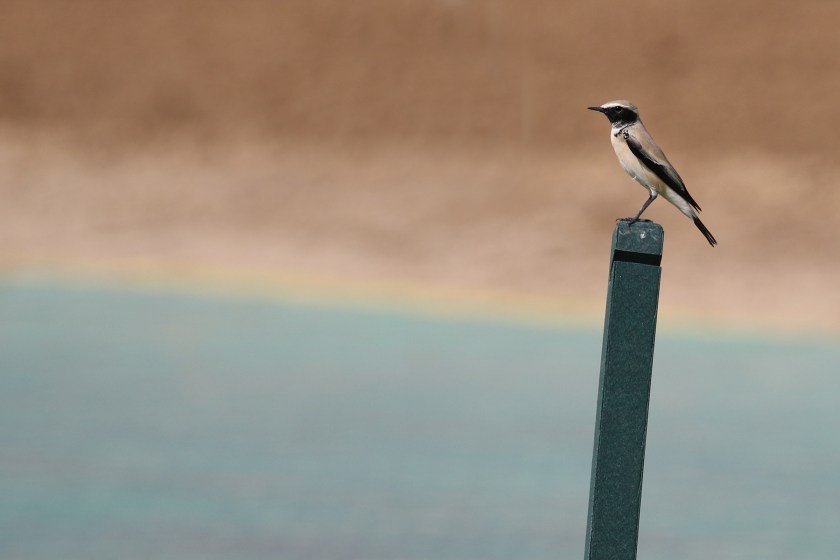
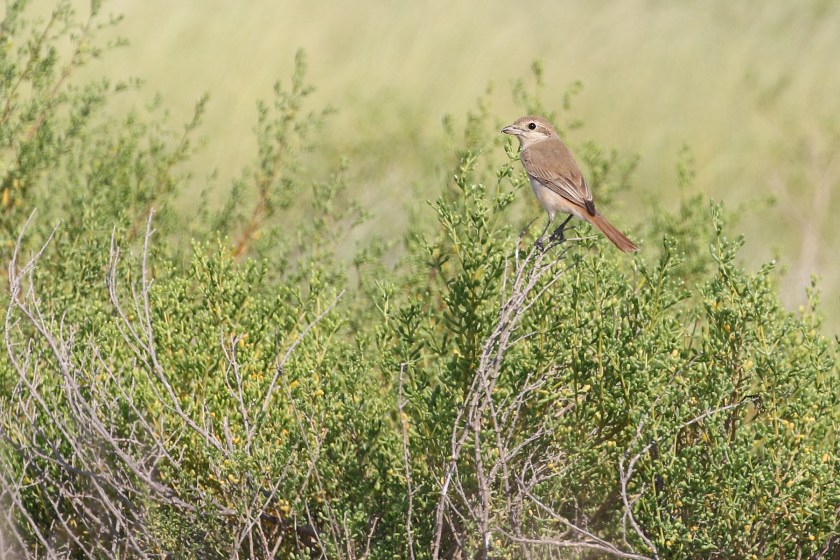
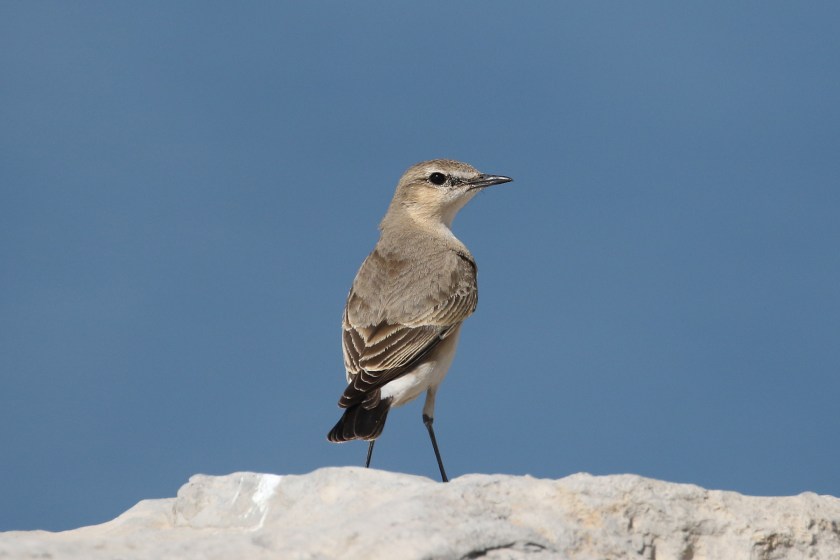
Wheatears were abundant and performative. Six species seen during the trip the most abundant were Isabelline and Desert…

V87A6710

V87A6701

V87A6685

V87A7563

Isabelline Wheatears (above) and Desert Wheatears (below)

V87A7149

V87A7200

V87A7557

V87A7776

V87A7799

V87A7811

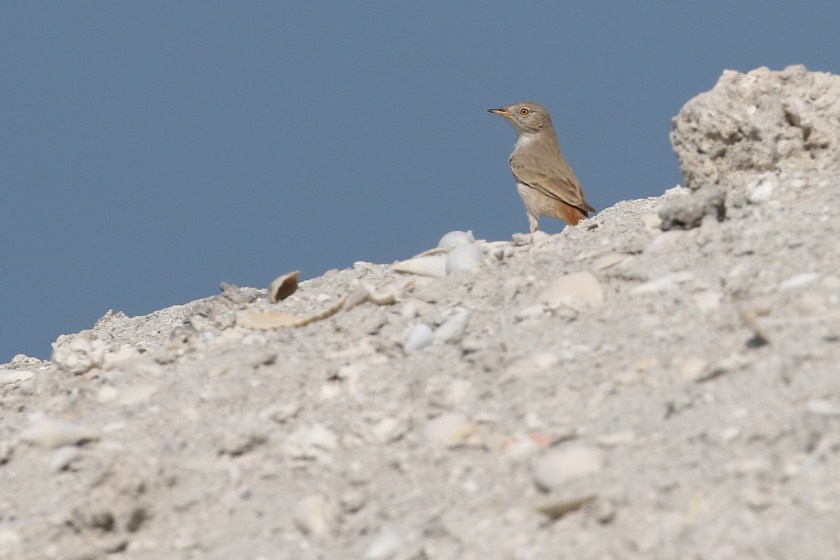
In refernce to Desert Wheatears, I remembered reading that Asian Desert Warblers have a habit of ‘tailing’ Desert Wheatears and funnily enough I found one of these handsome sylvids doing exactly that!
V87A7531

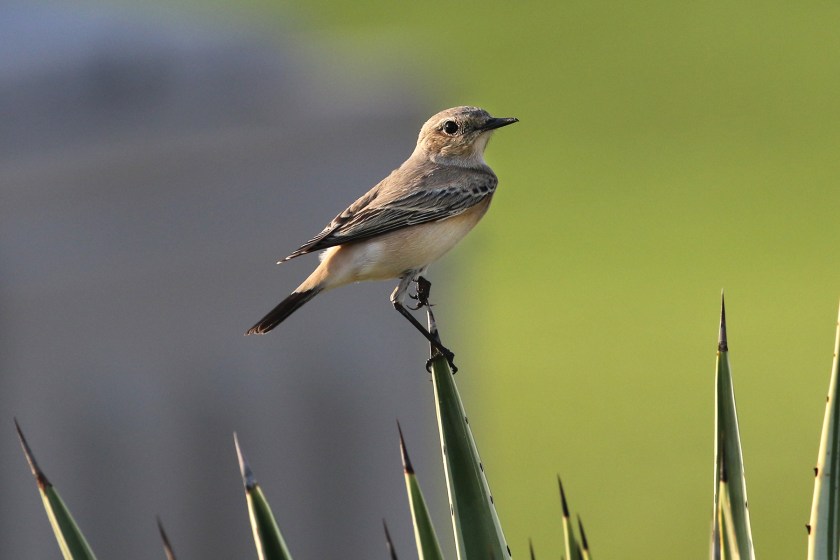
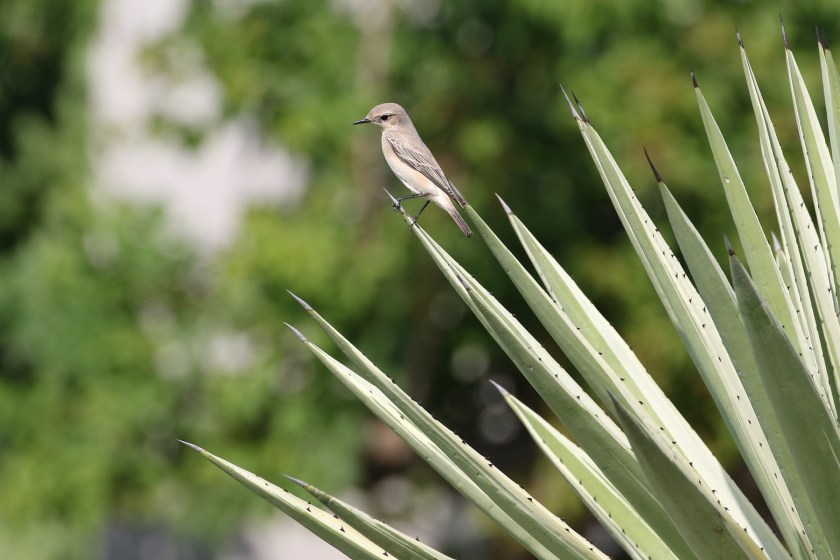
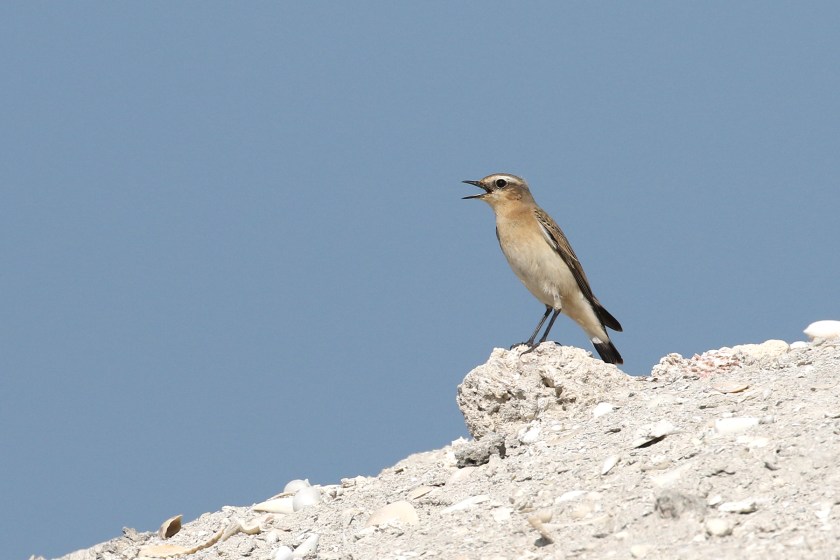
Both Red-tailed and a female Variable Wheatear were on a private site with no photogrpahy, which is a shame as they were all fantastic and very unfamiliar.  Perhaps the rarest for the region Was a Northern Wheatear (below) that i ran into on the Sadyaat Beech golf course (apparently only one or two get recorded on passage each autumn on Abu Dhabi island.)
V87A7529

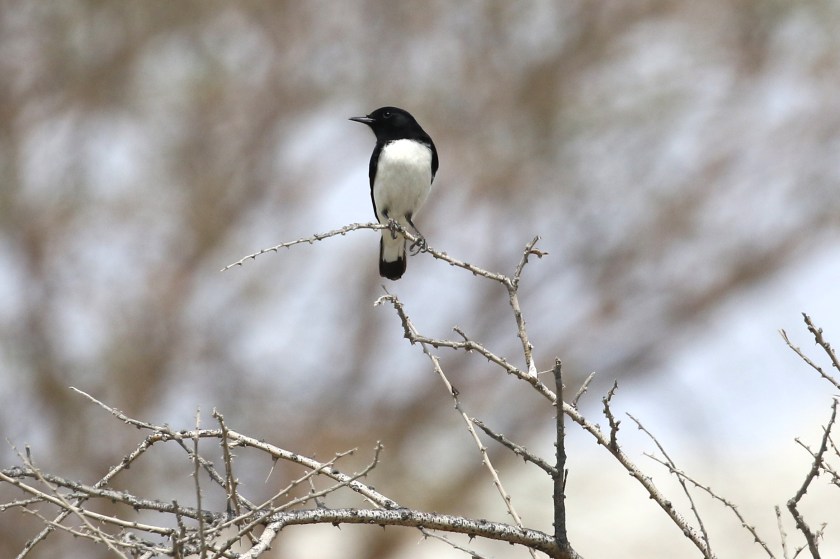
My personal Favourite of the trip, however were Hume’s Wheatear, with a couple of birds seen in the more remote areas visited, those glossy black upper parts head and wings looked amazing in the bright light.
V87A8381

V87A8398

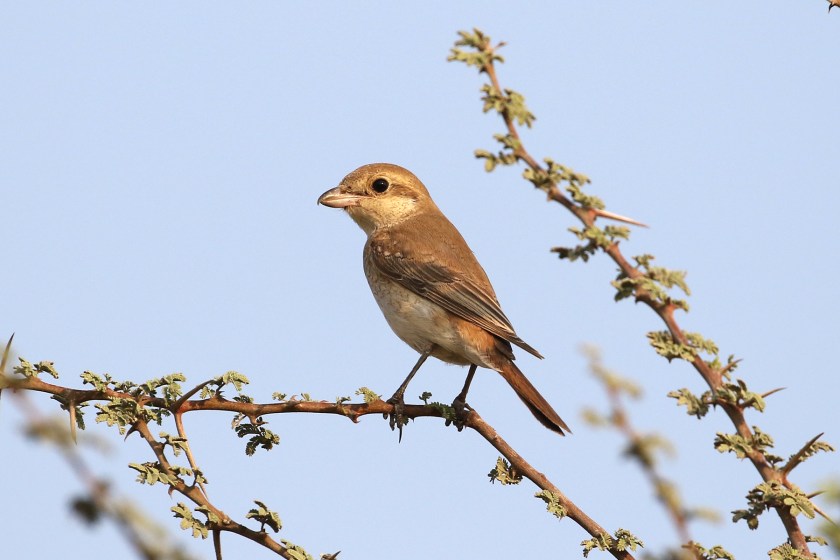
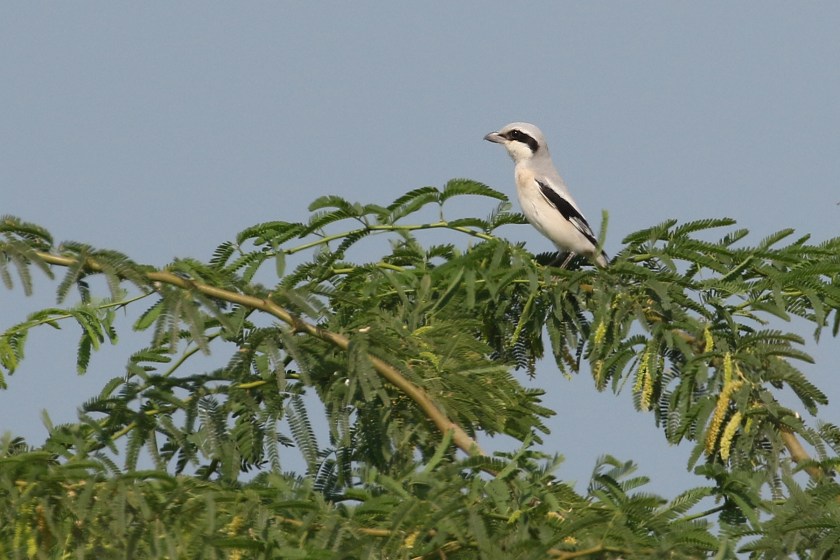
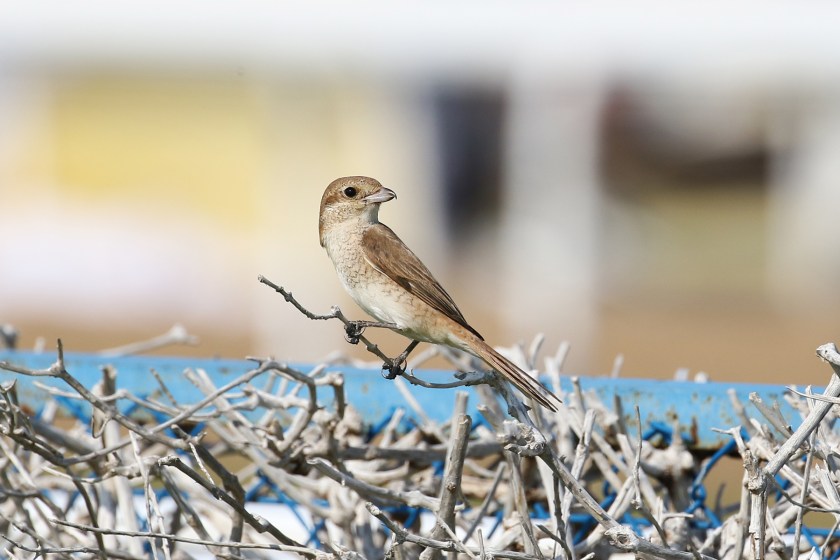
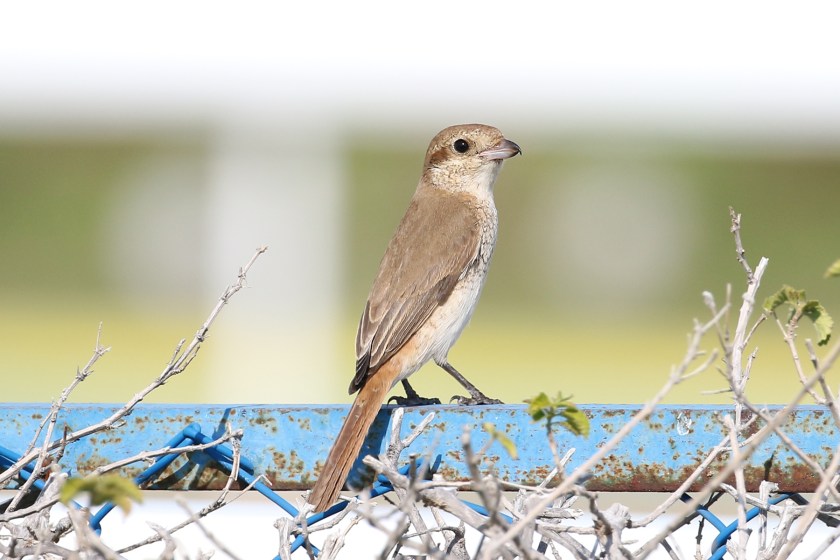
Shrikes were fairly widespread and at time tricky, its taken me a while to get my head round them infact. Durian were the most common on the whole. Turkestan Shrikes usually come through in numbers earlier than my dates but a few  were noted: the first 3 images below are ad female Turkestan followed by a 1w Turkestan – note the white underparts that contrast greatly with the warm brown uppers.
V87A7059

V87A7103

V87A7585

V87A8249

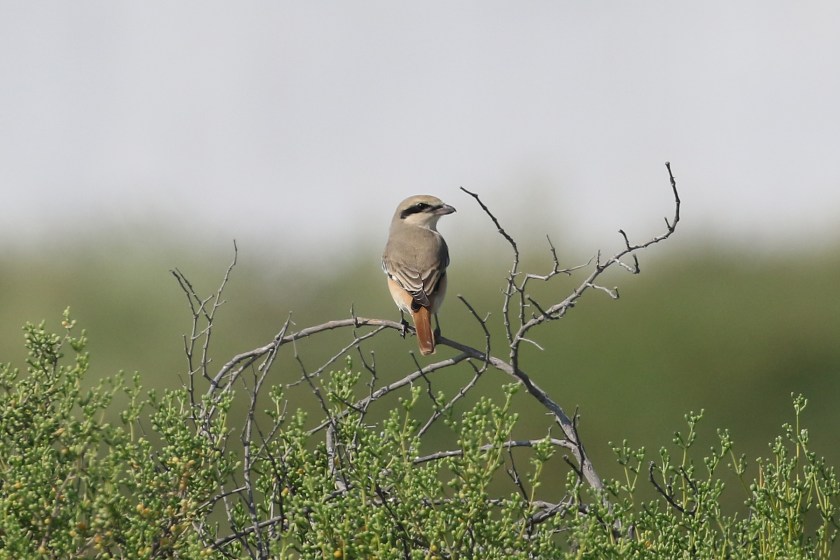
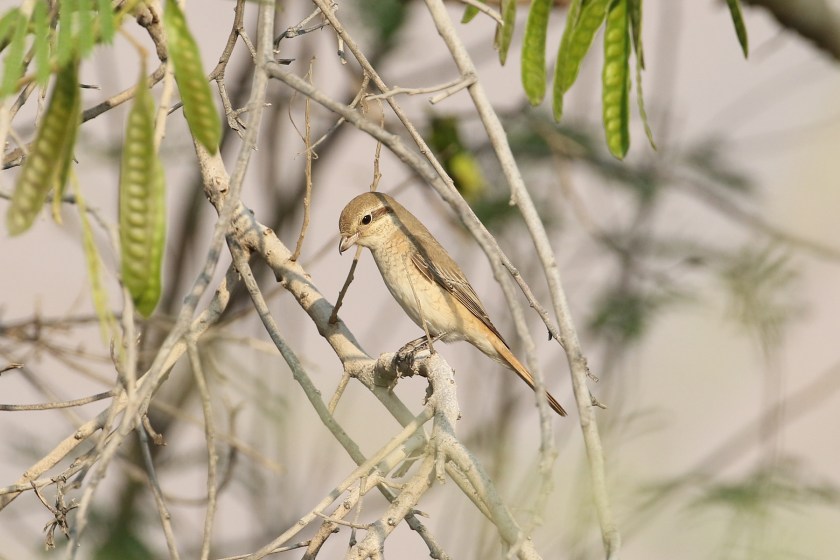
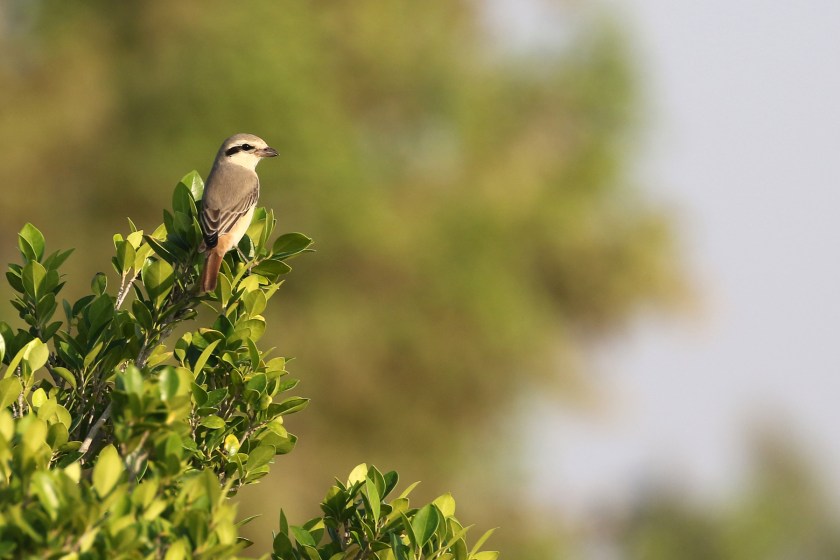
Below a 1w and 2cy + Daurian Shrikes. Although it has taken a while to get my head round them a key seems to be the buff underparts and less contrast with upperparts (Daurian) as well as buff super as opposed to the whitish super of Turkestan.
V87A8256

V87A7236

V87A8022


V87A8005

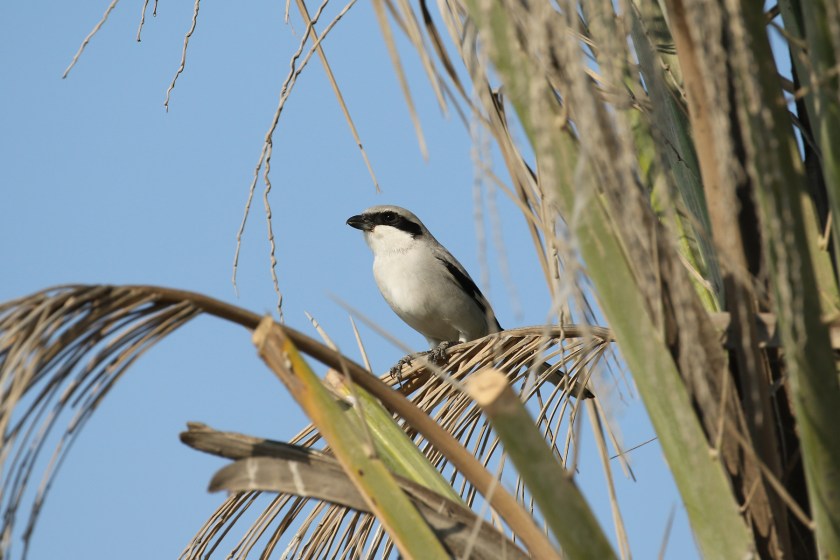
Steppe (above) and Southern (below) Grey Shrikes were also seen and heard in most places
V87A8156

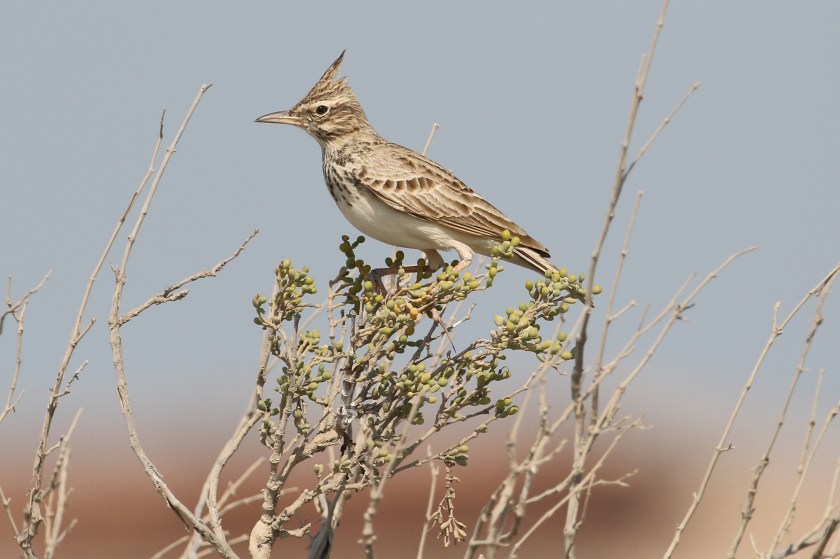
five species of Lark were noted with Crested the most populous.
V87A7960

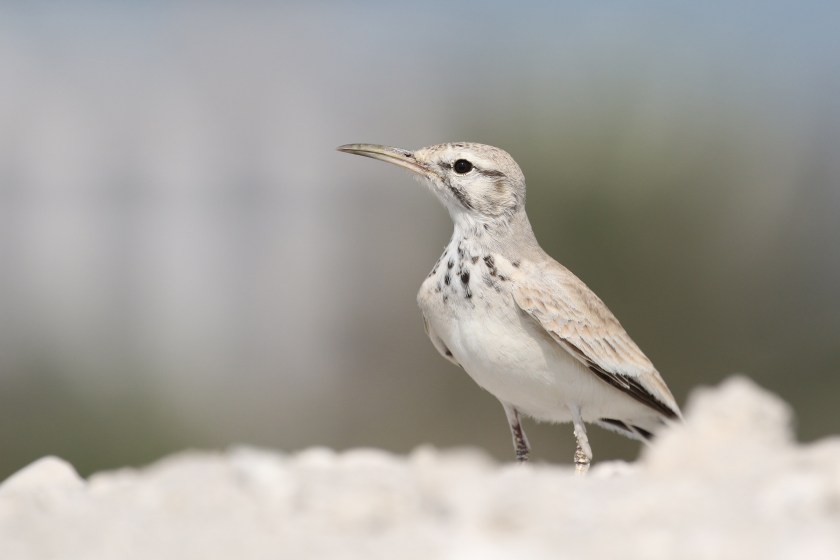
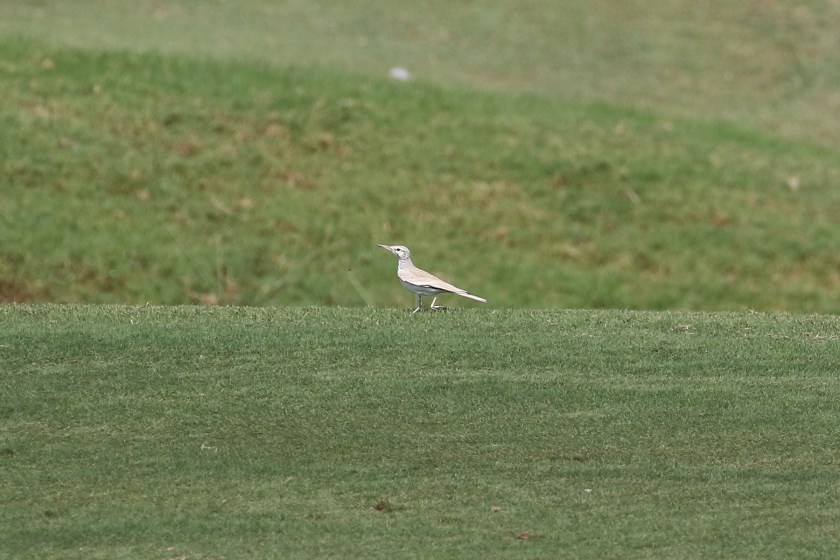
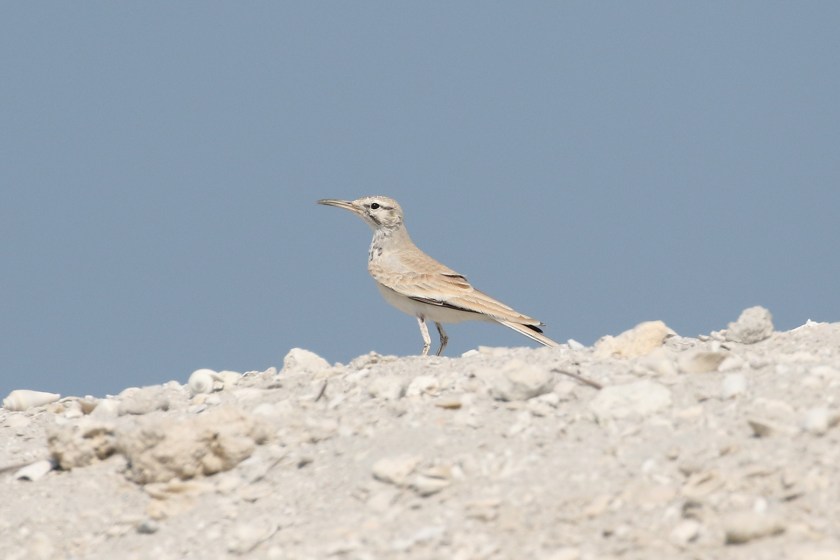
A Hoopoe Lark was a notable record for the island itself in Autumn and looked incredible on the Golf course, giving an idea of what one would look like if it turned up on a British south coast Golf course. This was actually one of the most amazing birds I’ve ever seen, didn’t expect to go so bonkers over it before seeing it but it blew my mind.
V87A7722

V87A7979

V87A8009

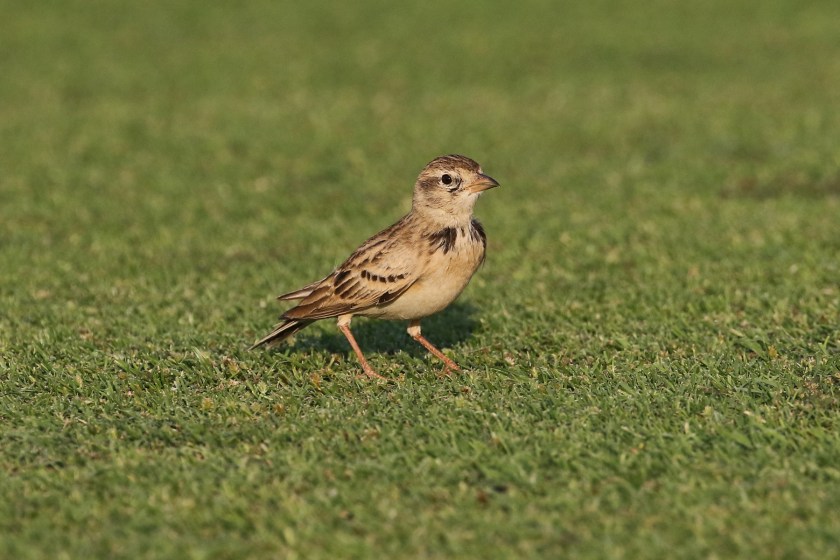
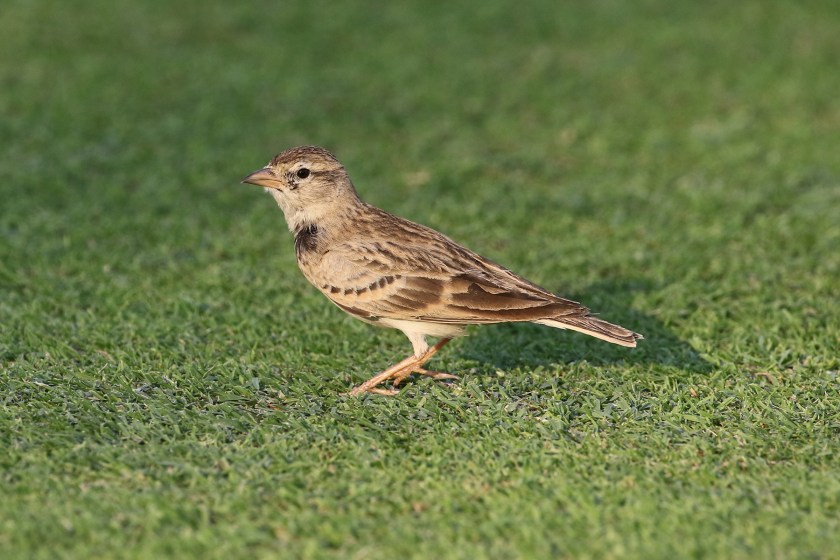
Saw a couple of Short-toed larks (below) between the racecourse and the Golf course as well as hearing mostly the odd flighty Skylark .
V87A7304

V87A7010.jpg

V87A7291

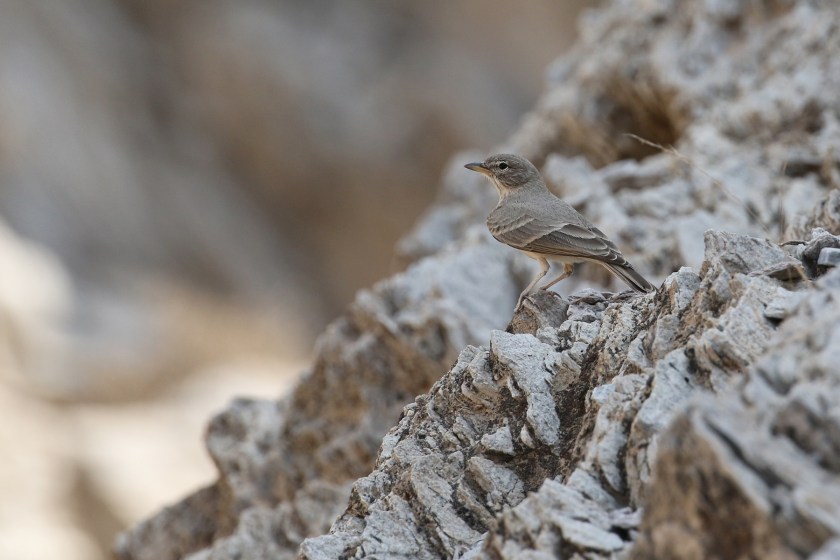
Desert Larks were seen high up in the Wadi’s (dry mountain riover beds) in groups of up to 15 birds. excellently camouflaged with their subtle ‘Chup’ or ‘Chilp’ (as i noted) calls giving them away
V87A8436

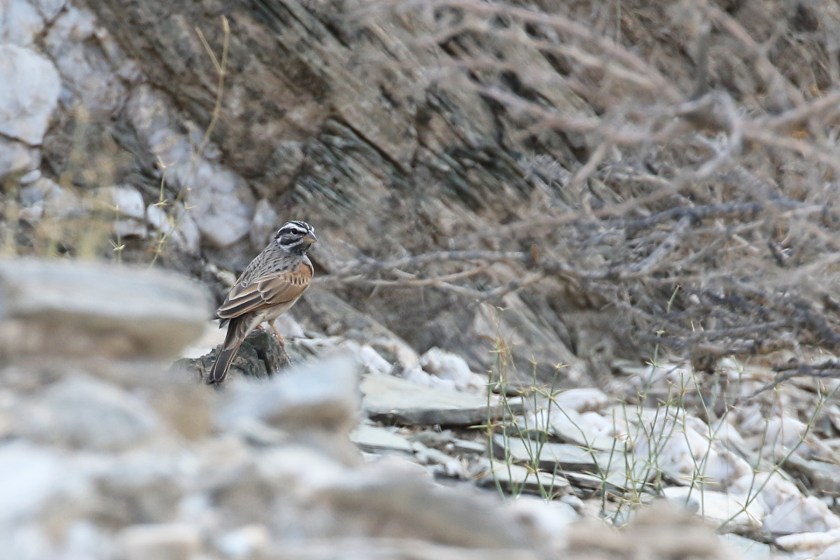
On this Occasion The Desert Larks were sharing the dry mountain habitat with a singing Southern Grey shrikePlain Leaf Warbler and Scrub warbler as well as a handful of Striolated Buntings
V87A8418

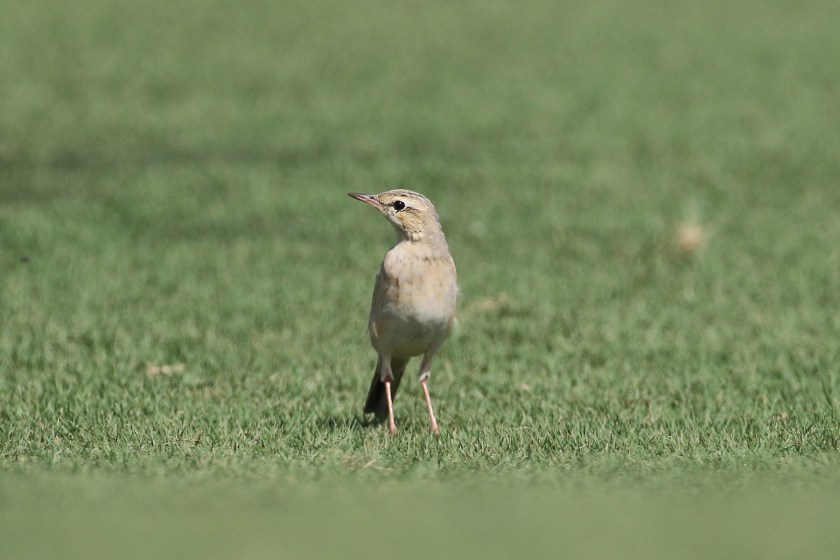
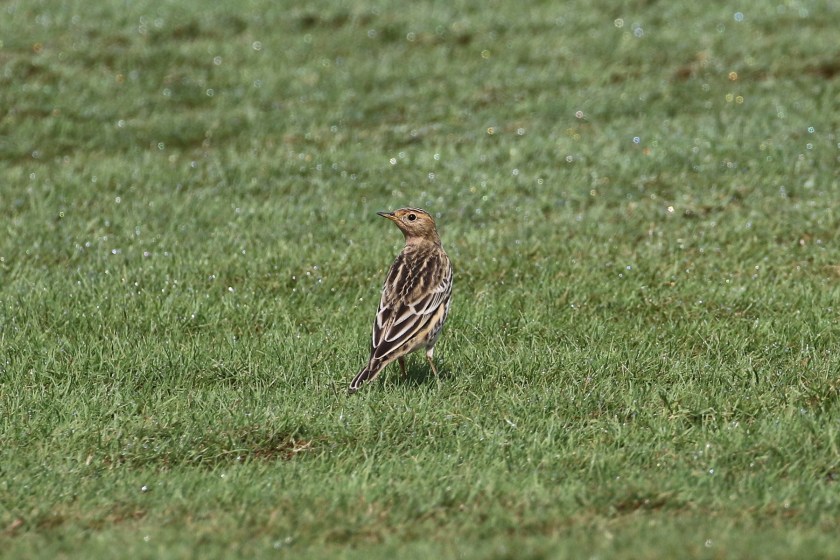
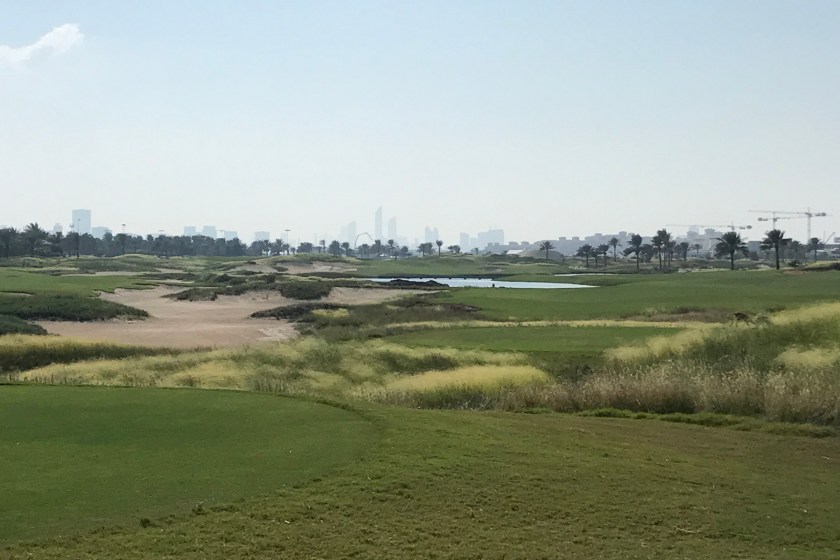
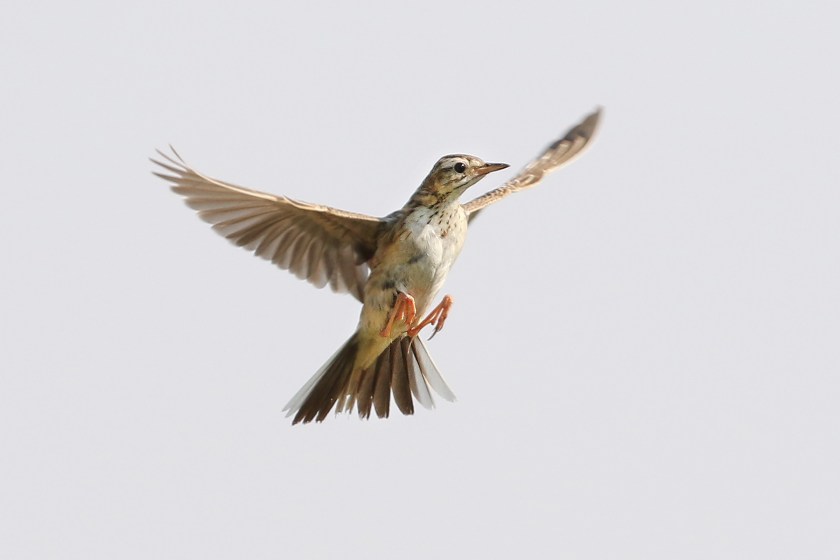
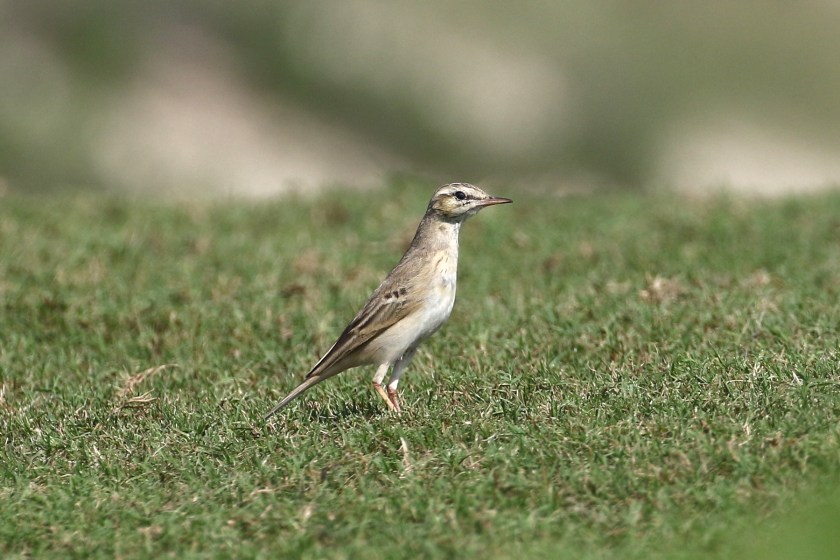
Another abundant group of birds were pipits. With Tawny and (Coutelli) water pipits the most abundant although there were large numbers of Red throated Pipits on the golf course rough areas, they shared this habitat with about 6/7 Richard’s Pipits which remained difficult to photograph on the deck!
IMG_6896

V87A8069

Richard’s Pipit and Tawny Pipits (Below)
V87A7623

V87A7708

V87A7507

Red Throated Pipits (below)

V87A7681

V87A7447

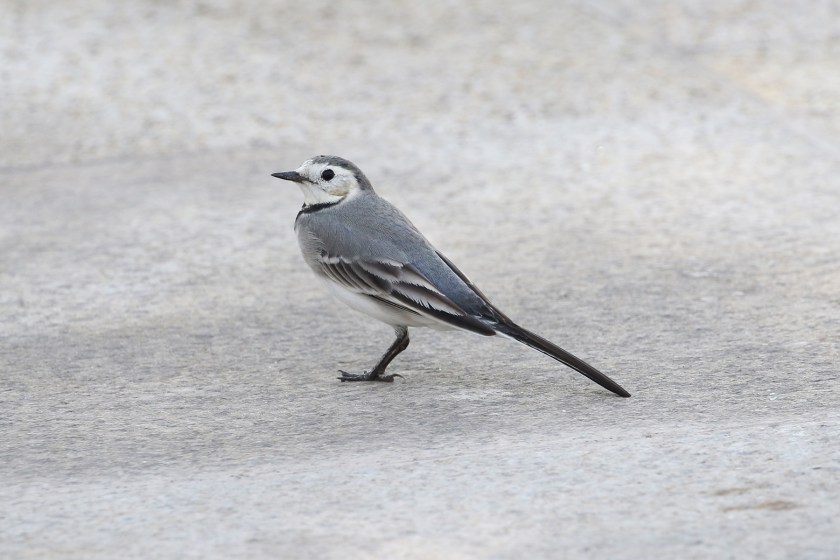
White Wagtails were predictably the most common Wagtails, most were stunningly crisp, with totally white flanks and more extensively white tipped Greater Coverts, I half arsedly assumed these birds to be eastern Alba, with reference to geography too i should add.

V87A7176

V87A7867

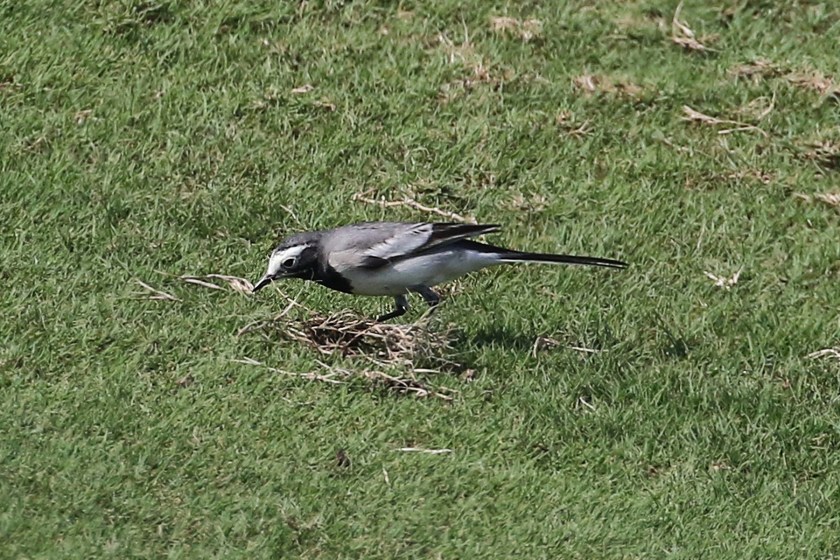
also in small numbers (perhaps 4 seen over the trip) were the subspecies Masked wagtail (below) Moticilla Alba personata, 
V87A7922

V87A7451

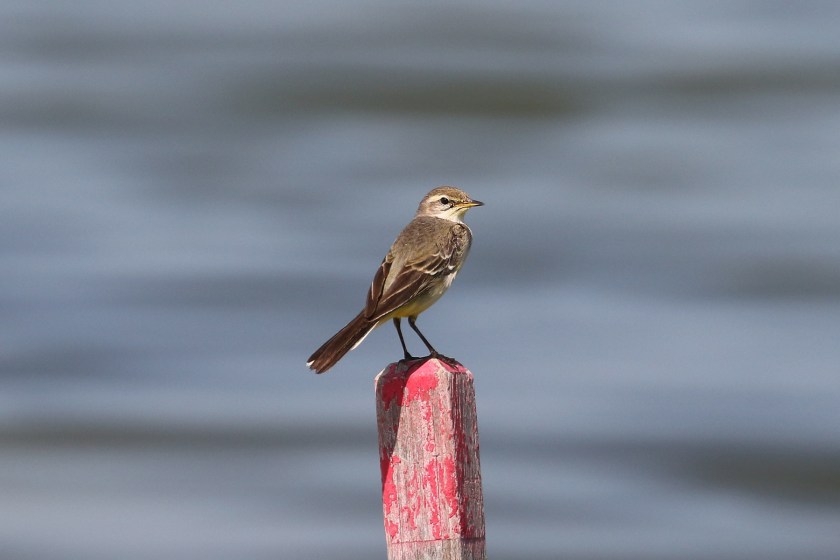
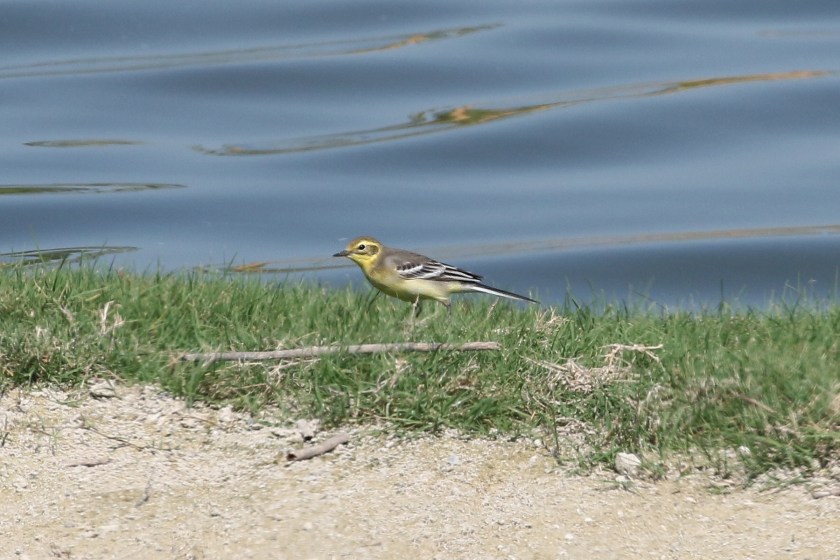
Both Yellow (above) and Citrine (below) Wagtails were present on the Golf Course, often calling one after another which was useful. In terms of yellow apparently Thunbergi are the most common on spring passage but good Beema and Feldegg also fairly regular… I also found a first for the UAE follow this for details.
V87A7488

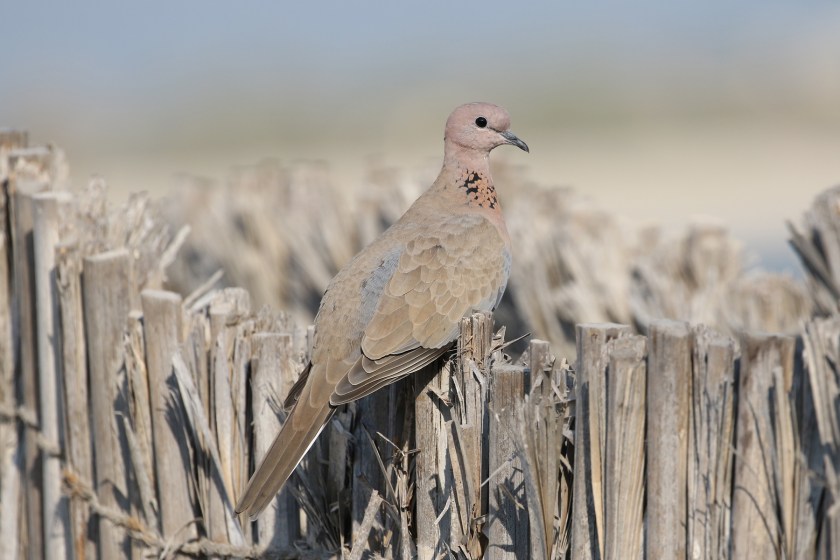
Laughing Doves were everywhere…

V87A7006

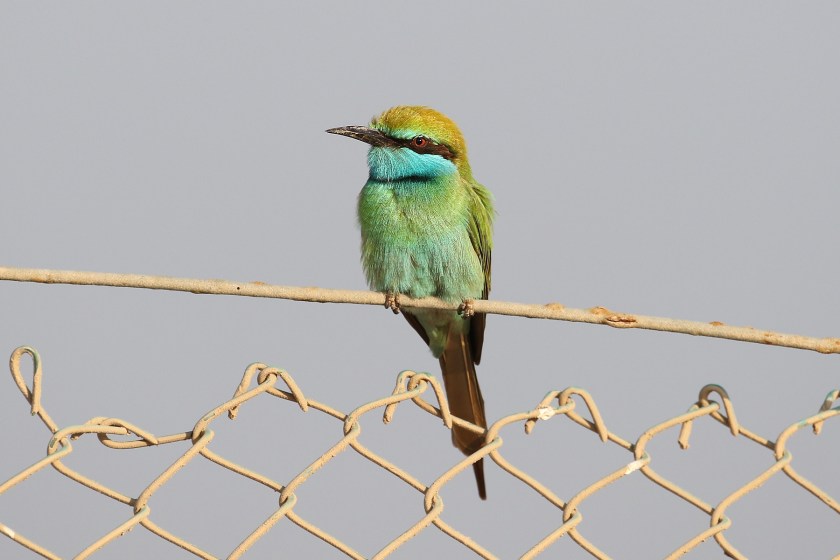
Little Green Bee eaters were perched around most half built buildings…
V87A6994

V87A6985

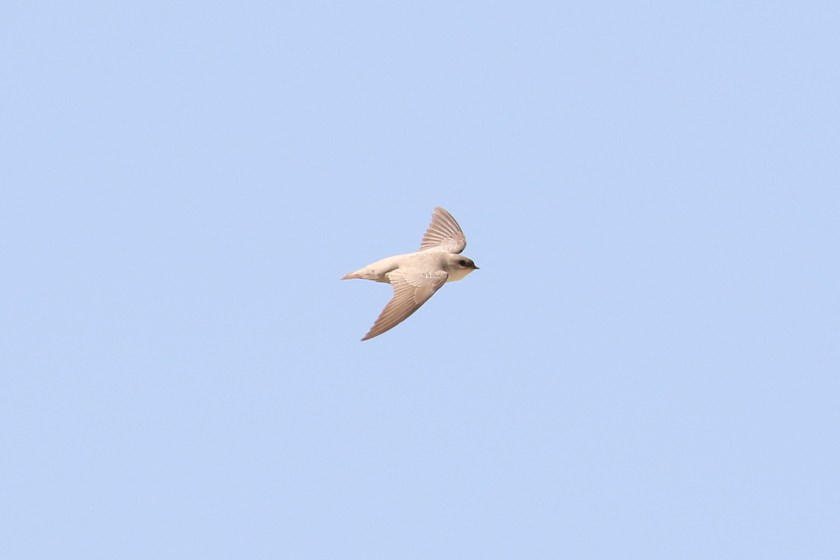
As were Pale Crag Martins…

V87A7401

Lawns and roadside turfed areas usually had a Hoopoe or two about…

V87A7261

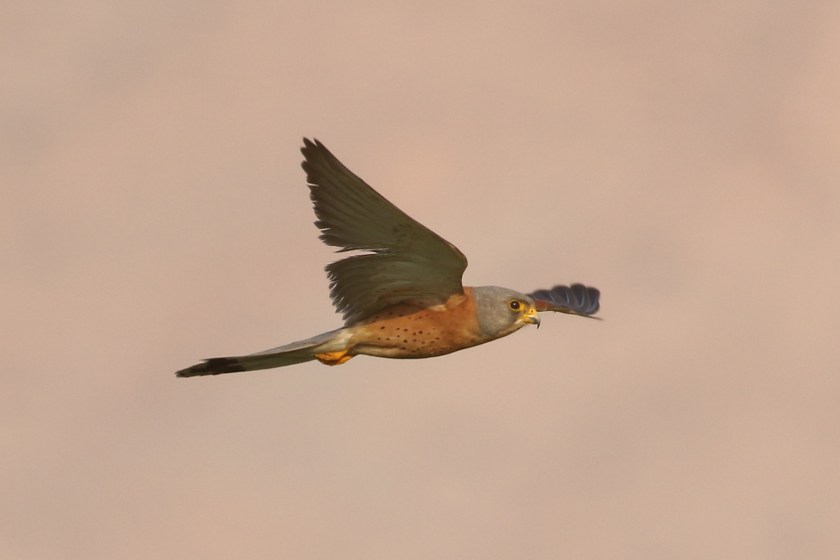
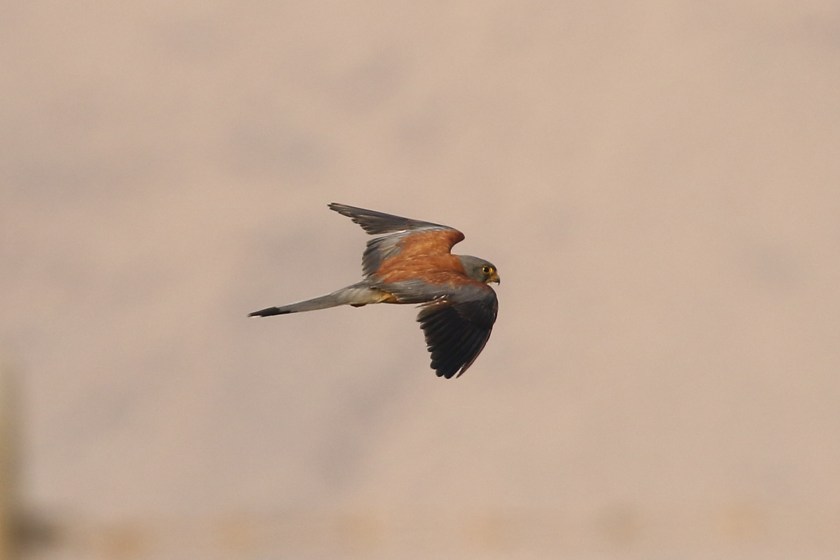
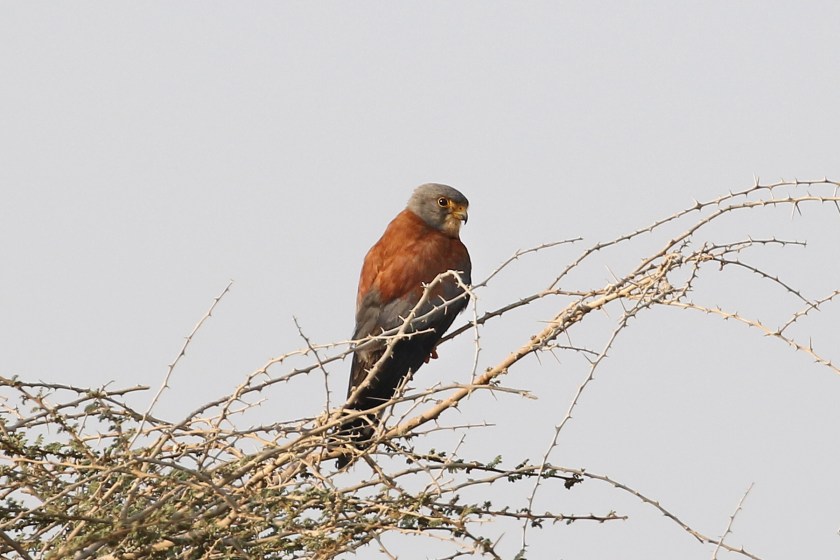
This Lesser Kestrel was apparently late for the region and shows much more grey/blue in the coverts than the western-most populations. as well as being perhaps a shade darker about the head and underparts. Certainly not to the extent of ‘Pekinsis’ but surely from somewhere more easterly. Interesting bird
V87A8195

V87A8214

V87A8202

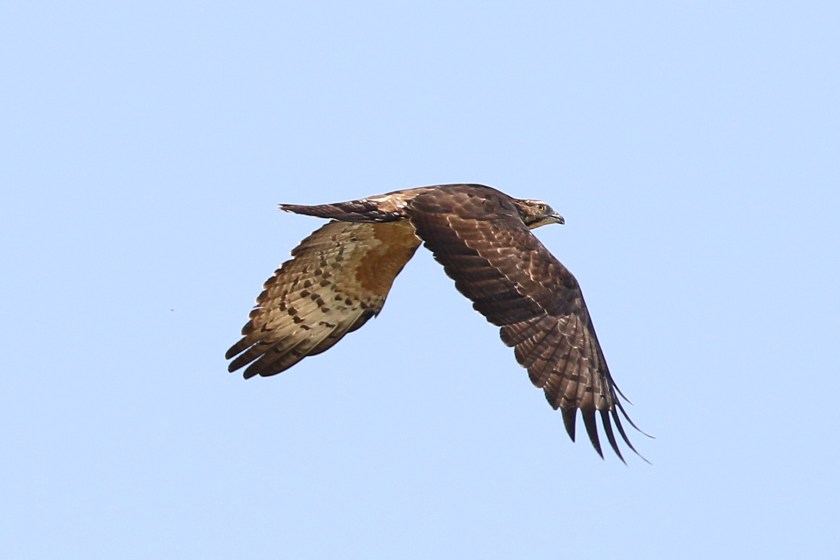
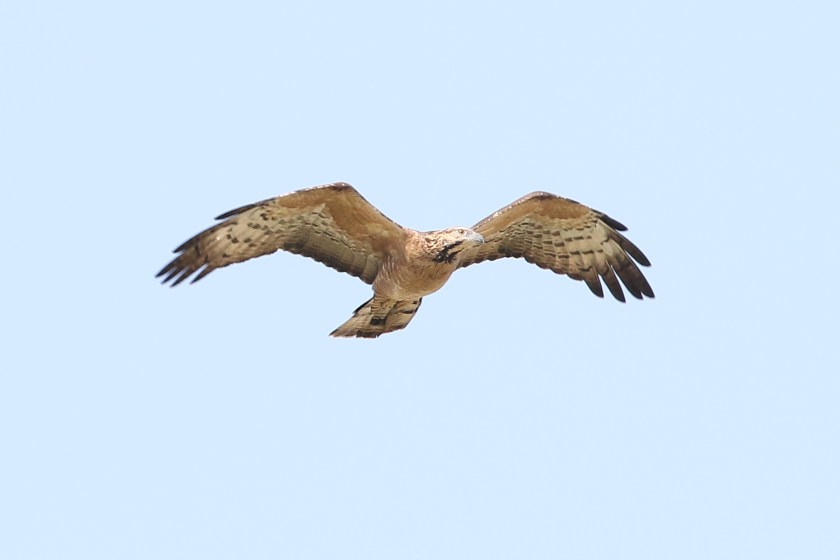
Mushrif Palace Gardens are a well known wintering site for Oriental Honey Buzzard, 2 birds were seen around the site including a bird i accidentally flushed off the deck. The below adult female gave close views.

V87A7821

V87A7838

V87A7819

I also wanted to include a shot of it higher up to reference more regular views of large birds of prey. Quite distinctive, but still ‘Honey-ish’ although noticeable more eagle-like in active flight
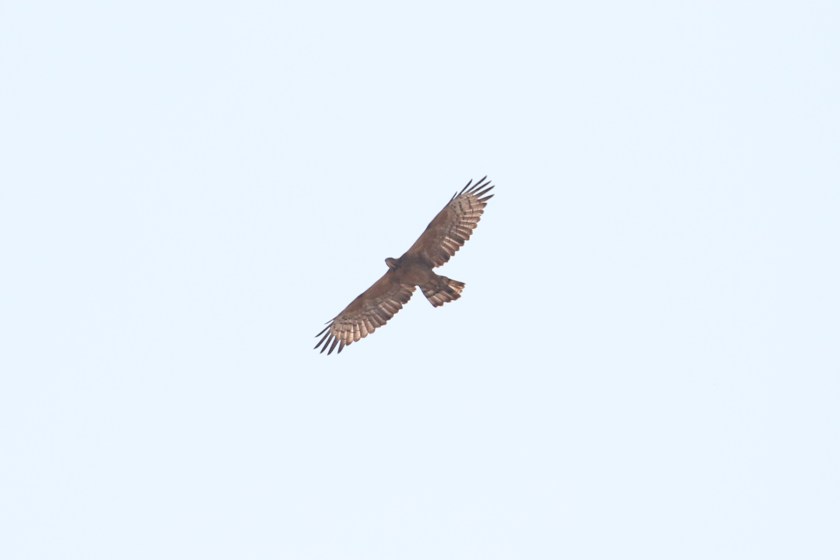
V87A7853

Other Raptors included many Marsh Harriers seen almost anywhere, Ospreys similar, Common Kestrels and a both an adult and a Juv Greater-Spotted Eagle, seen in poor light although fairly close, circling with Marsh Harriers pre roost at a mangrove site near Dubai…

V87A8446

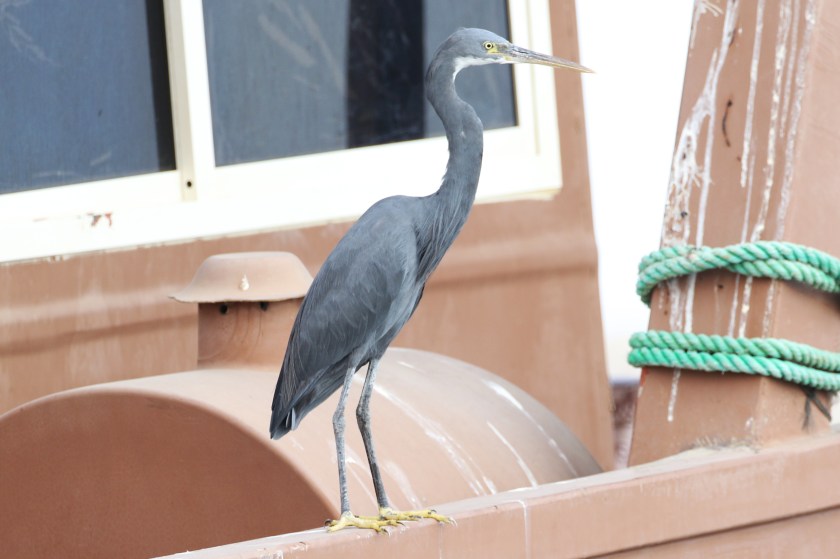
…This last site held a great number of herons etc fishing in an outfall. Grey, Purple, aswell as Great, western Reef  (below) and Little were abundant. Glossy Ibis too in a 30+ strong flock.
V87A8301

V87A8449

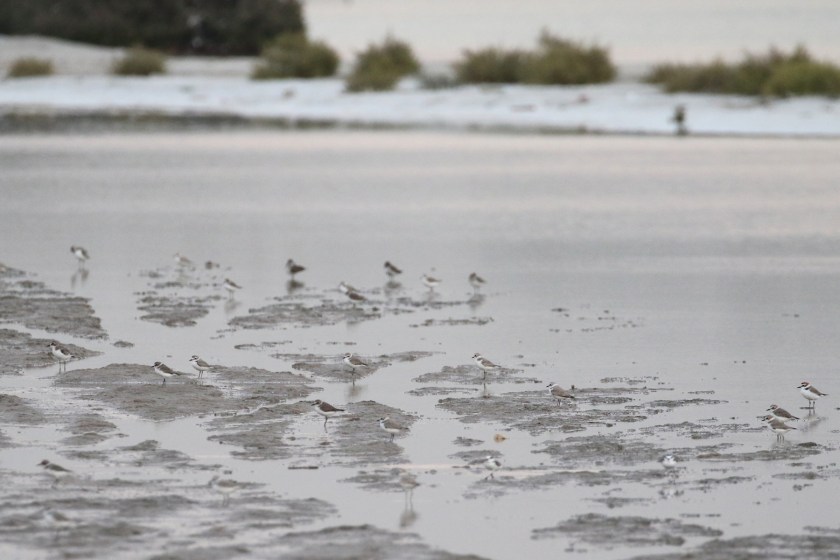
I didn’t spend lots of time looking for waders as the better sites for them were harder to get to and to tidally dependant for my time but a quick trip with Oscar to so e habitat one evening produced things like Black winged stilts, Lesser Sand and Kentish Plover (both pictured below) of interest.
V87A7344

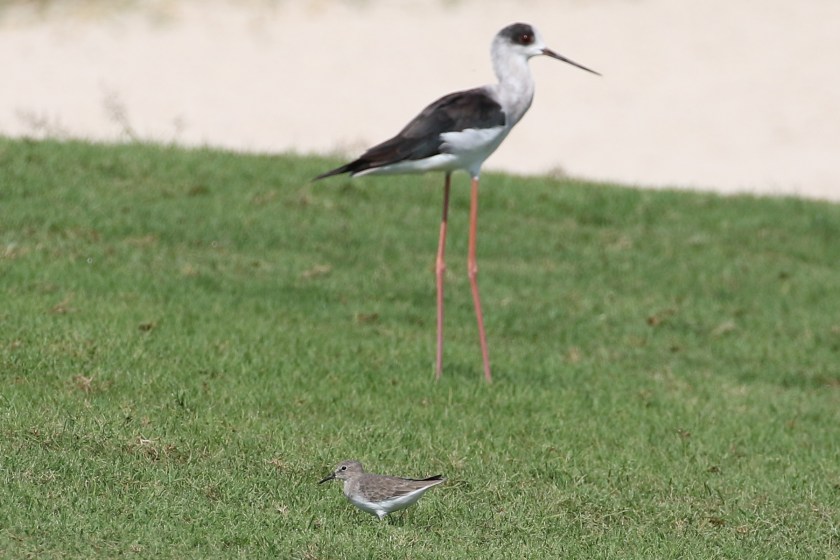
The golf course had the odd Little stint and Curlew Sandpiper as well as many Stilts, Greenshank and Redshank , and of course the numerous Red-Wattled Lapwings as well as things like the below Temminck’s Stint, But wasn’t the best or most flattering place to photograph shorebirds. Update! I was reminded today how I didn’t mention Crab Plover in this post, Well we saw a good number of them in one tidal mangrove site, Great birds, how could i have forgotten!
V87A7664

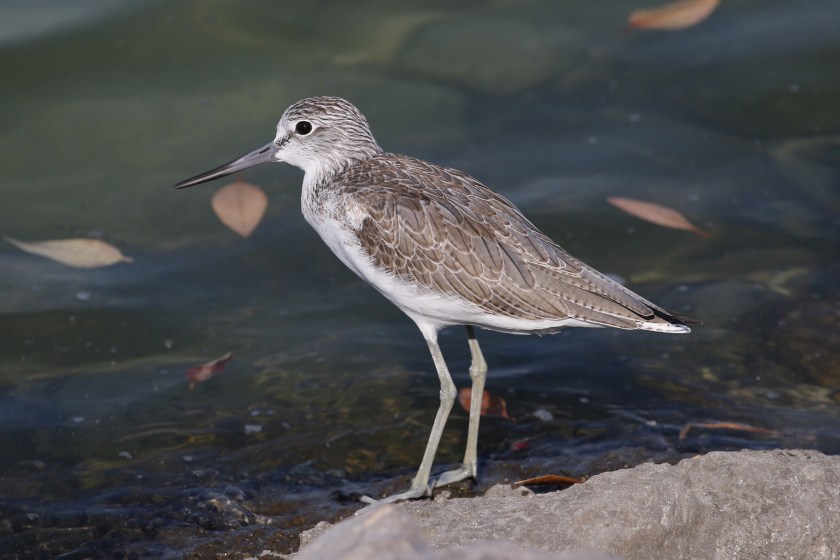
A walk along the edghe of a large mangrove site in Abu Dhabi was poorly timed oin terms of the tide, with hopes of a close Terek/Marsh Sandpiper or similar crushed i made do with this greenshank and Whimbrel.
V87A7900

V87A7879

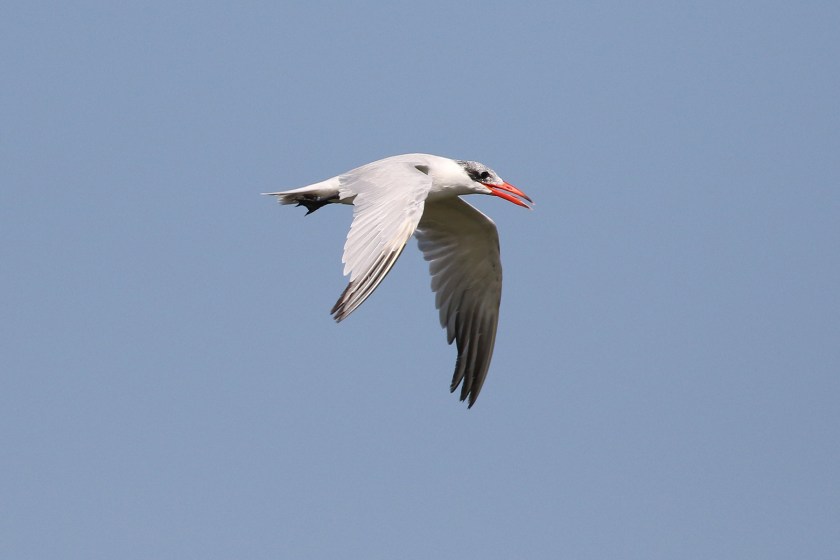
The waterways and coast line were patrolled by the odd Caspian Tern, heres a terrorfying looking adult.
V87A7424

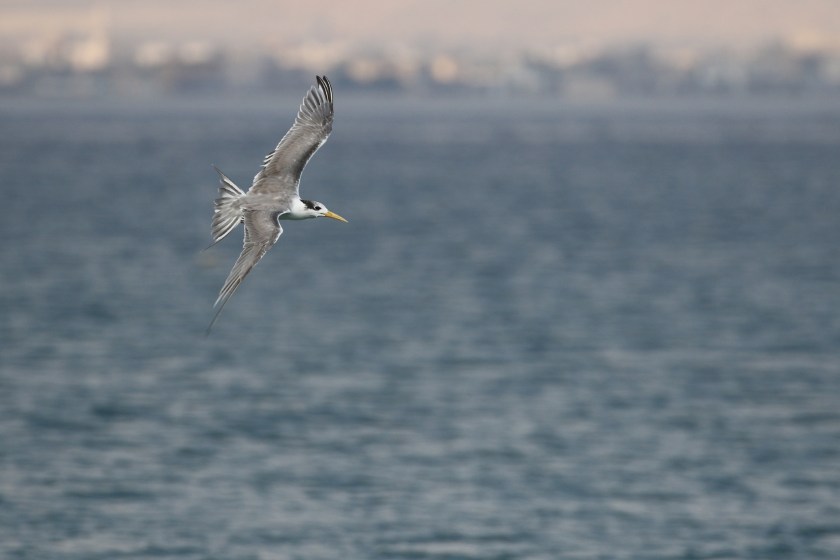
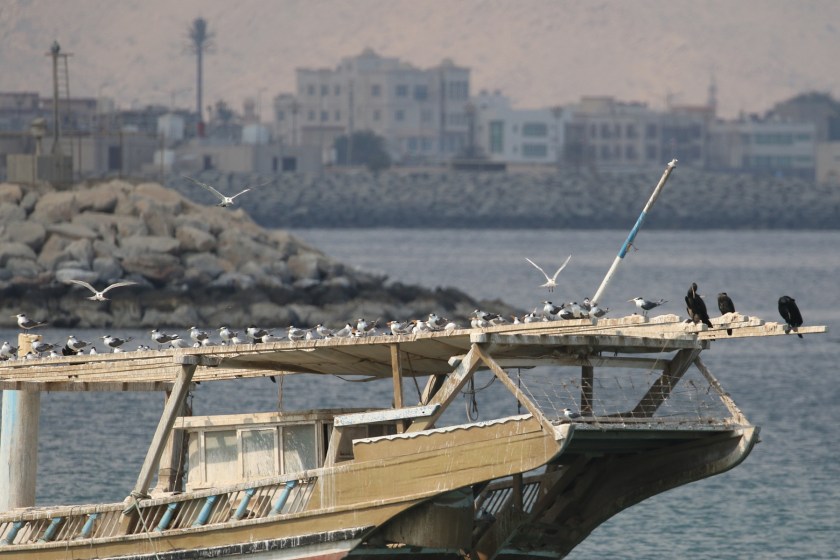
GullBilled, Saunders and both Lesser and GreaterCrested terns were also seen. The latter two at a site Oscar and I visited together, were 5 arctic Skuas were briefly seen harrasing GreaterCresteds also a small party of Red Necked Phaleropes.
V87A8320

Lesser and Greater Crested Terns

V87A8361

Greater-Crested Terns

V87A8351

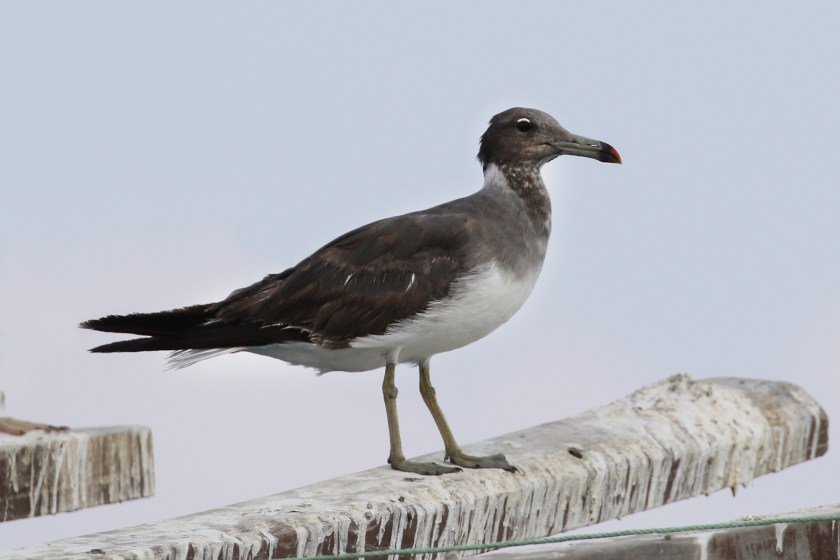
This site also revealed a single adult Sooty Gull, a Gull Tick!
V87A8308

This gets us onto the gulls nicely. The go to species in the UAE is Steppe GullLarus Cachinanns Barabensis – totally similar 1st win plumage to Caspian Gull,”best ID’d on structure at this age”. being thicker legged, more horizontal stance , shorter thicker bill etc. Other ages relatively easy due to mantle tone and emerging primary pattern etc heres some examples in ascending order of age.
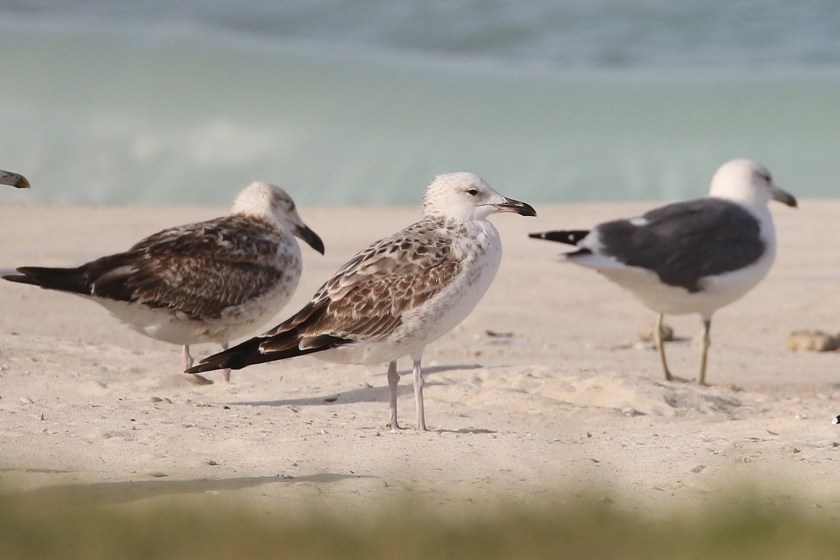
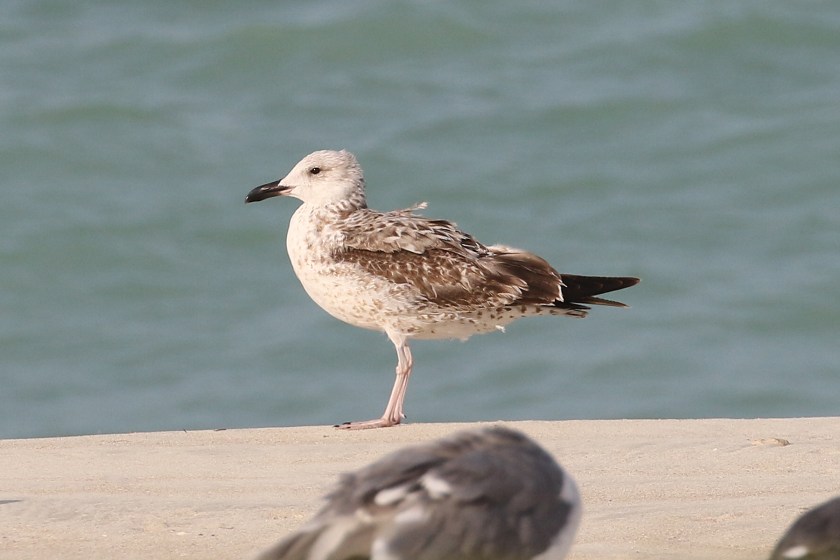
V87A8974

V87A8986

V87A9094

V87A8954

V87A8514

V87A8624

V87A8944

V87A8681

Heuglins Gulls were probably the next most numerous, 1cy birds being further behind in terms of moult, with the below bird almost complelty Juvenile plumage.
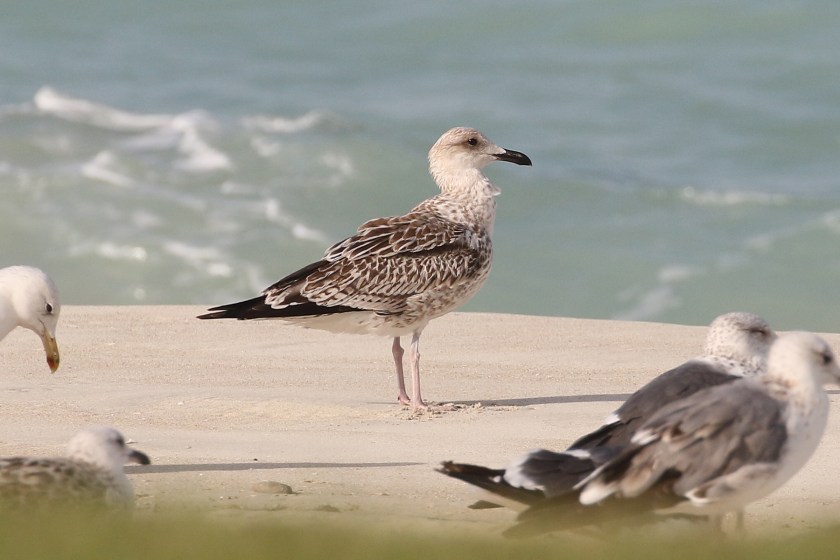
V87A9035

V87A8895

V87A8925

V87A8885

and here’s a second winter Steppe alongside a similary aged Hueglins
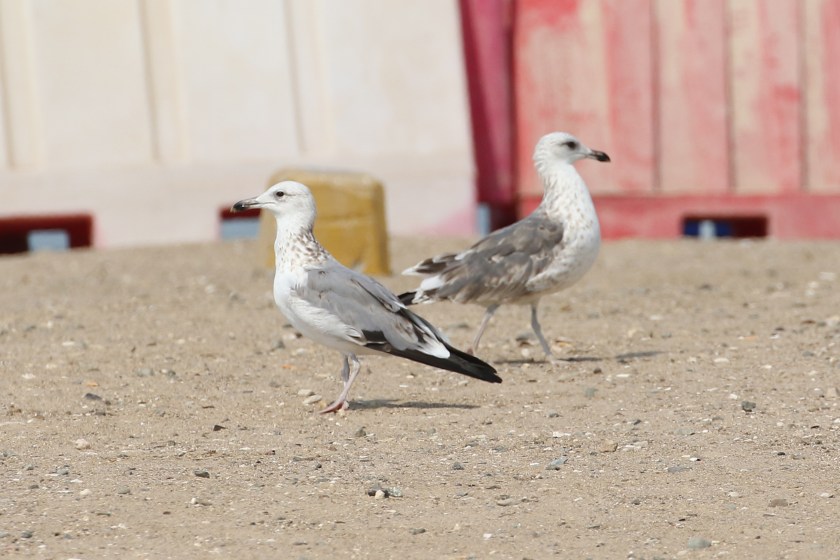
V87A8480

V87A8898

V87A8917

V87A8965

With a smaller number of Caspian Gulls present
V87A8589

V87A8852

V87A8721

V87A8798

V87A6791

V87A7906

Theres lots ive missed out through just wanting to get the post over with but I’d love to go again. Many Many thanks to Oscar Campbell.
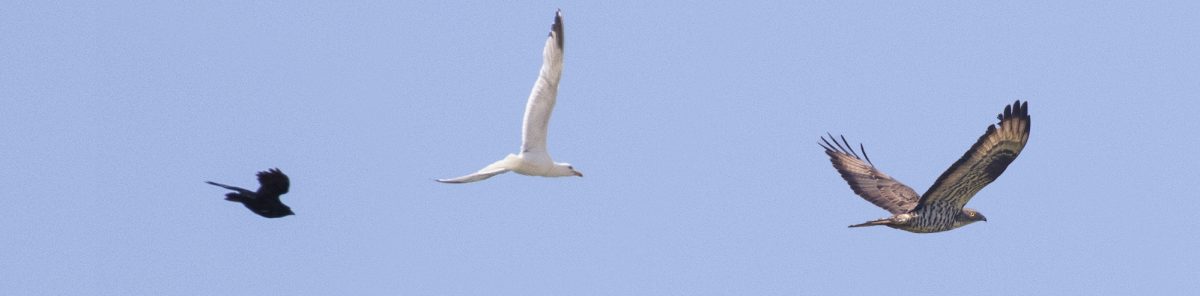
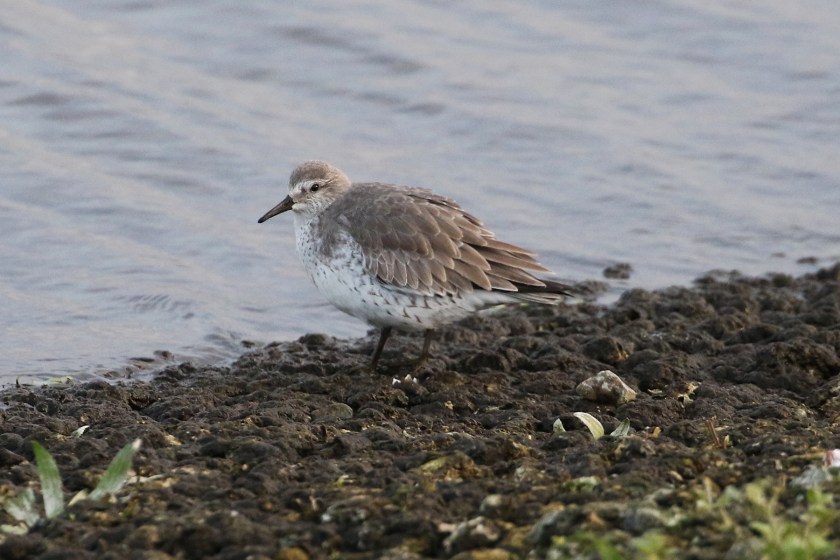


Dungeness 18/11/17


LP and I thought we would visit Dunge on a mid November day. At a glance around the fish hut and roosts visible from the road Gull numbers seemed low, however once out at the boats themselves the high tide had concentrated a group of loafing birds on the shore and a near by incoming fishing boat was good for turn over.  The first Caspian Gull of the day was this 2cy, pretty much one of the first birds I laid eyes on as we approached.

V87A9263

V87A9233

After much bread throwing and the fact that the fishing boat was now being pulled ashore rather than gutting, numbers on the beach grew, however the next Caspian gull was picked up much further out at sea flying towards the group – another 2cy,

V87A9517

V87A9555

Both birds showing one of my favourite features – P10 mirror on a second winter- just one of a list of things that make Caspian Gulls the best large white headed gull out there!  The below 1cy Yellow-legged Gull was also present on the beach.

V87A9219

Later we sat in the hides on the RSPB reserve and another 2 YLGs were seen aswell as one beautiful and one strange 1cy winter caspian Gulls although too distant for decent photography. The strange bird looked good enough on the deck but in flight had a bang on Herring gull tail pattern – odd.


Back to Reality… 10 – 16 Oct


With the Scillies just behind me, I struggled to motivate myself on the patch, despite the fact that I enjoy vis-migging and there are Hawfinches everywhere, even in London, I just haven’t got it together before work.

V87A4336

I spent from midday Saturday till practically dusk on the River, 7 Yellow Legged Gulls were present at Thames Barrier park.

V87A4201

V87A4260

at around 3pm Dante and Rich arrived after successfully twitching the Rock Thrush in Wales and before too long a 1st winter Caspian Gull appeared right in front of us in the bread mele (as they sometimes just do!)

V87A4460

X841 was ringed in may this year in the same site as previous east German birds we’ve seen here and at Dungeness; X307 , x090 , x309  X319 and is one of the better looking birds especially the greater coverts and Scapulars, perhap the high forecrown lets it down abit but im being picky. see below for info.

FullSizeRender-5

V87A4572

Earlier in the week I had a pair of Stones Chats in the bomb-crater field on Walthamstow Marsh, probably here for the winter, a welcome addition to the patch year list and were photogenic in the warm sun of Sunday.

V87A4669

V87A4721

Sunday’s Gulls drew abit of a blank bar a handful of Yellow Legs at the O2, in cluding this fairly subtle bird. The headstreaking resembles Herring at this time of year, but all else points to Yellow-Legged.

V87A4752

V87A4745

The crowds that came to oggle at a sunbathing seal didnt take too well to my throwing bread all over the place.

V87A4755

Scillies 2017

My third Autumn Scillies trip in a row, 2 weeks on st Agnes in beloved Roseveer Cottage with Lee Amery, Graham Gordon and Laurence Pitcher and for me at least, the best trip yet.  2 weeks earlier than last year with the last week of September and the first week of October was, luckily, a great period; a mix of genuine rarities, scarcities, lots of common migrants, met some new people,and spent time with friends, good food, drink and the best scenery.

V87A3237

 1cy Bee-eater

After mixed weather for our first few days the winds settled in the West and South West with fronts moving through and clearing with rain over night and some very wet days. A blast of south in the wind on our first full day and a Bee-eater and Red-eyed Vireo were found within 20 minutes of each other. The Bee-eater (found by Lee) was seen and heard by most birders on the island eventually but the Vireo proved very elusive.

V87A2898

Red-Eyed Vireo

Next, my personal highlight: The Scillies dream is really finding north American passerines and on the morning of the 29th of September a Rose-Breasted Grosbeak flew out of cover infront of me.  You can read finder’s account here . The moments surrounding the initial find will be with me for ever and the below image gives me the shivers, seeing it there on the granite looking like a real vagrant. Stoked!

V87A2636

1cy f   Rose-Breasted Grosbeak

V87A2859

The bird went from wingletang (where i originally found it, to a a field along Barnaby lane and then ended up opposite the post office where it was seen by most who came and twitched it over the 4 days it was present. By the end of its stay it was seriously tame and would hop around near bags of fertiliser and sit in a low bramble feeding, all under the watchful eye of the local cats….

V87A2823

V87A2846

This was a great ‘warmer upper’ for the following American rarities. Another Red-Eyed Vireo in the parsonage, a Cliff Swallow, found on Tresco on the 2nd of Oct, which eventually gave LP and I great views and shared air space with 2 of the Bee-eaters whilst a Yellow Browed Warbler called behind – very memorable bit of birding.

V87A3334

Cliff Swallow (above and below)

V87A3332

Whilst we relaxed with a bonkers overpriced coffee moments after viewing the Cliff Swallow LP recived a text “Who found the Waxwing?”… excitement and frustration ensued but we decided not to get on the charter back to Agnes, where the bird had been found, and remained on Tresco to kick about and see what else was lurking there until our boat returned later in the afternoon. nothing really was the answer.  

V87A3565

juv Cedar Waxwing

We got back just before the Cedar Waxwing was re-located and eventually saw it a few times away from the crowds and even in our little garden. (below)

V87A3642

Other highlights were a day trip to st Mary’s to see the Isabelline Wheatear, which was a success with the bird showing down to 10 meters or so and although both distant the American Golden Plover and Pectoral Sandpiper were present around Porth Hellick.

V87A3121

1cy Isabeline Wheatear

V87A3091

Besides the Bee-eaters, Scarcities and less common migrants were reasonably well  represented however there were a few obvious things missing but between a couple of Wrynecks on Gugh, a Marsh Warbler that GG picked up, a migrant Hawfinch, couple of Lapland Buntings, Yellow –Browed Warblers (which were only really apparent towards the end of the trip) there were plenty of Pied and Spotted Flycatchers, a Turtle dove and whinchats etc to keep us entertained.   

V87A3830

Wryneck

V87A4011

m Hawfinch

V87A3945

Lapland Buntings

V87A4032

Yellow Browed Warbler

V87A2985

Pied Fly-catcher

V87A3550

1cy Mediterranean Gull

IMG_6252

The original site of the Grosbeak find, a granite formation I’ve always loved aesthetically 

V87A3737

Looking West from Perigilis beach st Agnes

The return crossing on the Scillonian wasnt bad either and thanks to the help of a group of young(er) birders who were doing a count the following numbers were recorded. 100+ Balerics, 10+ Sooties, 1 Pomerine, 5 Arctic, and 10 Great Skua. thanks to Jake G/Micheal M for figures.

Added bonus – a finders report in the back of the 2016 Scillies Bird Report for the Caspian Gull last year, 1st for Scillies (hence the fuss!) 

FullSizeRender-4


25 – 27 August Beachy Head


A well-timed weekend visit to Beachy Head, staying with Laurence P.  We birded the entire headland over the two days and covered c22 km on foot.  Pretty careful and concentrated bush bashing revealed great numbers of common migrants but the highlights were 2 Honey Buzzards, moving east two hours apart.

V87A9978

The above adult Male bird went straight over our heads a couple of hours after the below bird  (looks ad female) had been picked up as a speck in the distance. Both heading east and gaining height, probably in order to cross the channel on a perfect day for it.

V87A9914

Totals were as follows; 23 Common Redstart, 1 Black Redstart (juv), 13 Whinchat, 18 Wheatear, 9 Spotted Flycatcher, 2 Pied Flycatcher, 19 Tree Pipit, c60 Yellow Wagtail, 4 Alba Wagtail, 2 Grey Wagtail, 8 Meadow Pipit, 44 Willow Warbler, 1 Chiffchaff, 8 Lesser Whitethroat, 100+ Common Whitethroat, 33 Blackcap, 12 Reed Warbler, 2 Sedge Warbler & a Reed Bunting. Around 2000 hirundine were seen and along with them, 10 Swift.

V87A0224

V87A0177

V87A0111

V87A0090

V87A0172

V87A0188

The below juv Pied Flys were particularly settled and I watched them feeding in the hedgerow behind the pub regularly whilst we skywatched on the sunday. A particular favourite of mine and I especially like them like this, preferring autumn plumage or spring females to black and white males.

V87A0149

V87A9925

V87A0193

V87A9884

A few waders were heard and seen, all flyovers including a Wood Sandpiper at night on our way to the pub! 3 Dunlin, During the day singles of Golden Plover and Ringed Plover were also noted fly overs.


19 – 28 August

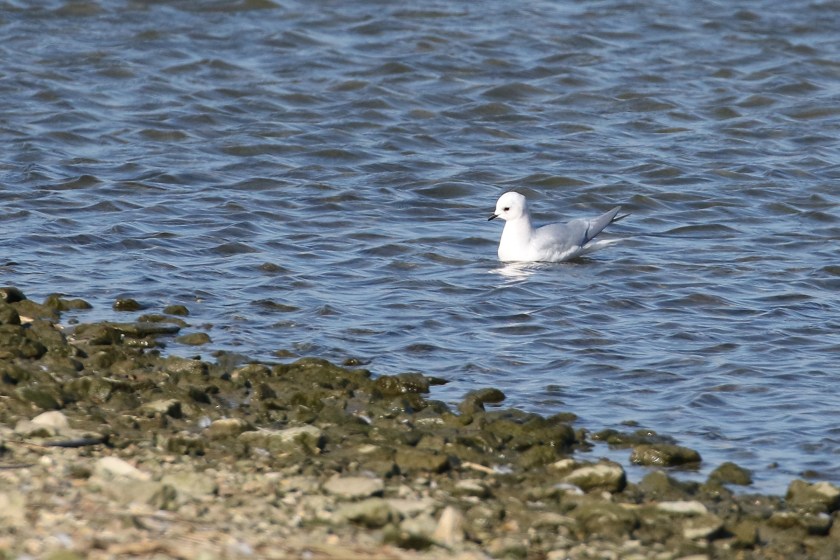
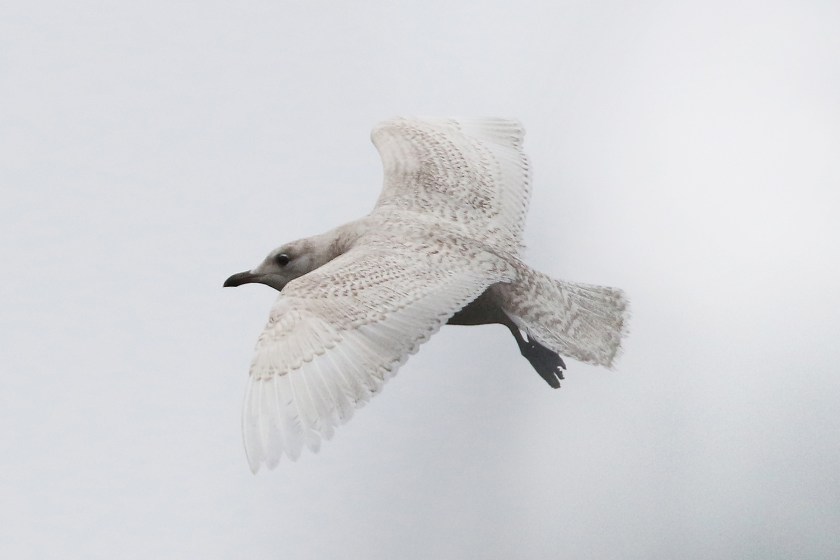
A trip to Oare Marshes with Rich and Dante was succesfull in that we caught up with two returning American birds – the Long-Billed Dowitcher was present, although distant amongst a group of Golden Plover on the East Flood (a new bird for me). Also present was the returning adult Bonaparte’s Gull which I saw in 2015 aswell.
V87A9555

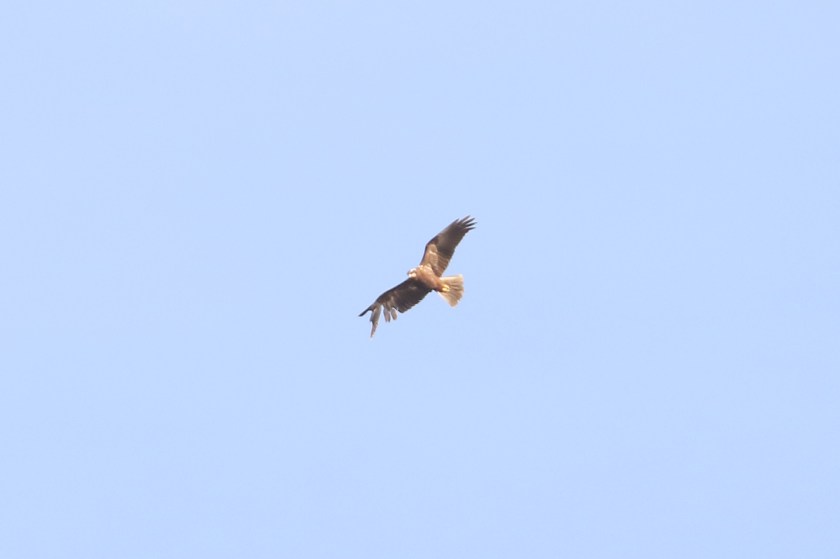
After Oare we visited a Kent Honey Buzzard site and after 20 minutes of scanning we had mediocre views of what seemed to be a male and a female – based on size alone really as the birds were completely silhouetted.

The week was spent birding Walthamstow Marshes and the Waterworks in the mornings before work.  Highlights were 2 gounded Tree Pipits on the 22nd,(rare here and my first for a couple of years on the patch, the eventualy moved on south calling) 3 Whinchats on the 23rd aswell as a couple of Wheatears and yellow Wagtails over and present on most days. Common Warblers still coming through in no great numbers.

V87A9626

V87A9820

V87A9690

V87A9259

V87A9251

David Bradshaw found a Spotted redshanks on the now well-drained Lockwood on Saturday. another was found shortly after! First on the patch for a few years and new for my patch list.  I was down visiting Laurence P at beachy (and seeing some great birds, more on that later…) and i was convinced they woudn’t stay however upon my return I broke free from the tropical temperatures in my flat and caught up with them, and David.

V87A0238

V87A0240

We will regain access in the mornings during the week soon and I will be up there every day. it looks fantastic.

IMG_5837


1 – 15 August


A few times a month my strange (non birdy) job takes me to rural Norfolk, near ten mile bank which is over the Ouse from Welney WWT.  Over the years I’ve found a few nice birds there, highlights being a flock of six Common Cranes one winter, an out of place Hawfinch over one spring and things like Brambling, the occasional Hen Harrier and fields full of Yellow wags on passage.

J2

With abit of fieldcraft and abit of luck I got close to this (first year?)  Kingfisher at the bottom of a standard fenland ditch on my lunch break recently. I spent probably 15 mins getting close and 10 mins shooting and watching through bins as the bird changed position, perch and stretched its wings.

V87A8837

V87A8841

This photoshoot came at an interesting time, especially shooting pictures of a Kingfisher – quintessential ‘Nature Photographer’ species. I had just read the recent British Birds article about birder-photographers.  (and spent some of the earlier part of the year cursing ‘no bins’ camera heads in hides in Hong Kong)  I often think about how using a camera as part of my birding affects it, I think its generally a good thing; It can be sort of used as a scope, It can allow me to appreciate commoner species more… it prolongs the experince and makes the birding more visual. Getting into position for photography and taking in a close up wader for example is indulgent in a great way (if the bird doenst mind) and akin to looking at an amazing living illustration in a bird guide… More on this another time.

Fast track to today in London, a visit to the patch before work and a fairly disappointing session although almost all the commoner warblers present.

V87A8963

V87A9006

Willow Warblers, Common and Lesser White throats , below.

V87A9082

V87A9064

The below male Kestrel is half of the local pair and may be the reason why the cow field has not yet yielded its annual Whinchats so far.

V87A9059

After work a quick circuit of the Lockwood turned up 2 Greenshank, an adult and a juv (pictured below) a Juvenile Little ringed Plover, c10 Common sandpipers and my first Wheatear of the autumn. Showing 7/8 primaries in the closed wing and buff panel mid wing sort of points to Greenland but perhaps too early?. dunno.

V87A9145

V87A9158

Strangely, this Kingfisher allowed me to get fairly close this evening. There are 3/4 birds hanging around, the others I suspect are first year birds. This and last weeks shots are the closest I’ve been to this species for a prolonged period, funny its happened within a week. Nice though.

V87A9189


YLG season…


Just an Update of some recent juvenile Yellow Legged Gull images from Thames Barrier Park and the O2. I’m not really seeing the numbers I was expecting just yet but theres still time.

V87A7722

V87A7698

The below individual has been around since the 8/9th of July, a real beauty to my slightly gull hungry eyes.

V87A7828

V87A7864

V87A7889

Below a contrastingly dark individual.

V87A8174

V87A8221

Next up… either some more YLGs or hopefully a nice juvenile Caspian Gull. I’m putting in the hours before and after work so fingers crossed.

June Iceland!

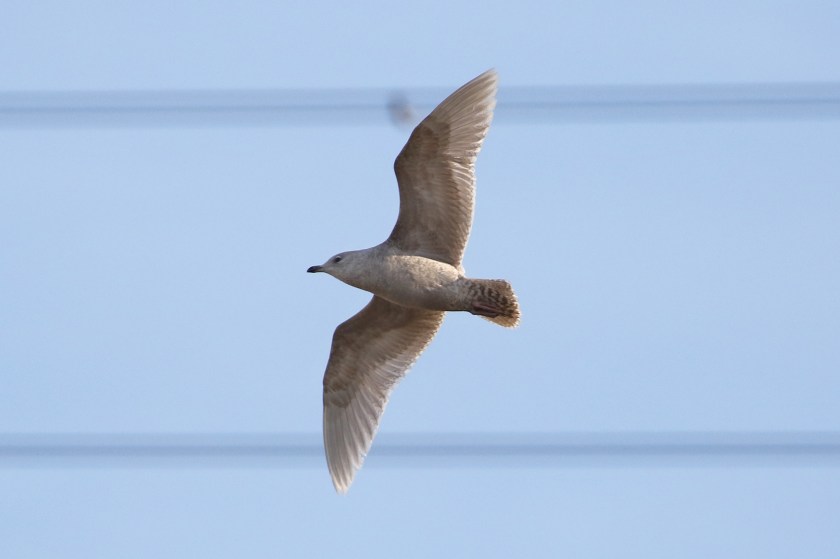
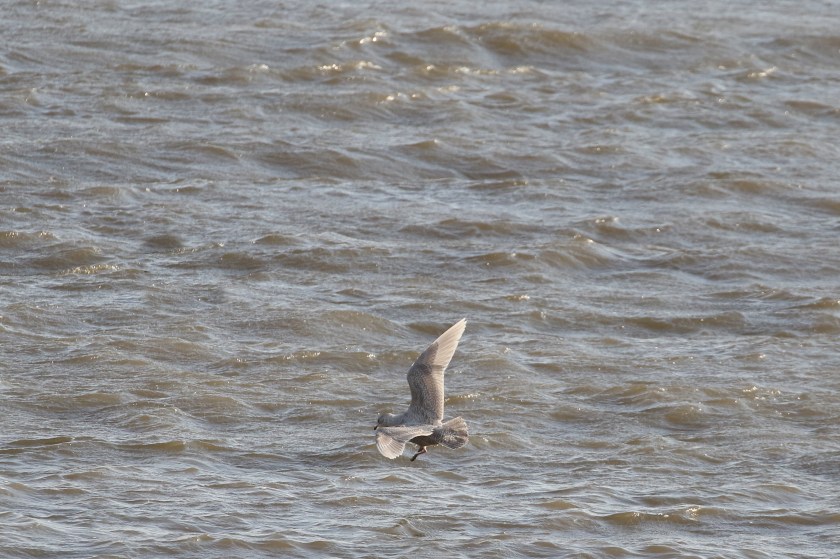
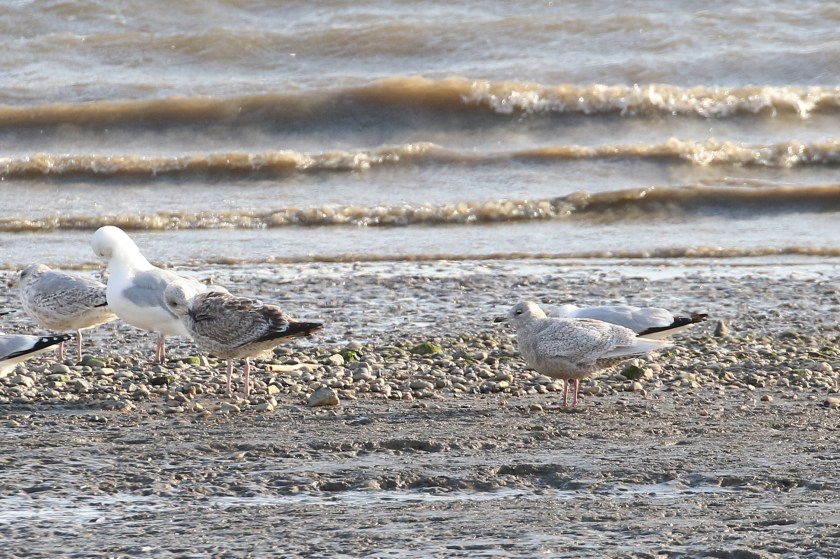
No sooner had a drafted I dull summer time blog post, a final day out on the Thames (before 2 weeks away with work) and I pick up a 1st summer Iceland Gull at Thames Barrier park!  Just over a year since the last one in the area that Rich B found on the beach at the O2 April 2016.  The bird flew westward and we lost it, despite our ziggzagging across the Thames in a attempt to refind it in the usual gathering spots.

V87A7931.jpg

There were 4 different 2nd summer Yellow Legged Gulls between the Cable car and the beach at the O2, heres 2 of them.

V87A7817.jpg

V87A7878

AND HERE’S THE DRAFTED EARLY JUNE POST….zzz

So June is here and things are, as expected, pretty quiet across the patches.  Rich had a nice new 2cy Caspian Gull at the O2 the other day and there are still some Yellow legged Gulls around on the river. Walthamstow is proving good for taking pics of juvenile wagtails and starlings and thats about it. The Common terns are paired up on a couple of the rafts, good numbers of Little Egrets seemed to be breeding and I’ve seen Swallows around recently which are probably the riding stables pair, fingers crossed.

V87A7497

The next post you read will probably be about Juvenile Yellow Legged Gulls. I will be out looking in the last week of June and first of July Looking for the country’s first continental birds. Here’s a post from Eastbourne last July to help get your eye in.

For now however, here’s one of a local and familiar Thames YLGs, been around since last October and is a real looker in my opinion. regulars to this blog (if such a thing exists) will probably recognise the bird. (why not comment if you do… or be damned if you dont!)

V87A7642

V87A7707